Overhead bin space fills up quickly mainly because airline policies restrict bag size and weight, prompting travelers to pack more efficiently or overpack, which reduces available room. Passenger habits like boarding early with larger or multiple bags and disorganized boarding procedures also accelerate bin crowding. Airlines are trying different strategies to manage this, but understanding and adjusting your packing and boarding habits can help you secure space better. If you want to find out more, keep exploring strategies to avoid the frustration.
Key Takeaways
- Early boarding passengers often fill overhead bins quickly with larger or multiple bags, reducing space for later arrivals.
- Strict size and weight regulations encourage overpacking, leading to bulkier bags that occupy more overhead space.
- Boarding procedures and passenger behaviors, like disorganized boarding or prioritizing quick access, accelerate bin crowding.
- Variations in aircraft design and configuration affect overall overhead bin capacity, causing quicker filling on certain planes.
- Airlines’ policies and efforts, such as guiding proper stowage and promoting under-seat storage, aim to mitigate early bin space depletion.
Why Do Overhead Bin Spaces Fill Up So Fast?
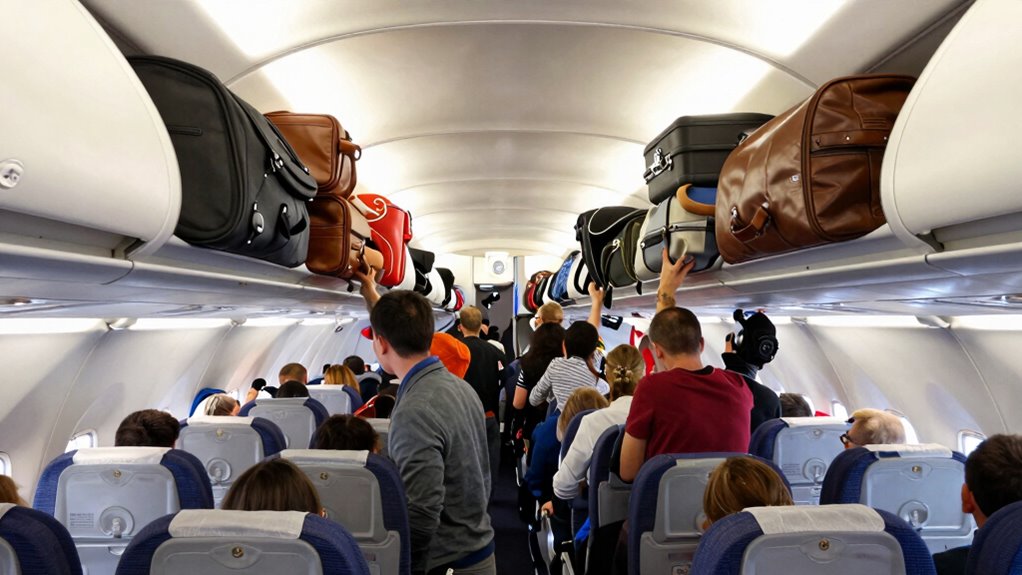
Have you ever wondered why overhead bin spaces seem to fill up so quickly? One reason is the limited carry-on size allowed on many flights, which encourages travelers to maximize their luggage weight while staying within size limits. When everyone brings larger or heavier carry-ons, overhead bins fill faster. Airlines often restrict checked luggage, so passengers rely on overhead storage, leading to more items competing for space. Additionally, travelers tend to pack efficiently but sometimes overpack, making their luggage bulkier and harder to fit. The combination of strict size limits and the desire to carry more weight in a small space results in crowded overhead bins early on. Being mindful of carry-on size and luggage weight can help you avoid this rush and secure your belongings more easily. Proper luggage organization can also make a significant difference in fitting more items efficiently. Understanding passenger behavior and how it influences packing habits can help travelers plan better and avoid the early fill-up of overhead bins. Moreover, some travelers may not be aware of the overhead bin capacity, which varies between aircraft types and can contribute to early filling. Recognizing the influence of aircraft design on storage capacity can also aid in better packing strategies. Additionally, awareness of airline policies regarding overhead storage can prevent surprises during boarding.
What Airline Policies Limit Overhead Storage?
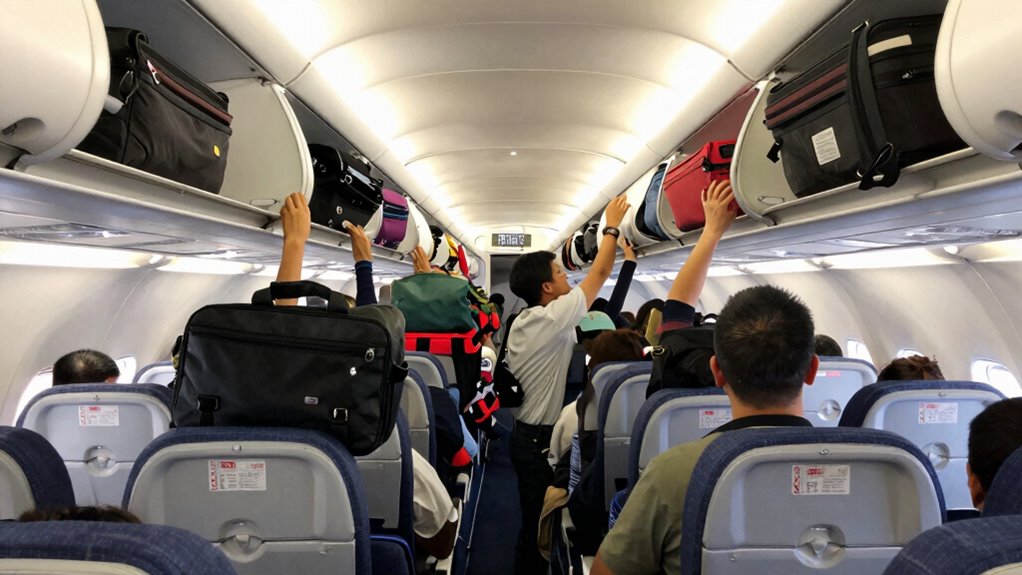
Ever wondered how airline policies limit your overhead storage options? Airlines enforce carry on regulations and luggage size restrictions to maximize space. These policies restrict the size and weight of your carry-on, often forcing you to check larger bags. Airlines typically specify maximum dimensions, such as 22 x 14 x 9 inches, to ensure fit in overhead bins. Here’s a quick overview:
| Policy Aspect | Limitation | Impact |
|---|---|---|
| Carry on regulations | Size and weight restrictions | Limits what you can bring onboard |
| Luggage size | Max dimensions allowed | Ensures fit in overhead compartments |
| Bag classification | Personal item vs. carry-on | Affects storage priorities |
Additionally, overhead bin space can vary depending on aircraft type and configuration, further affecting storage capacity. Understanding aircraft design can help travelers better anticipate storage availability. It’s also helpful to consider that aircraft interior layout influences how much space is accessible for overhead storage. Moreover, boarding procedures may impact how quickly overhead bins fill up during boarding.
How Passenger Habits Contribute to Bin Crowding
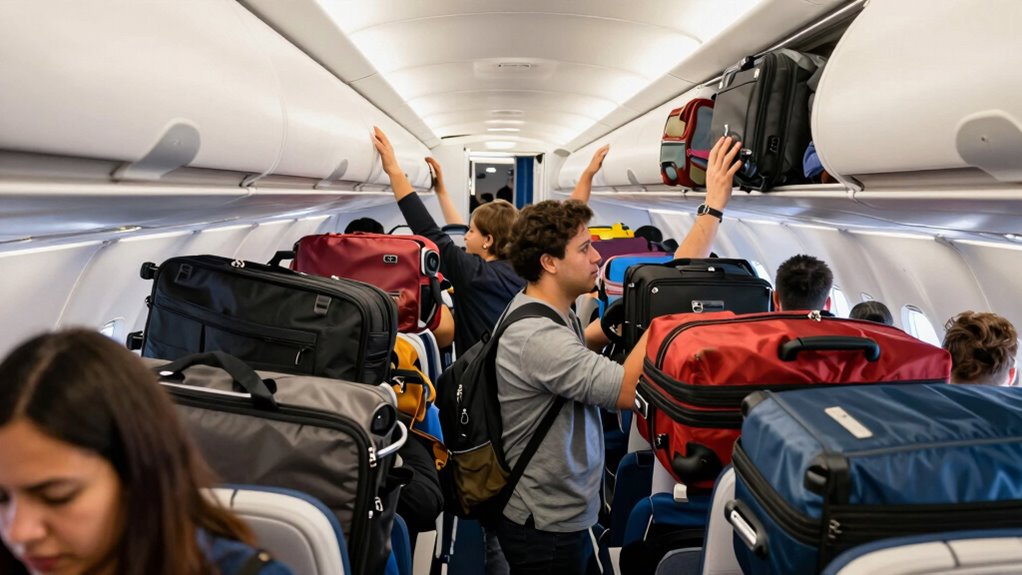
Your packing choices can fill overhead bins quickly, especially if you bring larger or multiple bags. Boarding order also matters—those who board early tend to take up more space, leaving less for others. By adjusting your habits, you can help reduce bin crowding and make the process smoother for everyone. Additionally, shared space considerations can be affected when passengers prioritize convenience over communal needs, impacting overall work-life harmony. Being aware of overhead bin space and how it’s utilized can help you pack more efficiently and avoid contributing to congestion. Furthermore, understanding space optimization techniques can assist travelers in making smarter packing decisions, ultimately leading to a more organized and less stressful experience. Additionally, precious metal investment options, like Gold IRAs, can influence how you plan your travel essentials, ensuring a more organized and less stressful experience.
Packing Strategies Impact Space
Passenger packing habits play an important role in contributing to overhead bin crowding. When you ignore carry on etiquette, you often bring larger luggage than necessary, which reduces available space. Choosing luggage with proper dimensions ensures it fits easily in the overhead compartment, preventing others from struggling to stow their bags. Overpacking or packing inefficiently also wastes space, forcing passengers to hold onto carry-ons longer or place them in less accessible spots. By packing smarter—using compact bags, rolling clothes, and prioritizing essentials—you help maximize space for everyone. Being mindful of luggage size and adhering to carry on etiquette not only speeds up boarding but also ensures overhead bins stay accessible longer. Smaller, well-packed bags contribute notably to smoother, more organized flights. Additionally, understanding mammography guidelines can help travelers plan ahead for health screenings, ensuring they maintain their well-being even during busy travel periods. Recognizing luggage size restrictions can further aid in efficient packing practices that benefit all passengers. Moreover, opting for lightweight and compact luggage makes it easier to fit everything without overstuffing the bins. Proper awareness of market research in travel trends can also inform smarter packing choices, reducing the likelihood of overpacking. Being informed about carry-on etiquette encourages better habits that improve the overall boarding experience.
Boarding Order Effects
When passengers board in an inefficient order, it often leads to increased overhead bin congestion. If boarding priority isn’t organized, travelers seated at the back tend to load their carry-ons first, filling bins early. This disrupts the natural flow, forcing those in front to wait or struggle to find space. Your seating arrangement influences this dynamic; if you’re in the rear, your luggage often gets loaded first, contributing to bin crowding. Conversely, passengers boarding later, especially from the front, may find limited space, leading to frustration. Properly managed boarding order, such as front-to-back or by seating zones, helps distribute overhead bin usage evenly. Recognizing how your boarding priority affects bin space can reduce delays and improve everyone’s travel experience. Additionally, understanding the Twin Flame Runner concept can help travelers navigate emotional challenges related to travel disruptions or delays. Being mindful of boarding habits can also promote a smoother boarding process and less overhead bin chaos. Paying attention to boarding procedures can make a significant difference in managing overhead bin space efficiently, especially when coordinated with boarding order strategies for optimal flow. Incorporating knowledge of best practices in boarding can further streamline the process and prevent bin crowding.
Tips for Packing and Boarding to Secure Overhead Space
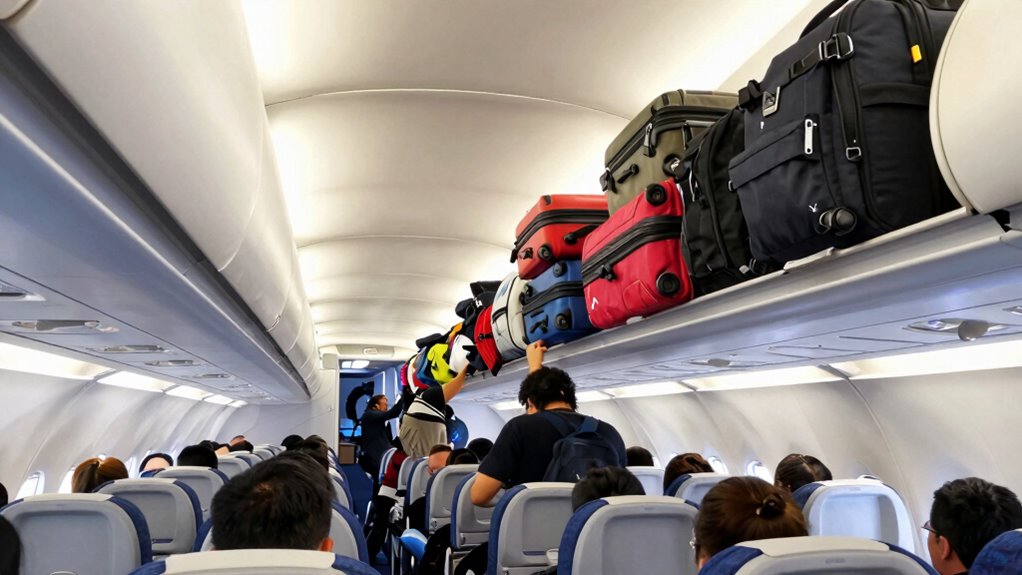
To secure overhead bin space, start by packing smart and keeping your luggage light. Place larger items at the bottom or in first to maximize space and make boarding smoother. Arriving early also gives you a better chance to find room before bins fill up. Being aware of trusted resources can help you choose the best airline options with more accommodating overhead storage policies. Additionally, understanding airline baggage policies can prevent surprises and ensure your carry-on meets size restrictions. Considering seasonal variations in travel patterns may also influence how early you should arrive to secure overhead space.
Pack Smart, Lightly
Ever wonder how to make sure you snag overhead bin space on a busy flight? The key is packing smart and light. Keep your carry-on within airline carry on restrictions to avoid last-minute gate checks. Use lightweight, flexible bags that fit easily into luggage compartments. Organize essentials in a small, accessible bag so you can grab them quickly without rummaging through everything. To maximize space, place heavier items at the bottom of your bag and lighter ones on top. Remember, overhead bins fill up fast, especially on full flights. By packing efficiently and adhering to carry on restrictions, you’ll board confidently, saving time and avoiding checked luggage. Here’s a quick glance:
| Tip | Why it helps | Example |
|---|---|---|
| Pack lightweight gear | Fits more in less space | Collapsible shoes, thin clothing |
| Use small bags | Easier to stow and organize | Tote for essentials |
| Follow carry on rules | Prevents gate checks | Check airline size limits |
| Distribute weight evenly | Prevents bag from toppling | Heavy items at the bottom |
| Keep essentials accessible | Quicker retrieval | Travel documents, snacks |
Place Larger Items First
Placing larger items at the bottom of your bag not only helps organize your belongings but also makes it easier to access your overhead bin space efficiently. When packing, start with bulky items like shoes, laptops, or chargers, placing them flat to conserve space. This method ensures your carry-on stays within weight limits and adheres to carry-on restrictions. By stacking heavier, larger items first, you create a stable base that prevents shifting during transit. Keep smaller essentials—like snacks or documents—on top for quick access. Properly packed larger items reduce the risk of overcrowding the bin and help you avoid last-minute rearranging. This strategic approach not only streamlines your boarding process but also maximizes the available overhead space for everyone.
Board Early for Space
Arriving early at the gate gives you a better chance to board before the overhead bins fill up. By implementing smart boarding strategies, you can secure space for your carry-on quickly, avoiding the scramble later. Passenger behavior often influences overhead bin availability, so boarding early helps you beat the rush. To maximize your chances:
- Check boarding groups and prioritize early boarding if possible
- Keep your carry-on accessible for quick placement
- Be ready to move swiftly when your group is called
- Observe how others are packing to anticipate bin space needs
Boarding early isn’t just about saving time—it’s about controlling your space and reducing stress. The earlier you board, the more likely you are to find overhead bin space and avoid the hassle of gate-checking or repacking.
What Airlines Are Doing to Manage Bin Congestion
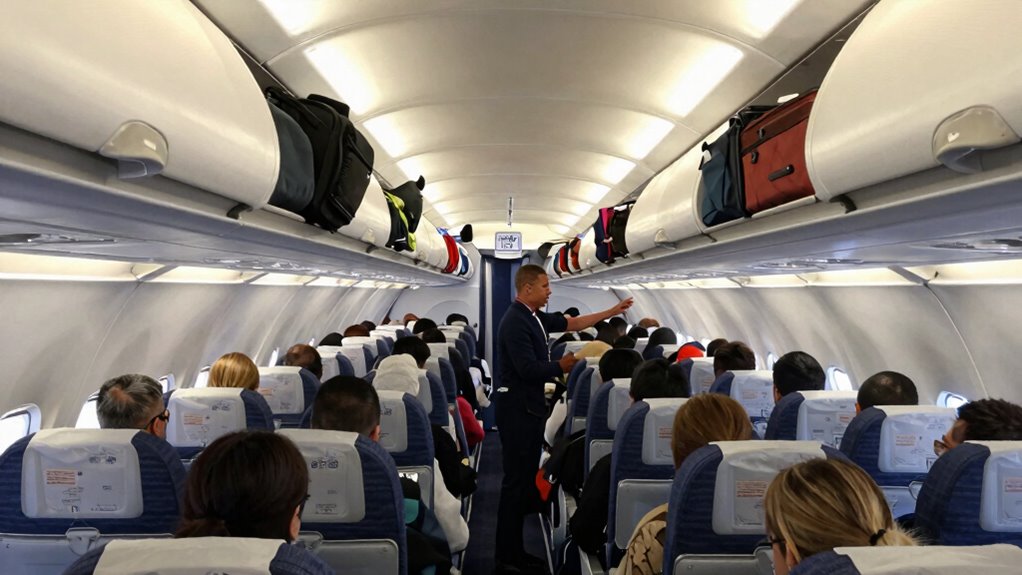
To address the persistent issue of bin congestion, airlines are implementing a variety of strategies to streamline overhead space management. They’re updating airline policies to encourage passengers to stow larger items under the seat or in designated compartments, freeing up overhead bins for carry-on bags. Some airlines now ask travelers to board in groups or by seat rows to reduce congestion at the bin areas. Crew members are also trained to assist with efficient overhead management, guiding passengers to ideal storage spots and prompting timely stowing of bags. Additionally, airlines are experimenting with boarding procedures that prioritize bin space utilization. These measures aim to minimize delays and create a smoother boarding experience by reducing the chaos and competition for overhead bin space.
How You Can Avoid Overhead Bin Frustration
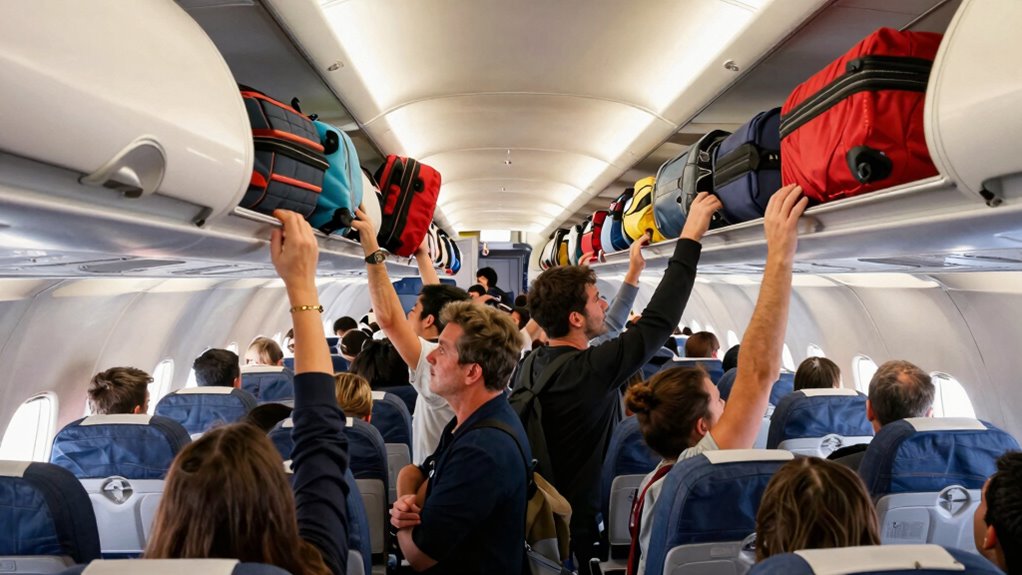
You can avoid overhead bin frustration by choosing your carry-on wisely and planning ahead. Proper luggage organization helps maximize space and makes it easier to fit your bag efficiently. Follow carry on etiquette by keeping your bag within airline size limits and placing it in the bin promptly. To minimize hassle:
- Pack only essentials to keep your bag lightweight and manageable
- Use compression bags or packing cubes for better organization
- Place your bag in the bin quickly when prompted
- Be respectful of fellow travelers waiting to stow their luggage
These tips help prevent delays and reduce the chance of your bag being displaced or left behind. Being thoughtful about your luggage organization and adhering to carry on etiquette creates a smoother boarding process and less overhead bin frustration.
Frequently Asked Questions
Can I Reserve Overhead Bin Space in Advance?
You can’t typically reserve overhead bin space in advance due to airline pre reservation policies. However, it’s helpful to follow overhead bin guidelines and arrive early to secure a spot. Some airlines prioritize certain passengers, like premium or frequent flyers, for bin space. Always check your airline’s specific policies before flying, and arrive early to increase your chances of finding space for your carry-on.
Do Larger Carry-On Bags Take up More Overhead Space?
Yes, larger carry-on bags take up more overhead space. Your airline’s carry-on policies and baggage restrictions typically specify size and weight limits, so exceeding these can cause issues. Larger bags may not fit easily in overhead bins, making it harder to find space for everyone. To avoid inconvenience, pack within your airline’s limits and consider how your bag’s size impacts overhead storage during your flight.
Are There Specific Airlines With More Overhead Bin Space?
Some airlines do offer more overhead bin space thanks to their specific carry-on policies and overhead bin design. You’ll find that airlines like Southwest and JetBlue tend to have more generous overhead compartments, accommodating larger or more carry-ons. It’s smart to check each airline’s carry-on policies before flying, as bin design varies, and space can fill up quickly, especially on smaller regional aircraft or budget airlines.
How Does Aircraft Size Affect Overhead Bin Availability?
Aircraft size directly impacts overhead bin availability due to cargo capacity and bin design. Larger planes, like wide-body jets, typically have more and bigger overhead bins, giving you extra space. Smaller aircraft, such as regional jets, feature limited bin capacity and smaller designs, so you might find your overhead space fills up quickly. Your ability to stow your carry-on comfortably depends on these factors, especially on smaller planes with more compact bin designs.
Is There a Weight Limit for Items Stored in Overhead Bins?
Yes, there is a weight limit for items stored in overhead bins. You should keep luggage weight within airline baggage restrictions to avoid issues. Heavyhanded hauling can cause hazards, so airlines typically recommend a maximum weight—often around 15-22 pounds—to guarantee safety and space. Adhering to these limits helps prevent overstuffing overhead bins, making boarding smoother and ensuring everyone’s belongings stay secure during the flight.
Conclusion
Understanding why overhead bins fill so quickly can help you plan better. Did you know that on average, each passenger carries nearly 2.5 bags? By packing smarter and boarding strategically, you can avoid the frustration of cramped overhead space. Airlines are also working on solutions, but being proactive makes a difference. With a little prep, you’ll enjoy a smoother, less stressful flight—so next time, arrive with confidence, knowing you’ve done your part to secure that coveted overhead spot.