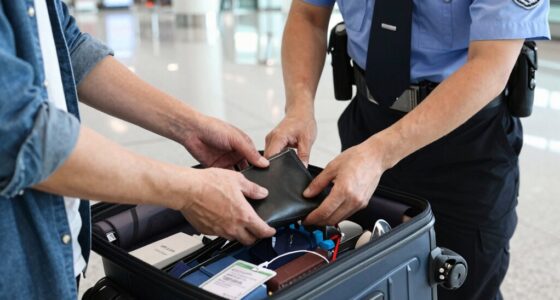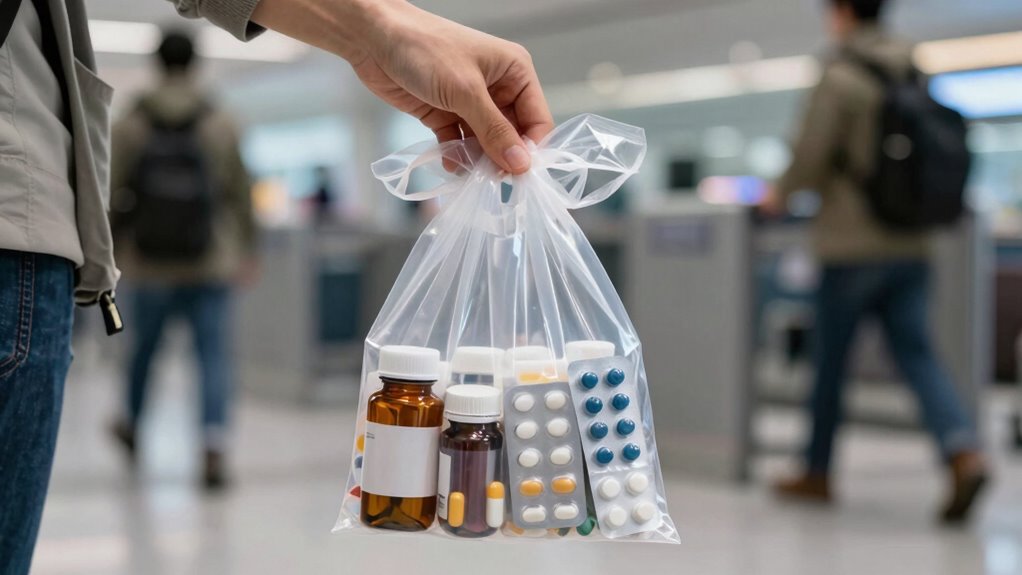

To avoid questions and delays when flying with medications, keep all meds in their original labeled containers and carry copies of prescriptions or doctor’s notes. Declare your medications upfront at security and separate them in a clear plastic bag for easy inspection. Be prepared to answer questions confidently and follow TSA guidelines for liquids or syringes. If you want to make certain smooth travel, there’s more helpful advice to follow that can make the process easier.
Key Takeaways
- Declare medications upfront during security screening and present them separately for inspection.
- Keep all meds in original, clearly labeled containers with prescription details visible.
- Carry necessary documentation like prescriptions or doctor’s notes, preferably in multiple copies and translated if needed.
- Pack medications in a transparent, organized bag at the top of your carry-on for easy access.
- Familiarize yourself with TSA and regional regulations to confidently answer questions and prevent delays.
What Are TSA and Airport Security Rules for Carrying Medications?
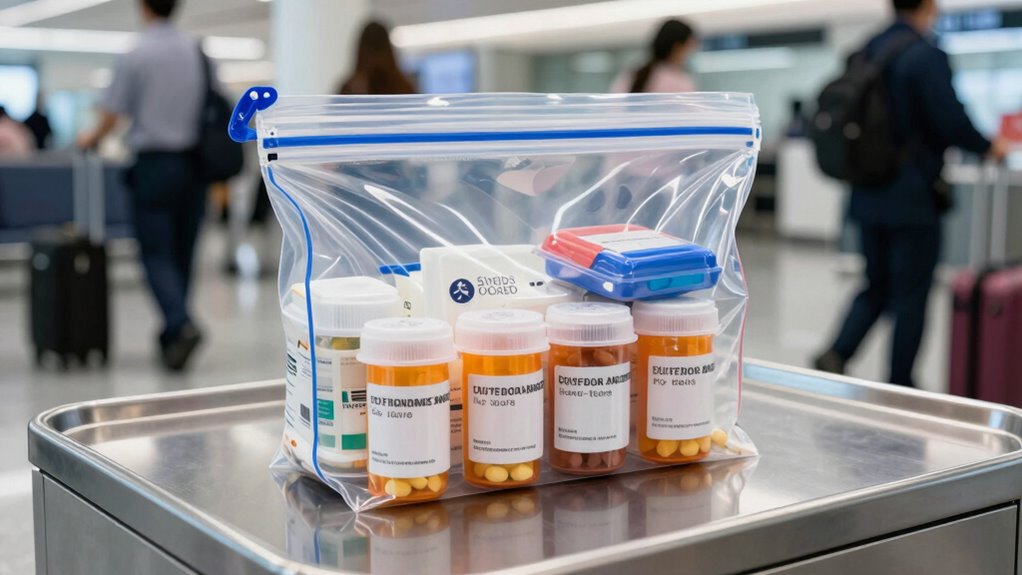
When traveling through airport security, understanding TSA rules for carrying medications can make the process smoother. TSA generally allows medication exemptions, meaning you can carry necessary medications in your carry-on, even if they exceed the usual liquid limits. During security screening, you should declare these medications to officers and present them separately for inspection. Keep medications in their original containers with clear labels to avoid delays. If you have special needs, such as liquid medications or syringes, inform the TSA officer upfront. While most medications are permitted, it’s essential to follow these guidelines to prevent questions or delays. Being prepared and knowledgeable about TSA rules ensures a stress-free experience at security checkpoints. Remember to properly store your medications to prevent any issues during screening. Additionally, understanding the requirements for liquid medications can help you navigate the process more efficiently. For additional peace of mind, familiarize yourself with airport security procedures related to medication transport before your trip. Knowing the regional variations in security protocols can also prepare you for different airport experiences across the country. Being aware of family photoshoot fails can also remind travelers to stay calm and patient during unexpected situations at security.
How to Organize and Pack Your Medications for Security Checks
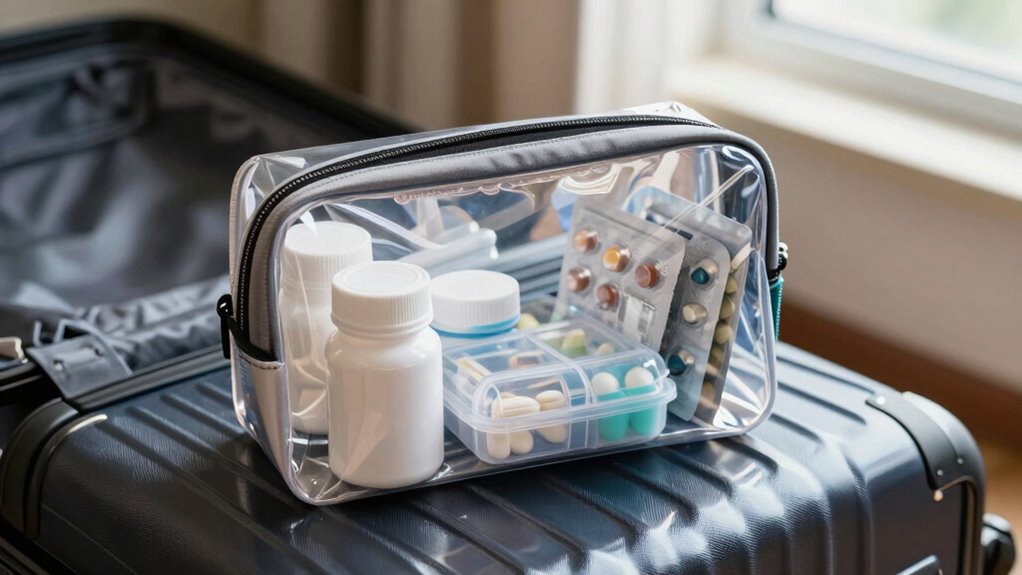
To guarantee a smooth security process, it’s important to organize and pack your medications carefully before heading to the airport. Proper medication storage helps prevent delays and questions during security checks. Use a clear, resealable plastic bag to hold all your prescriptions and over-the-counter drugs, making them easily accessible for inspection. Keep medications in their original containers with labels intact to verify their contents quickly. For security procedures, separate your medications from other personal items in your carry-on, and consider placing them at the top of your bag for easy access. Avoid mixing medications with other items to prevent confusion. Well-organized medication storage streamlines the process, reduces stress, and ensures you comply with security protocols efficiently. Being aware of media literacy can also help you understand security procedures better and avoid unnecessary confusion. Additionally, reviewing airline security policies beforehand can further help you prepare effectively. Familiarizing yourself with security screening procedures can also make the process quicker and less stressful.
Legal Tips for Carrying Prescription and Over-the-Counter Drugs
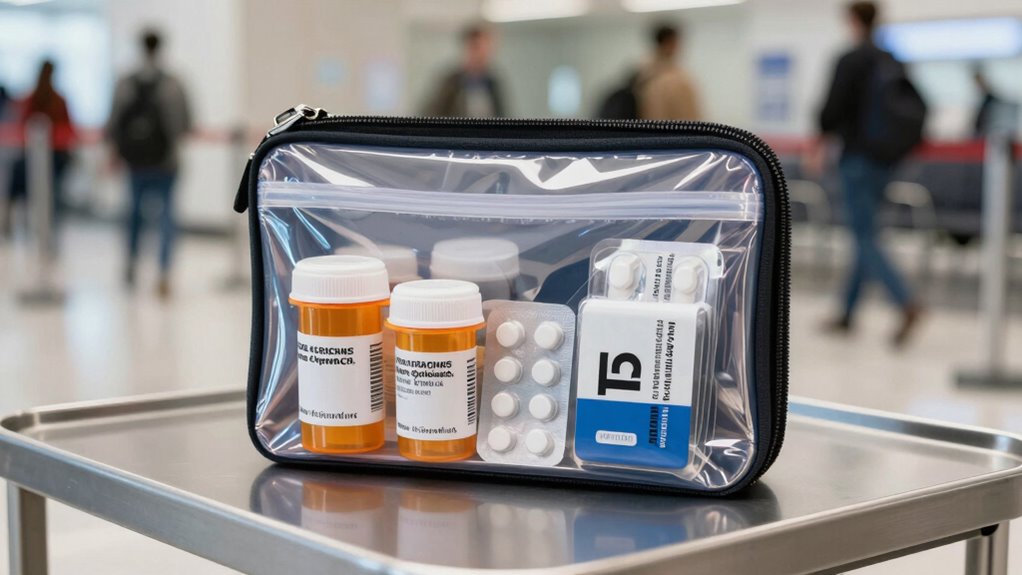
Carrying prescription and over-the-counter medications across borders requires understanding and following legal regulations to avoid issues at security checkpoints or customs. To guarantee legal compliance, carry original prescriptions or doctor’s notes that clearly identify your medications. Keep your drugs in their original containers with labels intact for easy identification. Proper medication storage is essential; avoid mixing different medications in unmarked containers. Familiarize yourself with the specific laws of your destination country, as restrictions on certain drugs may vary. Always carry only the amount you need for your trip to prevent suspicion or delays. Additionally, understanding vetted privacy policies can help you manage how your personal information is handled when traveling. Being aware of bank SWIFT/BIC codes can also be beneficial if you need to make international payments related to your travel expenses. Staying informed about legal medication requirements is crucial to avoid confiscation or legal issues during travel. Researching travel health advisories can provide updated information on medication restrictions in your destination. Knowing the regulations surrounding controlled substances can help prevent legal complications during your trip. By following these legal tips, you minimize the risk of having your medications questioned or confiscated, making your travel smoother and stress-free.
International Travel: How to Handle Medications When Crossing Borders
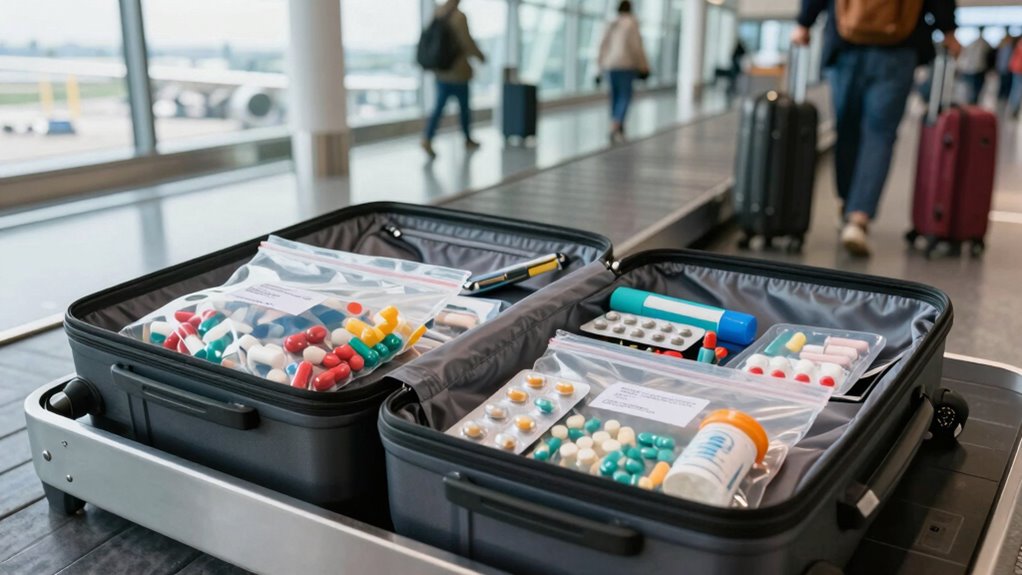
Managing medication regulations becomes even more important when crossing international borders. Before you travel, make certain you have all necessary travel documentation, such as prescriptions and a doctor’s note, translated if needed. Carry original medication containers with clear labels to prove they are legally prescribed. Be prepared for security checks by storing your medications properly—preferably in your carry-on to avoid loss or damage. Knowing the specific rules of your destination country helps prevent delays or confiscation. Some countries have strict regulations on certain medications, so research these beforehand. Keep your medication storage organized and accessible, and carry copies of your prescriptions. Additionally, understanding border security procedures can help you anticipate and navigate potential questions more smoothly. Familiarizing yourself with electric bike regulations in your destination can also prevent misunderstandings during security checks. Being aware of medication documentation requirements can further streamline the crossing process. By staying informed and prepared, you can smoothly navigate border crossings without unnecessary questions or issues.
Communicating Effectively With TSA and Airline Staff About Your Medications
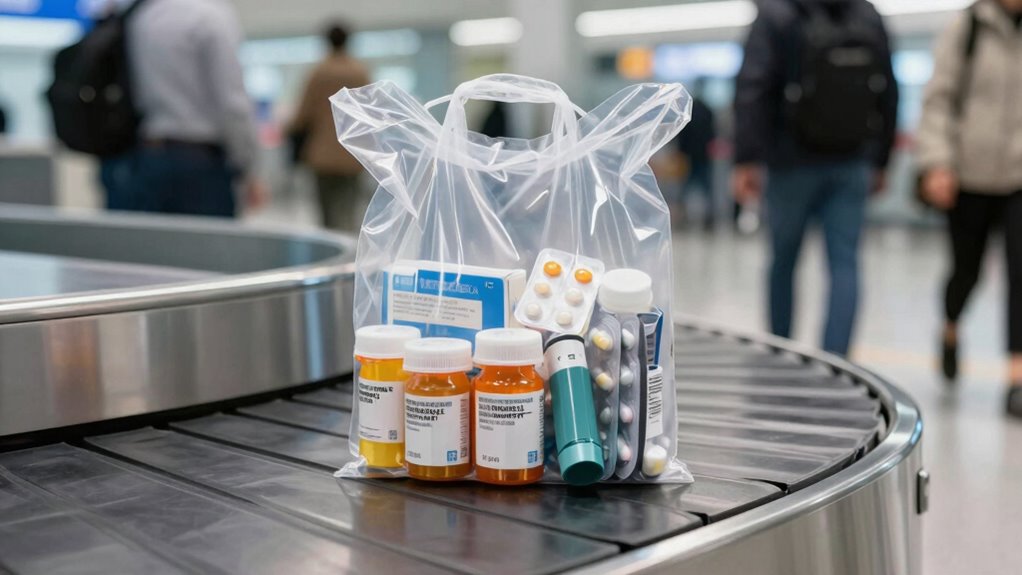
When talking to TSA and airline staff about your medications, clear labeling and proper documentation are vital. Knowing your rights and airline policies helps you explain your needs confidently. Being prepared ensures smoother communication and reduces potential delays or issues. Additionally, understanding the importance of water safety and hydration can help you manage your medications effectively during travel. Being aware of air purifier maintenance dos and don’ts can also be beneficial if you need to carry medical devices that require specific care. Recognizing cryptid mysteries and other paranormal phenomena can also help travelers understand and cope with unusual encounters or stories they might hear during their journeys. Furthermore, familiarizing yourself with regional flavors and culture can make your travel experience more comfortable and enjoyable. Understanding water chemistry and how it affects your health can also contribute to a smoother travel experience when managing medication side effects.
Clear Labeling and Documentation
Ever wondered how to guarantee your medications are smoothly accepted through security? Proper medication labeling is key. Make sure each bottle has clear, legible labels with your name, the medication name, dosage, and prescribing information. Carry original prescription documentation or a doctor’s note that details your medication needs. This documentation should include your name, the medication’s name, and your doctor’s contact info. Keep these items easily accessible in your carry-on bag. Well-labeled medication and proper documentation reassure TSA and airline staff that your meds are legitimate, reducing the chance of questions or delays. Double-check that your labels match your prescriptions and are up-to-date. Using essential DIY tools like label makers or waterproof labels can help ensure your labels stay intact during travel. Additionally, understanding airline medication policies can further prevent misunderstandings at security. Being aware of security screening procedures related to medical items can help you prepare accordingly. Familiarizing yourself with travel-friendly packaging options can also help prevent accidental damage to your medications. Ensuring your medication storage complies with medication storage guidelines from health authorities can help avoid issues during screening. Clear labeling and thorough documentation help streamline the security process and keep your trip stress-free.
Know Your Rights and Policies
Do you know your rights and airline policies regarding carrying medication? Understanding these policies helps guarantee medication safety and avoids unnecessary delays. TSA allows passengers to carry necessary medications in carry-on luggage, even if they exceed usual quantity limits. Be prepared to declare your medications and answer questions about their use. Keep medications in their original containers with clear labels to comply with travel restrictions. Familiarize yourself with airline-specific rules, as some may have additional requirements. Knowing your rights empowers you to communicate confidently with TSA and airline staff, reducing misunderstandings. Staying informed about medication safety procedures and travel restrictions helps you navigate security smoothly, ensuring your medications arrive safely and your travel remains stress-free. Additionally, reviewing security screening procedures can help you better prepare for the process and minimize delays. Being aware of medication storage guidelines can further streamline your experience at security checkpoints. Knowing that you can request medical accommodations in advance can also help facilitate smoother security checks if needed. Being aware of medication documentation requirements can also help you avoid complications if questions arise. Understanding passenger rights related to medical supplies can give you added confidence during security checks.
Preparing Your Prescriptions and Documentation Before Travel

Are you prepared to handle your medication needs during travel? Ensuring your prescriptions and documentation are in order can prevent delays and questions at security. Start by confirming proper medication storage—use clear, labeled containers to keep medications organized and visible. Double-check that your prescriptions validate your medications, especially if traveling internationally. Carry multiple copies of your prescriptions, including a doctor’s note if necessary. Keep all prescriptions in your carry-on to avoid loss or damage. Verify that your documentation includes your name, medication details, and dosage instructions. Also, consider translating your prescriptions if traveling abroad. Having these items ready streamlines security checks and helps you avoid unnecessary questions about your medication. Proper preparation makes your journey smoother and stress-free.
Troubleshooting Common Airport Delays Caused by Medications
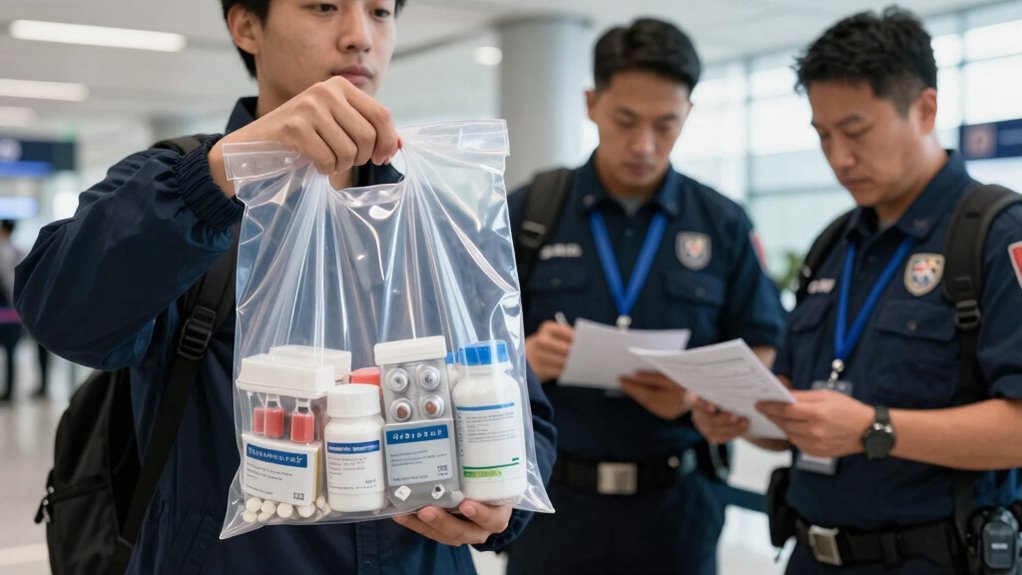
Despite careful preparation, airport delays related to medication can still happen, causing stress and disruption. One common issue is security procedures, which might require you to explain your medication or open containers for inspection. To avoid delays, guarantee your medication storage complies with TSA guidelines—keep liquids in clear, labeled bottles and carry prescriptions or doctor’s notes easily accessible. If you’re traveling with medication that needs refrigeration, carry a small, insulated cooler with ice packs approved for air travel. When going through security, declare your medications upfront and follow instructions from TSA agents. Being organized and transparent helps streamline the process, reducing the chances of delays. Proper medication storage and clear communication with security are key to preventing disruptions during your journey.
Quick Checklist: Traveling Smoothly With Your Medications
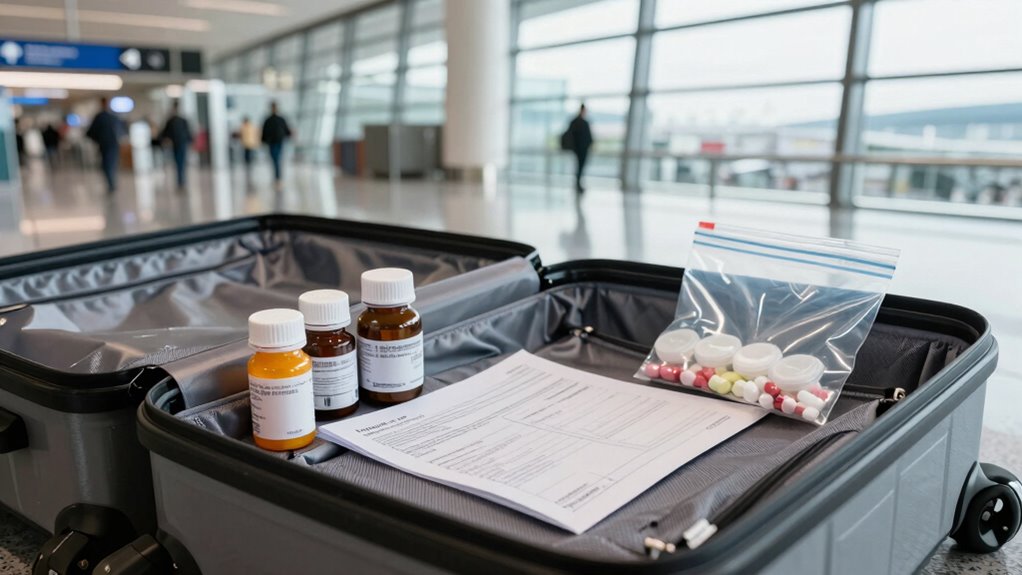
To make certain a smooth journey with your medications, it’s crucial to follow a quick and organized checklist before heading to the airport. First, pack your medications in a clearly labeled container, ensuring proper medication storage. Use travel accessories like pill organizers or temperature-controlled pouches to keep everything secure. Double-check your prescriptions and carry extra doses if needed. Keep your medications easily accessible in your carry-on bag to avoid delays during security screening. Finally, bring relevant documentation, such as prescriptions or doctor’s notes, in case authorities ask for verification. This proactive approach minimizes questions and keeps your trip on track. With these simple steps, you’ll travel confidently, knowing your medications are well-prepared and compliant with security protocols.
Frequently Asked Questions
Can I Carry Large Quantities of Medication in My Carry-On?
Yes, you can carry large quantities of medication in your carry-on, but you should store it properly and carry prescription documentation. Make certain your medication is in its original container for easy identification. Keep essential medicines accessible, and bring a copy of your prescription or a doctor’s note if asked. This helps security staff verify your medication quickly, avoiding delays and questions during screening.
Are There Specific Packaging Requirements for International Medication Travel?
Yes, there are specific packaging requirements for international medication travel. You should adhere to packaging regulations that guarantee your medication is clearly labeled and protected. Use original containers with your prescription labels intact to maintain international compliance. Carry a doctor’s note describing your medication and its necessity. This helps avoid questions at customs and ensures smooth passage through security. Proper packaging and documentation are key to preventing delays and complying with international travel rules.
How Should I Handle Medication Injections or Liquids Over 3.4 Ounces?
Did you know that over 80% of travelers face questions about liquids at security? When handling medication injections or liquids over 3.4 ounces, make sure you carry proper medication documentation, like a doctor’s note, to streamline security screening procedures. Keep your liquids in a clear, reusable container and declare them upfront. This proactive step helps avoid delays and ensures your medication gets through security smoothly.
What Should I Do if My Medication Is Lost or Confiscated?
If your medication gets lost or confiscated, stay calm and contact airline staff immediately. Show your medication documentation, including prescriptions and doctor’s notes, to verify its necessity. Follow the airline’s lost baggage procedures to locate your medication quickly. Keep copies of all documentation handy and inform security personnel of your medical needs to prevent further delays. Acting promptly ensures you get the necessary treatment without unnecessary inconvenience.
Are There Special Considerations for Traveling With Pet Medications?
Did you know that over 70% of pet owners travel with medications for their pets? When traveling with pet medications, make sure you carry a written prescription and keep medications in their original containers for medication compliance. Pack extra in case of delays, and inform security officers about your pet’s medications to prevent questions. Always check airline policies for pet travel, and keep medications accessible during transit.
Conclusion
Traveling with medications is like steering a busy airport runway—you need clear signals and smooth procedures to land safely. By staying organized, knowing the rules, and communicating confidently, you’ll steer through security without turbulence. Think of your medications as trusty co-pilots—ready to support your journey. With preparation and a calm attitude, you’ll glide through the checks and borders, arriving at your destination ready to take on new adventures without delays or questions holding you back.