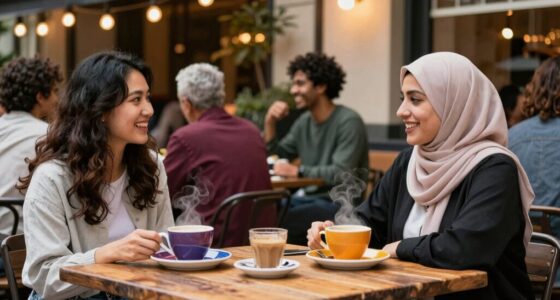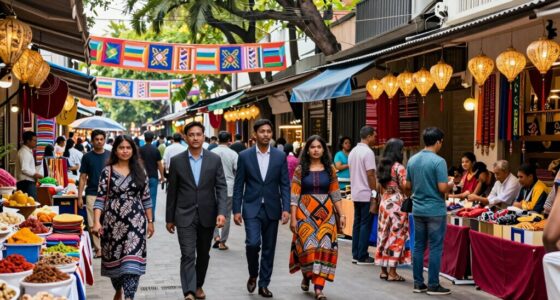
To photograph people respectfully while traveling, start by understanding local customs and cultural norms. Always ask for permission politely before taking photos, especially in private or sensitive moments. Use friendly body language like a genuine smile and eye contact to build trust. Respect privacy, avoid taking photos during emotional or vulnerable situations, and be discreet about sharing images. If you continue exploring, you’ll discover more ways to capture authentic moments thoughtfully.
Key Takeaways
- Always ask for permission before photographing individuals, especially in private or sensitive situations.
- Approach subjects politely, explaining your intent clearly to build trust and comfort.
- Be attentive to non-verbal cues and cultural norms to ensure respectful interactions.
- Share images responsibly by obtaining consent before posting and respecting privacy boundaries.
- Respect cultural customs, religious sites, and emotional moments to avoid causing offense or discomfort.
Understand Cultural Norms Before Photographing Locals
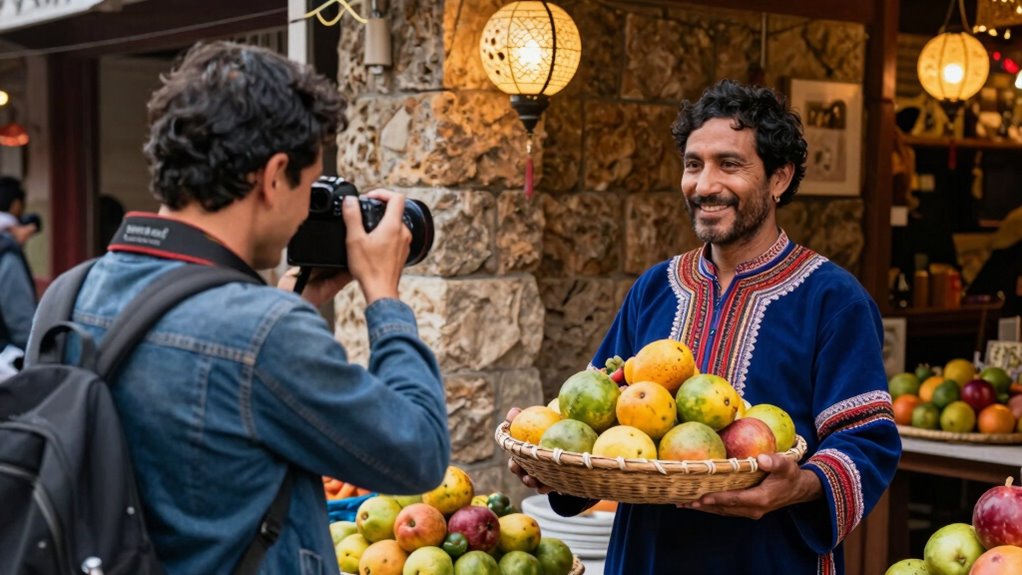
Before you start snapping photos of locals, grasping their cultural norms is vital. Different communities have unique local customs that influence how they view photography. Some may see photos as respectful, while others might consider it intrusive or disrespectful. It’s essential to recognize cultural sensitivities around gestures, dress, and social interactions. For example, taking pictures in religious sites or during traditional ceremonies may be off-limits unless you have permission. Observe how locals behave and follow their lead. Respect their boundaries and avoid actions that could be seen as intrusive. Understanding and honoring these cultural nuances not only helps you avoid offending anyone but also enriches your travel experience by fostering genuine connections and showing your respect for their traditions. Being aware of digital content norms and local attitudes toward photography can also help you navigate these situations more thoughtfully. Recognizing auditory sensitivities and respecting the comfort levels of individuals with auditory processing differences can further enhance your awareness of personal boundaries in various settings. Additionally, understanding privacy expectations in different cultures can prevent misunderstandings and demonstrate your respectful intent. Paying attention to non-verbal cues can also provide valuable insights into whether locals are comfortable being photographed or prefer privacy.
Ask Permission Politely Before Taking Photos
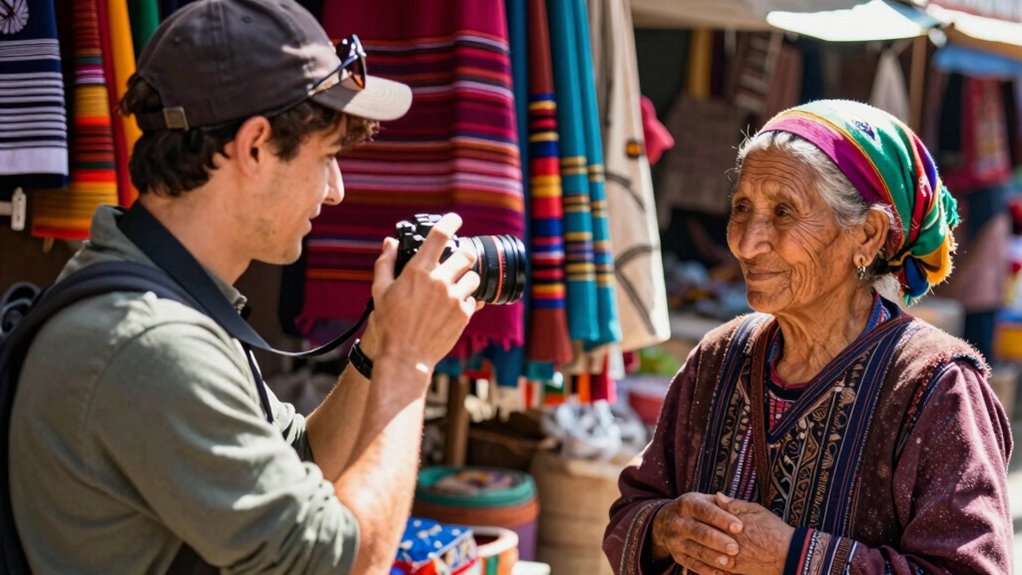
Asking permission politely before taking photos shows respect and helps build trust with locals. When you approach someone, smile and explain that you’d like to capture a candid moment or their portrait. Using your photo equipment responsibly reassures them you’re respectful of their privacy. Remember, some people prefer not to be photographed, so always honor their wishes. To emphasize the importance, consider this:
| Respectful Approach | Reason |
|---|---|
| Ask clearly | Builds trust |
| Smile and be friendly | Shows genuine interest |
| Respect their decision | Maintains good relations |
| Keep a polite tone | Demonstrates respect |
| Thank them afterward | Shows appreciation |
Taking photos with consent ensures meaningful, respectful captures rather than intrusive snapshots. Being aware of electric bike regulations and cultural sensitivities can also help avoid misunderstandings during your travels. Additionally, understanding cultural norms related to photography can prevent unintentional offenses. Being mindful of local customs can further enhance your experience and foster positive interactions.
Use Friendly Body Language to Connect With Subjects
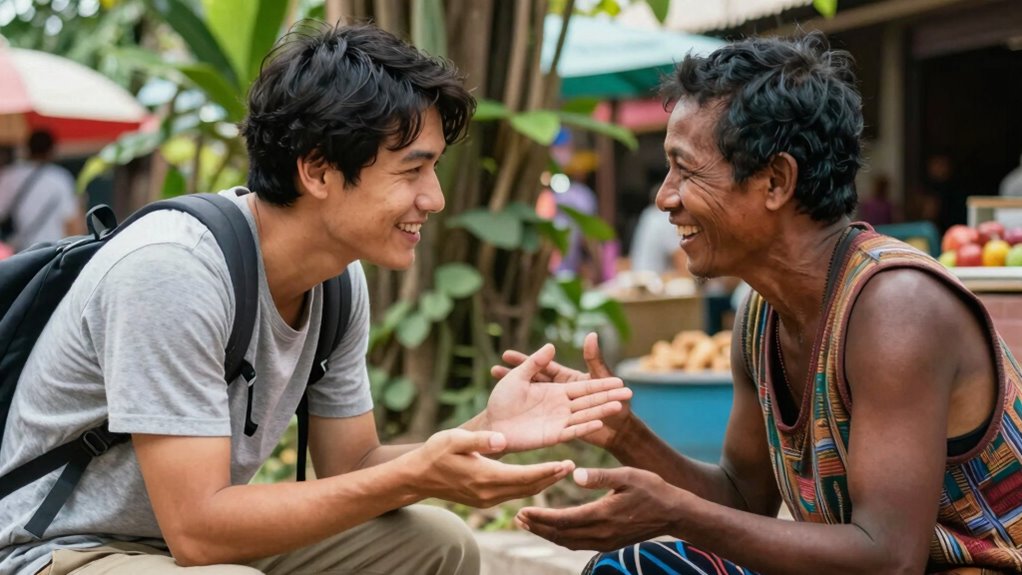
Using friendly body language creates an immediate connection with your subjects and helps them feel at ease. Gesturing friendliness through open gestures, a genuine smile, and relaxed posture signals you’re approachable. Maintain eye contact to show you’re genuinely interested and respectful, which encourages trust. Keep your body language warm and unthreatening; avoid crossing your arms or appearing distant. When you approach someone, gently lean forward or tilt your head slightly to signal engagement and friendliness. Your posture and eye contact communicate your intentions clearly, making your subjects more comfortable and willing to share their authentic selves. Being aware of cultural differences in body language can also help you communicate more effectively and respectfully. Paying attention to non-verbal cues from your subjects can further enhance mutual understanding and comfort. Additionally, understanding home design and architecture details like door swings and stair proportions can help you plan your photography setups with better spatial awareness, creating a more comfortable environment for your subjects. Recognizing how gelato flavors appeal to different preferences can also be useful if you’re capturing candid moments in local spots, as it adds context to your photos. Moreover, being mindful of environmental factors like lighting and background noise can improve the quality of your images and the overall experience for your subjects. This non-verbal approach fosters a respectful, positive atmosphere that makes capturing natural, respectful photos much easier.
Respect Privacy in Sensitive Situations
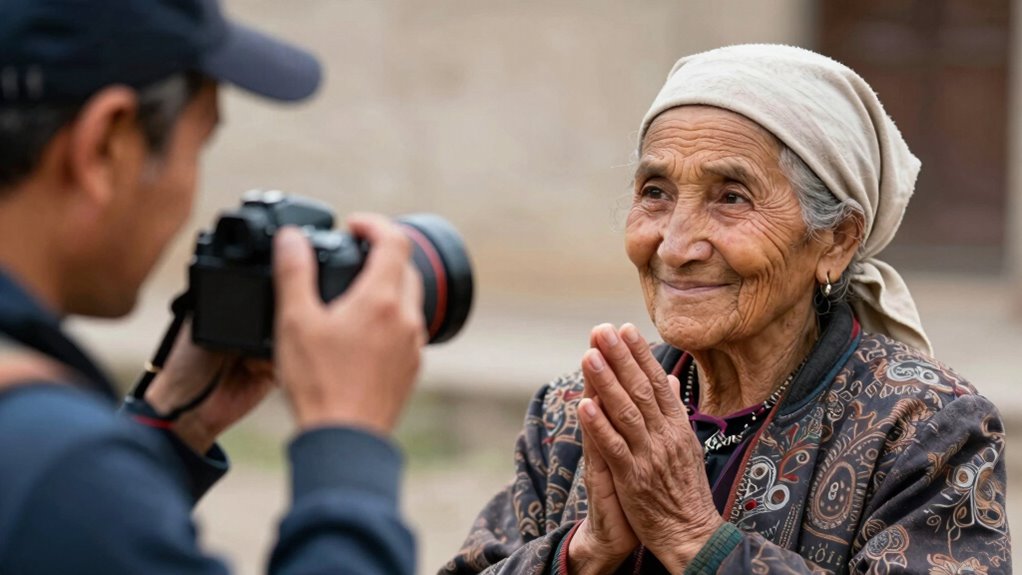
Always ask for permission before taking photos in sensitive situations, and be mindful of cultural norms that may influence privacy expectations. Respect people’s wishes if they decline or seem uncomfortable, and avoid capturing moments that are emotionally or personally private. By doing so, you demonstrate genuine respect and make certain your photos don’t cause unintended harm. Incorporating awareness of traditional Indonesian home decor principles can help you better understand the cultural context and avoid unintentional disrespect. Paying attention to environmental impact of tissue paper can also remind you to be considerate about your surroundings and minimize waste when capturing or sharing images. Being aware of privacy considerations ensures you uphold ethical standards while photographing in unfamiliar environments. Additionally, understanding cultural sensitivities can guide you in recognizing situations where photography might be inappropriate or offensive, helping you maintain respectful interactions. Recognizing community and cultural connections can further deepen your understanding and foster respectful engagement in diverse settings.
Seek Permission First
Before taking a photo in sensitive situations, it’s essential to ask for permission. This demonstrates good photographer etiquette and shows respect for the person’s privacy. Remember, ethical considerations should always guide your actions—if someone isn’t comfortable, don’t push. Approach people politely, explain why you want to photograph them, and wait for their consent. This approach not only fosters trust but also helps you avoid misunderstandings or offending someone. In delicate circumstances, such as involving children, vulnerable individuals, or private moments, seeking permission is even more vital. Respecting others’ boundaries ensures you’re capturing their story with integrity and sensitivity. Additionally, understanding privacy considerations and how they relate to cultural norms can help you navigate different social contexts more effectively. Being aware of security zone info can also help you recognize areas where photography might be restricted or sensitive. Recognizing the importance of energetic alignment can also help you approach subjects with a more respectful and harmonious attitude, fostering better interactions. Taking time to observe and cultural sensitivities can further enhance respectful photography practices. Being mindful of local customs can also prevent unintentional offenses and promote positive exchanges.
Respect Cultural Norms
How do you guarantee your photos respect the cultures you’re visiting? The key is understanding and following cultural etiquette. Respect cultural norms by observing how locals behave and dress, especially in religious or sacred sites. Always research beforehand to learn what’s appropriate—some communities may find certain images intrusive or disrespectful. Practice good photography ethics by avoiding taking photos in situations where privacy is expected, such as during private moments or sensitive ceremonies. Being mindful of cultural sensitivities helps prevent offense and shows respect for local traditions. Additionally, being aware of security measures in the area can help you navigate photography restrictions safely. Understanding urban traffic confidence can also help you choose appropriate settings for street photography, minimizing the risk of disrupting daily life. Remember, honoring these norms not only protects your reputation as a respectful traveler but also enriches your experience by fostering genuine connections. Respectful photography demonstrates your appreciation for the culture and its people. Incorporating an awareness of local customs and traditions ensures you capture moments respectfully and meaningfully. Moreover, paying attention to cultural taboos can help you avoid unintentional offenses while capturing authentic moments. Being attentive to support and boundaries in caregiving can also remind you to approach sensitive situations with empathy and respect.
Avoid Sensitive Moments
When you’re photographing in sensitive situations, it’s crucial to respect people’s privacy and emotional boundaries. Photo ethics guide you to recognize moments that may be personal or vulnerable, such as someone grieving or in distress. Avoid capturing these moments without explicit permission, as doing so can violate personal boundaries and cause discomfort. If you see someone in an emotionally charged situation, give them space and consider whether taking a photo is appropriate. Remember, respecting these boundaries isn’t just polite—it’s essential to maintain trust and integrity. By being mindful of sensitive moments, you show respect for others’ dignity and ensure your photos are ethical and considerate. Always prioritize people’s comfort over getting the perfect shot in delicate situations. Being aware of personal boundaries related to emotional states can help you navigate these situations more ethically. Recognizing emotional boundaries is fundamental to maintaining respectful interactions while traveling. Additionally, understanding cultural sensitivities can further prevent unintentional offense and foster trust with your subjects. Incorporating knowledge of professional services can also guide you in handling situations that require guidance or support, especially in emotionally charged moments.
Share Photos Respectfully and Build Trust
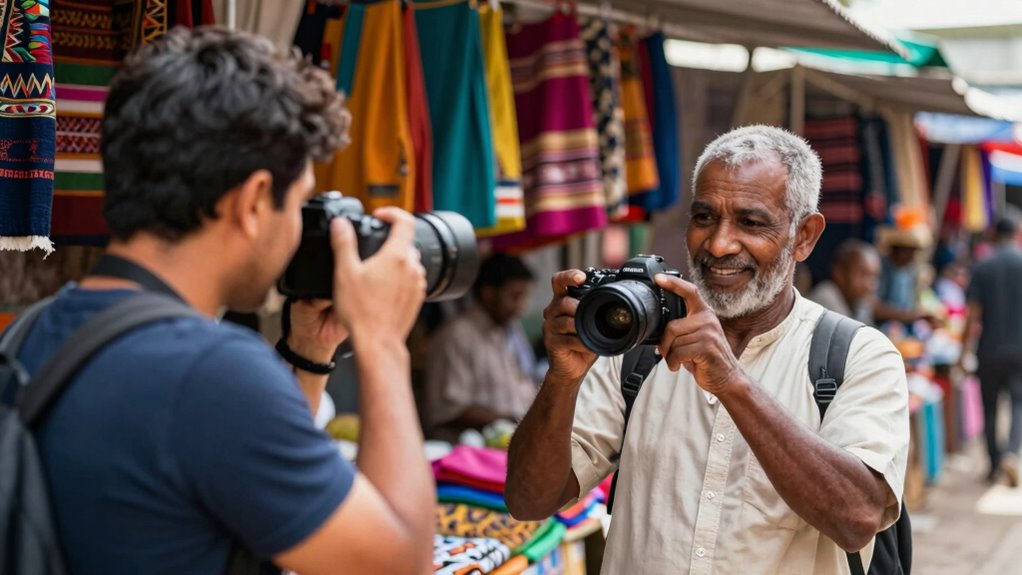
Before sharing your travel photos, always ask for permission and clearly explain your intentions. This shows respect and helps build trust with the people you photograph. When you approach thoughtfully, others are more likely to feel comfortable and appreciated.
Ask Permission First
Have you ever taken a photo without asking someone first and noticed their discomfort? That moment highlights the importance of asking permission before shooting. Respecting consent etiquette shows you value their comfort and personal space. It’s essential to recognize photography boundaries and understand that not everyone is comfortable being photographed. When you approach someone politely and ask if you can take their picture, you build trust and demonstrate respect. This simple step encourages positive interactions and avoids misunderstandings. Remember, a friendly smile and honest explanation of your intentions can make a big difference. By asking first, you show that you respect their autonomy and are considerate of their feelings—key elements to capturing authentic, respectful travel photos.
Share Your Intentions
Sharing your photos thoughtfully helps build trust and shows respect for the people you meet. Clearly communicate your intentions before sharing or posting images. Explaining why you took the photo demonstrates transparency and respects their privacy. Practicing good photography etiquette means being honest about how you plan to use the images, which fosters trust. Showing cultural sensitivity also involves respecting local customs around photography, such as avoiding certain subjects or locations. When you share your photos, consider the context and whether your subjects would feel comfortable with their images being shared publicly. Being upfront about your intentions helps prevent misunderstandings and demonstrates your respect for their dignity. Ultimately, thoughtful sharing nurtures positive relationships and reinforces mutual respect during your travels.
Be Discreet and Respectful When Sharing Your Photos
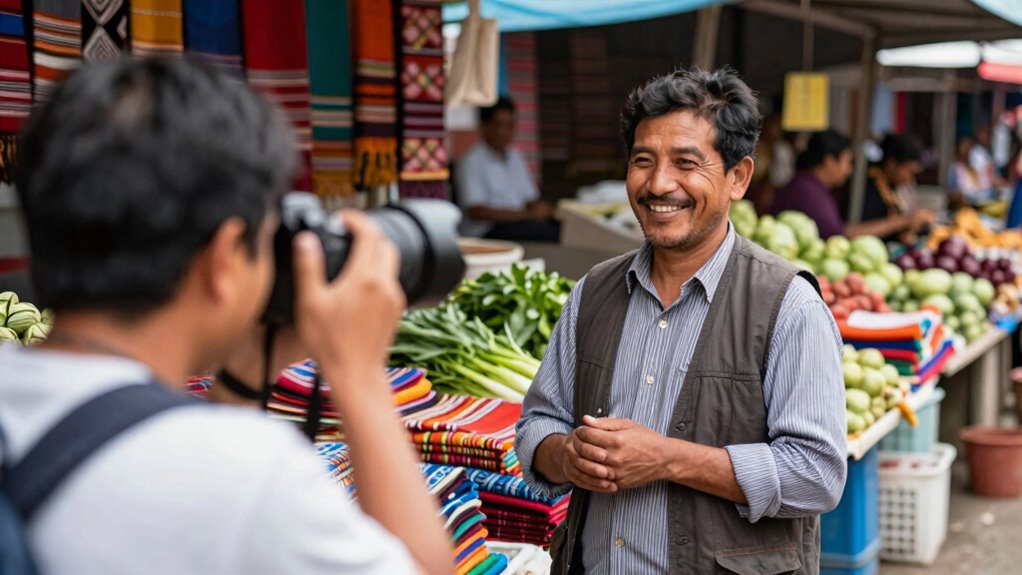
When sharing travel photos, it’s important to prioritize the privacy and dignity of the people you’ve photographed. Respect their privacy boundaries by avoiding posting images that could embarrass or harm them. Follow consent etiquette—if you’re unsure whether someone would be comfortable with their photo being shared, ask them directly. Be discreet by cropping or blurring faces if needed, especially when sharing publicly or on social media. Remember, just because a photo looks good doesn’t mean it’s appropriate to post it without consideration. By being mindful of these principles, you show respect for their autonomy and cultural norms. This approach helps foster trust and demonstrates that your travel photography is rooted in kindness and responsibility.
Frequently Asked Questions
How Can I Handle Language Barriers When Asking to Photograph Locals?
When facing language barriers, use gesture clarification and simple language to ask locals for permission. Smile and point to your camera, then gesture asking if it’s okay to photograph them. Keep your tone friendly and respectful, and be patient if they don’t understand right away. Using universal gestures and basic words can bridge the gap, making it easier to get their consent and ensure you respect their comfort.
What Should I Do if Someone Refuses to Be Photographed?
If someone refuses to be photographed, respect their decision by honoring their choice. Always seek their explicit consent through a respectful approach, and don’t pressure or insist. Remember, modeling consent is essential, so if they decline, move on without making them uncomfortable. Showing understanding and respect builds trust, ensuring you maintain positive interactions and uphold ethical photography standards while traveling.
Are There Any Specific Cultural Taboos Related to Photography I Should Know?
Cultural sensitivities and religious considerations can make photography a delicate issue. You should avoid taking photos in sacred sites, temples, or religious ceremonies without permission, as this can be deeply offensive. Be mindful of local customs—what’s acceptable in one culture may be taboo in another. Always seek permission before photographing individuals, especially in conservative communities, to show respect and prevent unintended offenses. Respecting these taboos keeps your travels respectful and enriching.
How Can I Protect the Privacy of Children in My Photos?
To protect children’s privacy, always ask for permission before taking their photos, especially if they’re minors. Respectful photography means being considerate of their comfort and cultural norms. If you’re unsure, avoid capturing children who seem uncomfortable or are in private settings. Using blurred faces or avoiding identifiable shots also helps maintain their privacy. Remember, showing respect for children’s rights fosters trust and positive interactions during your travels.
What Are the Best Ways to Share Travel Photos Without Causing Offense?
Ever wondered how to share travel photos without offending anyone? You should prioritize cultural sensitivity and always seek photo consent before posting images of locals. Respect their privacy and customs by asking politely and avoiding intrusive shots. Consider blurring faces if you’re unsure. By showing respect and understanding, you’ll foster positive connections and share your journey without causing offense. Remember, thoughtful sharing reflects your respect for the cultures you visit.
Conclusion
Think of photography as a dance—you lead with respect and listen to the rhythm of your surroundings. When you approach locals kindly and ask permission, you’re weaving a genuine connection instead of stepping on toes. Respect their privacy, share your photos thoughtfully, and trust builds like a steady beat. By dancing gently with others’ boundaries, you create a harmonious story that celebrates both your journey and their dignity.