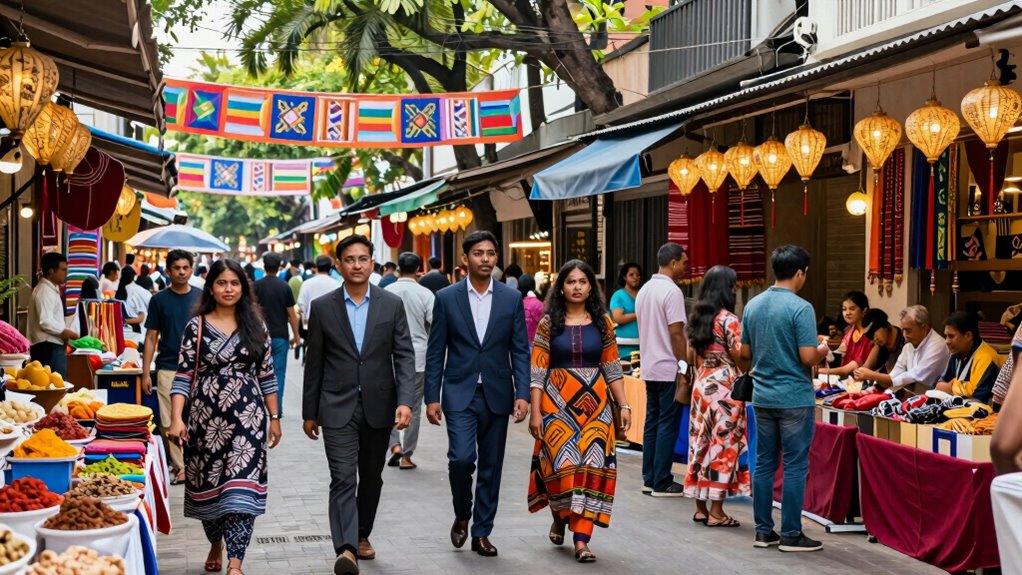

When traveling abroad, observing how locals dress can help you gauge what’s appropriate in each setting. Pay attention to cultural symbols, colors, and the way people accessorize. Notice the attire at religious sites, formal events, or casual outings to understand expectations. Trust your instincts and adapt quickly if something feels off. Staying aware and respectful makes a big difference. If you keep exploring, you’ll discover even more tips to navigate dress norms confidently.
Key Takeaways
- Observe local dress habits and cues in different settings to gauge appropriate attire effortlessly.
- Pay attention to colors, accessories, and styles that indicate formality or casualness.
- Research cultural and religious dress norms beforehand for better understanding and respect.
- Use environmental cues and social context to adapt your outfit without overthinking.
- Trust your instincts and keep outfits simple, respectful, and adaptable to avoid dressing incorrectly.
What Are Cultural Dress Norms Around the World?
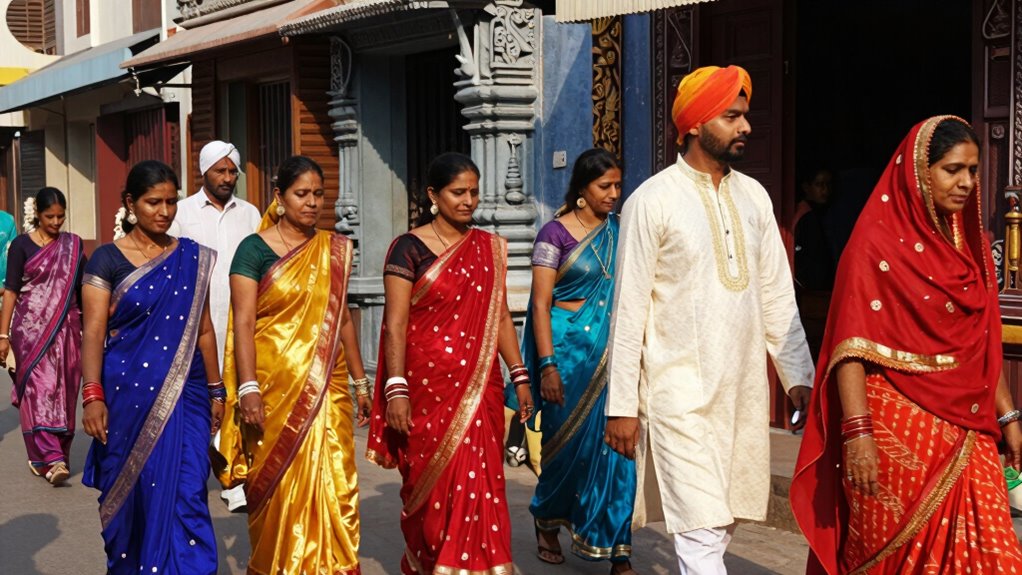
Cultural dress norms vary widely around the world, reflecting each society’s history, beliefs, and values. You’ll notice that traditional garments often serve as symbols of identity and pride, showcasing unique craftsmanship and cultural stories. Understanding dress etiquettes is essential, as some cultures expect modesty or specific attire in religious or formal settings. For example, in some countries, covering shoulders or wearing certain colors is a sign of respect, while in others, casual dress is acceptable everywhere. By observing these norms and respecting traditional garments, you show appreciation for local customs. Keep in mind that what’s considered appropriate can differ greatly, so paying attention to how locals dress helps you blend in and avoid unintentional offenses. Recognizing cultural dress norms can also open doors to deeper connections and respectful interactions during your travels.
How to Spot Appropriate Dress in Any Setting
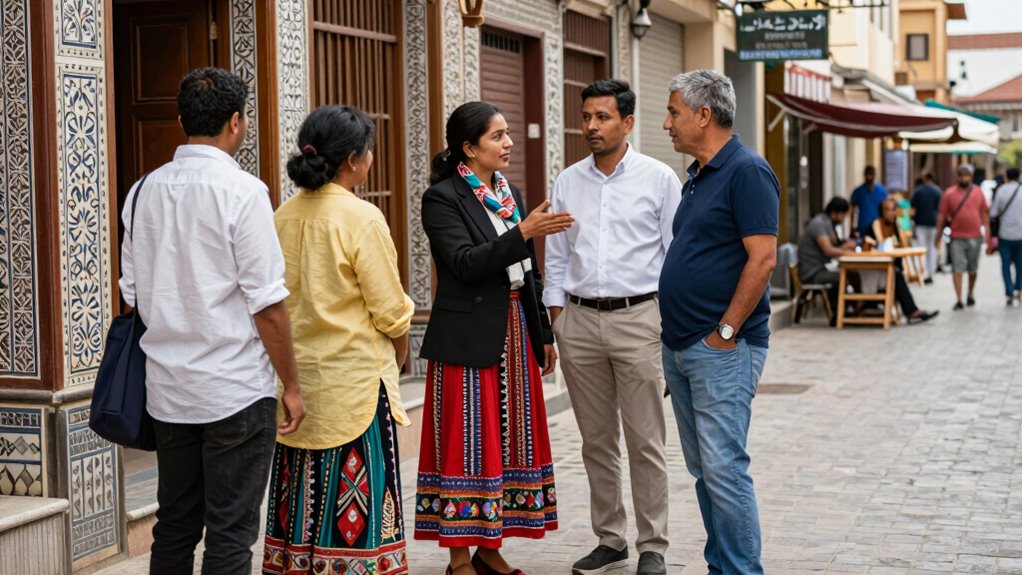
Understanding what to wear in any setting requires paying close attention to your environment and the people around you. Look for cues in cultural symbolism, which can reveal accepted dress norms. Notice how locals dress, including their choice of dress color, as it often signals respect, mood, or social status. For example, subdued tones might be appropriate in conservative environments, while brighter colors could suit festive occasions. Observe if others wear accessories or specific styles that align with the setting’s tone. Pay attention to details like whether people are dressed casually or more formally. These visual clues help you gauge the level of formality and appropriateness. Additionally, being aware of regional flavors can inform your understanding of long-term planning and the importance of respecting local customs in your attire choices. Recognizing the influence of cultural symbols can further deepen your awareness of appropriate dress, helping you blend seamlessly into new environments. Consulting with local architectural influences or styles can sometimes provide subtle hints about regional preferences and social expectations. Moreover, understanding local fashion trends can offer additional guidance on what is considered stylish and suitable in the area. By tuning into these subtle signals, you can confidently choose attire that respects local customs without overthinking every detail.
Tips for Dressing Respectfully at Formal and Religious Events
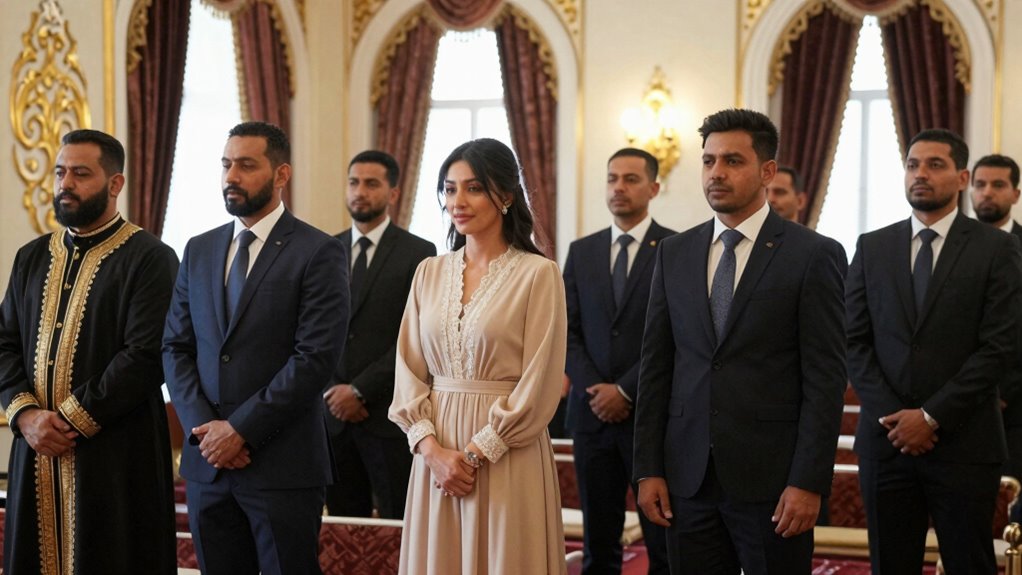
When attending formal or religious events, dressing appropriately shows respect for the occasion and the people involved. To do this, consider the cultural symbolism behind clothing choices—what certain colors or styles represent in that community. Wearing traditional attire can honor local customs and demonstrate your respect. If traditional dress is expected, opt for garments that align with the cultural context, ensuring they are modest and appropriate. Avoid revealing or casual clothing that might be seen as disrespectful. It’s also helpful to research specific dress codes or guidelines beforehand, especially for religious ceremonies. Recognizing how cultural symbolism influences clothing choices can help you make more informed decisions. Understanding dress code expectations can prevent misunderstandings and show your genuine respect. By paying attention to cultural symbolism and choosing traditional attire when suitable, you show genuine respect and foster positive interactions during these meaningful events. Additionally, being aware of appropriate accessories and grooming can further demonstrate your attentiveness to cultural norms. Being mindful of local customs also helps you navigate different social settings more comfortably.
How to Tell Casual From Respectful Attire in Different Cultures
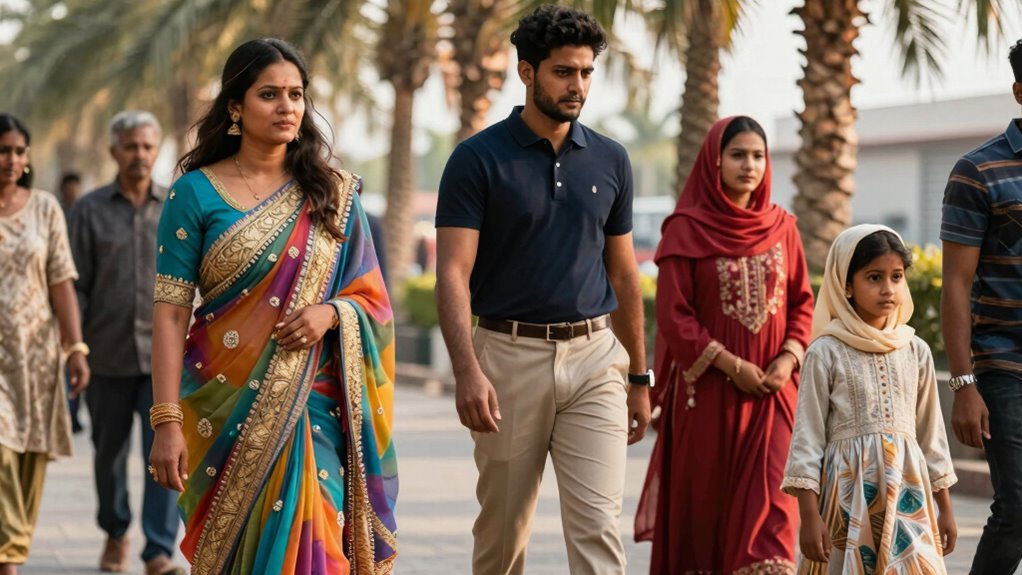
To distinguish casual from respectful attire in different cultures, pay close attention to local norms and social cues. Cultural symbolism plays a key role in how clothing is interpreted; what’s considered relaxed in one place might be seen as disrespectful elsewhere. Dress symbolism varies, so observe how locals dress for everyday activities and social interactions. For example, simple, well-fitted clothing often signals respect, while overly casual or revealing outfits can be seen as inappropriate. Notice body language, accessories, and grooming, as these also communicate cultural expectations. When unsure, lean toward modest, neat attire to avoid misreading the room. By observing how others dress and understanding the Cultural symbolism behind clothing choices, you’ll navigate respectful attire with confidence and sensitivity. Additionally, being aware of dress codes helps demonstrate your respect for local customs and social harmony. Recognizing the significance of local fashion norms can further enhance your understanding of appropriate dress. Moreover, understanding the concept of unspoken rules in dress can prevent unintended disrespect and foster positive interactions. Familiarizing yourself with these cultural cues will help you adapt your wardrobe choices seamlessly.
What to Pack for International Travel: Dress Tips to Know
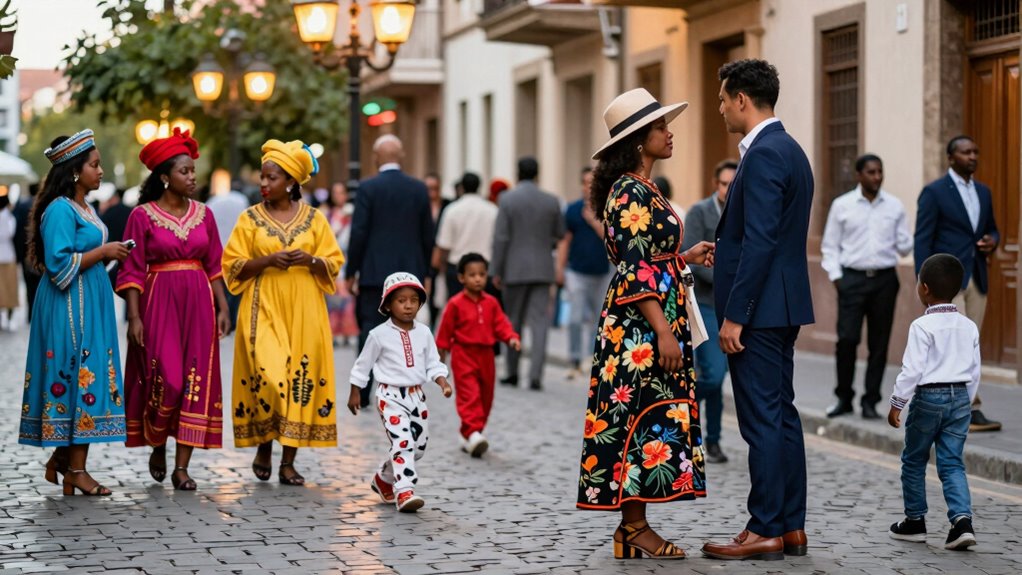
Packing appropriately for international travel involves more than just choosing stylish outfits; it’s about selecting clothing that respects local customs and suits various situations. To avoid fashion faux pas, include wardrobe essentials like versatile tops, modest bottoms, and a lightweight scarf or jacket. Think about layering options for unpredictable weather and different settings, from casual sightseeing to formal dinners. Stick to neutral colors that are easy to mix and match, helping you pack light and avoid overpacking. Avoid bold patterns or revealing clothing that might offend or attract unwanted attention. Remember, dressing thoughtfully shows respect for local culture and helps you blend in comfortably. Additionally, being aware of cultural sensitivities related to clothing can prevent misunderstandings and ensure respectful interactions. Incorporating appropriate water attire, such as modest swimwear or cover-ups, can be essential when visiting water parks or engaging in aquatic activities abroad. Understanding local dress codes can also help you navigate social situations more smoothly. Being mindful of cultural dress expectations can further enhance your travel experience and foster positive connections. For example, choosing clothing that aligns with local conservative standards demonstrates respect and consideration. By packing smartly, you’ll sidestep cultural missteps and enjoy your trip with confidence.
Common Mistakes That Can Offend Locals Without Realizing

Many travelers unknowingly offend locals by making simple wardrobe choices that clash with cultural norms. Ignoring cultural sensitivity can lead to uncomfortable situations or even insults. For example, wearing revealing clothing in conservative countries or neglecting to cover shoulders might be seen as disrespectful. These fashion faux pas can be unintentional but still cause offense. To avoid this, research local dress customs beforehand and observe how locals dress in public spaces. Small adjustments, like covering knees or avoiding flashy accessories, show respect and awareness. Additionally, understanding traditional clothing styles, such as cultural dress norms, can help travelers blend in more seamlessly. Recognizing the importance of cultural attire can further demonstrate your respect for local traditions. Being mindful of these simple yet vital details helps you avoid offending others and makes your experience abroad more respectful and enriching. Paying attention to cultural dress codes can prevent misunderstandings and foster positive interactions with locals. Moreover, understanding the significance of local fashion customs can deepen your appreciation of the culture and enhance your travel experience. Being aware of clothing etiquette in different regions ensures you remain respectful in diverse social settings.
How to Adjust Your Outfit on the Spot Using Context Clues
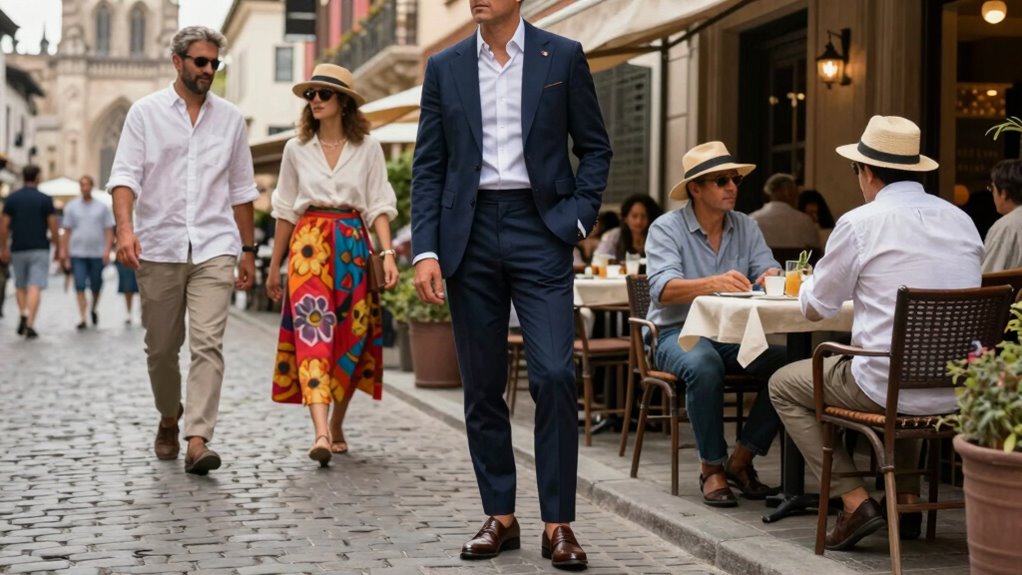
When you arrive at a new destination, start by observing local attire trends to get a sense of what’s appropriate. Pay attention to the environment and setting—what people wear to cafes versus religious sites can differ markedly. Additionally, noticing the use of natural light and cozy spaces can give subtle cues about the local aesthetic preferences and cultural values. Recognizing cultural dress norms can help you avoid unintended offense and make your experience more enjoyable. Being aware of media literacy and how local media portray fashion can further refine your understanding of appropriate attire. Educating yourself about regulatory oversight and how it influences local fashion standards can provide deeper context for dressing appropriately. Finally, mirror locals’ clothing choices to blend in comfortably and show respect for the culture. Being mindful of cultural dress norms can help you avoid unintended offense and make your experience more enjoyable.
Observe Local Attire Trends
By paying close attention to how locals dress, you can quickly adapt your outfit to fit the cultural context. Notice the traditional accessories they wear, such as jewelry or head coverings, which often hold cultural significance. These details can guide you in choosing appropriate attire and accessories that blend in seamlessly. Also, observe the color symbolism prevalent in the area—some cultures associate specific colors with respect, celebration, or mourning. Incorporating these subtle cues helps you avoid standing out in a negative way and shows respect for local customs. Keep your outfit simple but respectful, and consider matching your accessories or colors to local trends. Small adjustments based on these observations can make you feel more comfortable and confident while respecting the cultural vibe.
Note Environment and Setting
Pay attention to your surroundings and the specific environment you’re in, as these clues can guide you in adjusting your outfit instantly. Different settings carry unique cultural symbolism and dress symbolism that reveal what’s appropriate. For example, a formal dinner may call for more conservative attire, reflecting respect and tradition. If you’re in a religious site, modest clothing aligns with cultural expectations, while a beachside café might invite casual, relaxed dress. Observe local details—such as the way others are dressed or specific cultural cues—to fine-tune your outfit. Recognizing these subtle signals helps you blend seamlessly without overthinking. By staying alert to the environment and setting, you demonstrate respect and adapt effortlessly to varying cultural norms.
Mirror Locals’ Clothing Choices
Observing how locals dress provides immediate clues for adjusting your outfit to fit in seamlessly. Pay attention to whether they wear traditional garments or adhere to specific dress codes, which reveal cultural expectations. For example, in some regions, modest attire signals respect, while casual styles indicate comfort. Use these cues to tweak your clothing instantly, avoiding missteps. Here’s a quick guide:
| Traditional Garments | Dress Codes | Emotional Impact |
|---|---|---|
| Vibrant, embroidered | Formal | Respect and admiration |
| Simple, understated | Casual | Comfort and belonging |
| Colorful accessories | Religious | Connection and reverence |
| Layered clothing | Climate-aware | Preparedness and respect |
| Cultural motifs | Event-specific | Appreciation and trust |
Matching your outfit to local clothing choices shows respect and helps you blend effortlessly into the environment.
Building Confidence to Dress Respectfully Without Overthinking
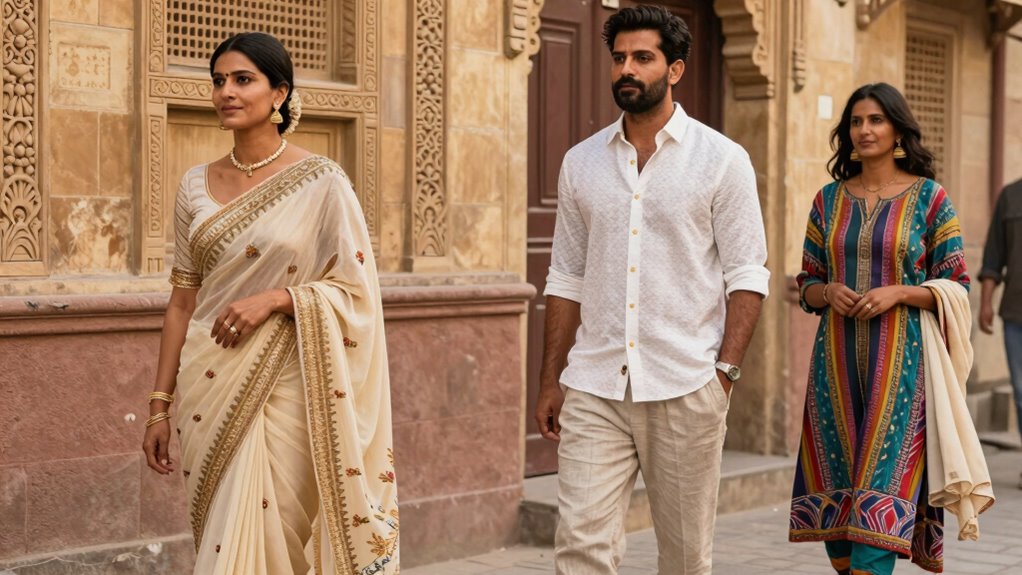
Trust your instincts and focus on observing local attire trends to get a feel for what’s appropriate. Respect cultural norms by choosing outfits that align with the environment, rather than overthinking every detail. When in doubt, your intuition will guide you to dress confidently and respectfully without unnecessary stress.
Observe Local Attire Trends
Understanding local attire trends can help you dress more confidently and respectfully abroad. Pay attention to traditional garments worn during festivals or special events, as they often reflect cultural values. Observe how locals incorporate fashion influences into their everyday wear, such as modern adaptations of traditional styles or popular streetwear. Notice the colors, fabrics, and accessories that are common in different settings, like formal gatherings or casual outings. By doing so, you’ll gain insight into what’s considered appropriate and stylish in the area. This awareness allows you to blend in more naturally without overthinking your choices. Remember, respecting local fashion trends shows appreciation for the culture and helps you feel more comfortable in your surroundings.
Respect Cultural Norms
Even if you’re unsure about what’s appropriate, embracing local norms can boost your confidence and help you dress respectfully. Understanding cultural symbolism and dress symbolism is key to showing respect without overthinking. For example, certain colors or styles may carry specific meanings, like mourning or celebration. By observing how locals dress, you can avoid misunderstandings and demonstrate cultural sensitivity. Keep in mind that modesty and appropriateness often align with local values, so adjusting your attire accordingly shows respect. When in doubt, opt for simple, well-kept clothing that aligns with the general dress standards. Respecting cultural norms through your attire not only helps you blend in but also fosters positive interactions, making your experience abroad more authentic and respectful.
Trust Your Intuition
Learning to trust your intuition can substantially boost your confidence when dressing abroad. When you tune into how you feel in a particular outfit, you become more aware of cultural sensitivities and dress etiquette without second-guessing every choice. If something feels off or out of place, it’s a sign to adjust accordingly. Overthinking can lead to unnecessary stress, but trusting yourself helps you read social cues naturally. Remember, cultural sensitivities vary, and your instinct often guides you better than rigid rules. By paying attention to what feels respectful and appropriate, you develop a more authentic style that respects local norms. Trusting your intuition simplifies dressing abroad, making it a more comfortable, confident experience.
Frequently Asked Questions
How Do I Handle Dress Code Differences in Rural Versus Urban Areas?
When steering through dress code differences in rural versus urban areas, observe local attire and dress expectations closely. In rural spots, opt for modest, practical clothing that blends with the environment, while in urban areas, you can be slightly more expressive but still respectful. Pay attention to what locals wear and adapt accordingly. If unsure, lean towards conservative choices, and you’ll show respect without overthinking the dress code.
Are There Universal Clothing Tips That Apply Across Multiple Cultures?
About 70% of travelers say respecting local customs enhances their experience. When dressing abroad, focus on simple, modest clothing that respects cultural symbolism and fashion etiquette. Avoid flashy or revealing outfits, and opt for neutral colors when unsure. Carry versatile pieces, like scarves or jackets, to adapt quickly. By doing so, you show respect without overthinking, making interactions smoother and more enjoyable across diverse cultures.
How Can I Adapt My Style While Respecting Local Dress Traditions?
To adapt your style while respecting traditional attire and cultural symbolism, start by researching the local customs and dress norms before your trip. Opt for subtle, respectful choices that honor traditional attire, like incorporating accessories or colors meaningful to the culture. Observe locals’ clothing choices and mirror their style when appropriate. This shows respect and helps you blend in, fostering positive interactions without overthinking your outfit decisions.
What Are Subtle Signs That My Outfit Might Be Inappropriate?
Imagine you’re at a local temple, and someone gives you a subtle glance when your shoulders are exposed. That’s a sign your outfit might be inappropriate, hinting at a dress code etiquette concern. Watch for confused or disapproving looks, stiff body language, or others adjusting their clothing. These cues indicate you should be more mindful of fashion sensitivity. Stay observant and adapt quickly to show respect without overthinking.
How Do I Balance Comfort and Cultural Respect When Dressing Abroad?
To balance comfort and cultural respect abroad, you should prioritize understanding local dress etiquette and cultural sensitivities. Opt for clothing that covers shoulders and knees when necessary, and avoid flashy or revealing outfits in conservative settings. Dress comfortably by choosing breathable fabrics, but always adapt to the environment. Observe what locals wear and follow their cues to show respect without sacrificing your comfort, helping you blend in effortlessly.
Conclusion
Mastering dress codes abroad is like dancing to a new rhythm—you’ll find your footing with a little awareness and practice. Trust your instincts, read the room like an open book, and don’t overthink every stitch. When you respect local styles, you’ll wear the language of kindness effortlessly. So, pack your curiosity and confidence—you’re ready to step into any culture’s wardrobe with grace and ease.