
When you’re on the trail, ensuring your water is safe involves choosing between filtering, boiling, or chemical treatments. Filters are quick and effective for removing debris and some pathogens, while boiling kills all germs when brought to a rolling boil for at least one minute. Chemicals like iodine or chlorine tablets are lightweight and good for viruses and bacteria but take time. Your best option depends on your water source and trip needs—keep exploring to learn which method suits you best.
Key Takeaways
- Filters physically remove debris and some microbes but may not eliminate viruses; boiling kills all pathogens effectively.
- Boiling is the most reliable method for ensuring water safety, especially in highly contaminated sources.
- Chemical treatments like iodine tablets are lightweight and effective against bacteria and viruses but require waiting time.
- Combining filtering and chemical treatment offers enhanced protection, especially in murky or suspected contaminated water.
- Consistently follow proper procedures and use the same trusted method throughout your trek to stay safe.
Why Safe Water Matters on the Trail
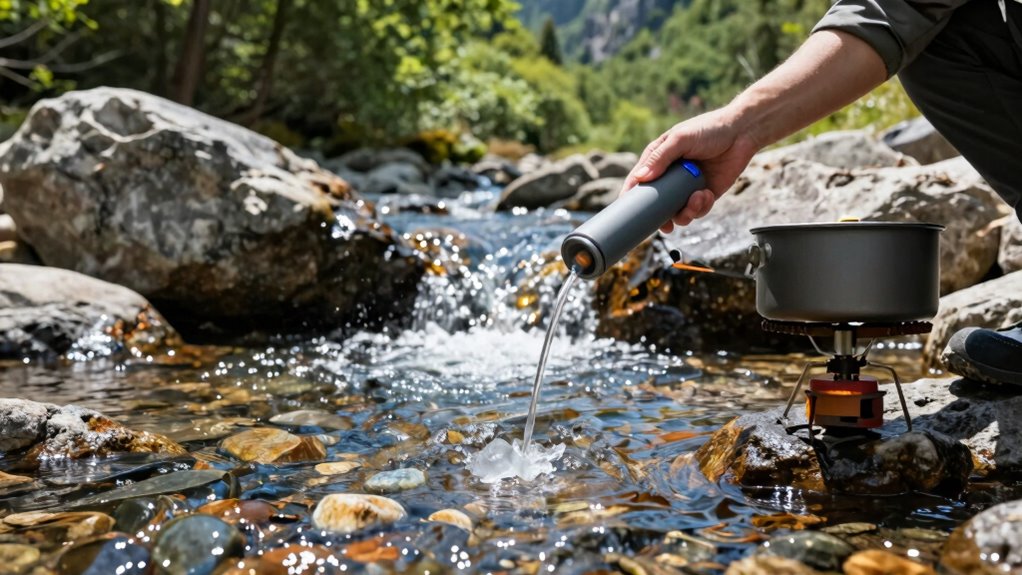
Having access to safe water on the trail is essential for staying healthy and energized. Waterborne pathogens can cause illnesses like giardiasis or cryptosporidiosis, which can ruin your trip and drain your energy. Staying hydrated is vital, but drinking contaminated water puts you at risk. Proper hydration strategies help you maintain your stamina and prevent dehydration, especially during long hikes. Ensuring your water is free from harmful pathogens keeps you safe and healthy. Untreated water might look clean, but invisible germs can cause serious illness. Always use reliable methods to purify water, like boiling or filtering, to protect yourself. Remember, safe water isn’t just about quenching thirst; it’s about safeguarding your health and keeping your adventure on track. Water purification methods are crucial for preventing illness during outdoor activities.
How to Choose the Best Water Purification Method
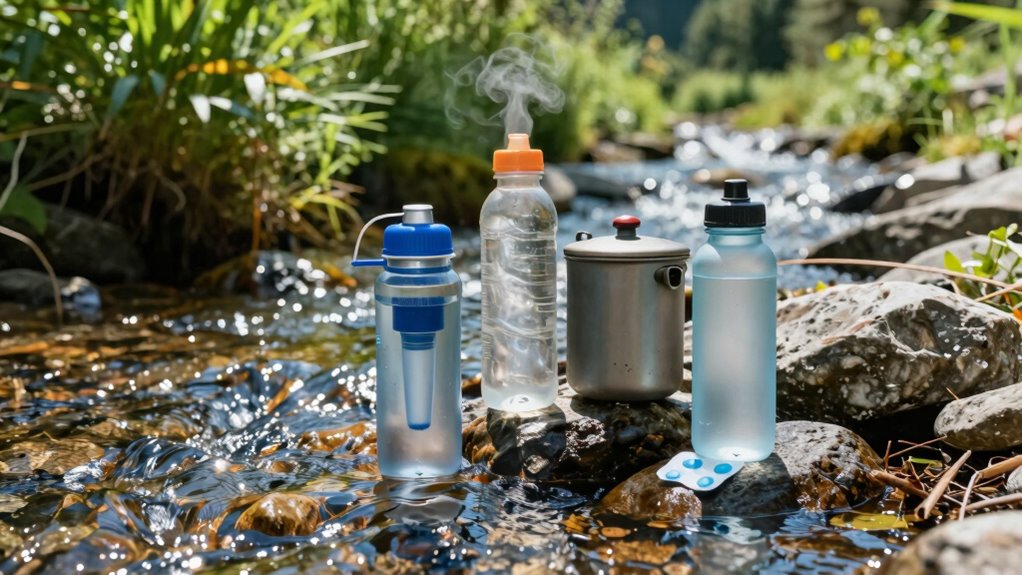
Choosing the best water purification method depends on factors like the type of water source, available equipment, and your specific needs. If you need quick, lightweight options, consider portable filtration systems or chemical purification methods. Portable filtration is great for removing debris and bacteria, making it ideal for stream or river water. Chemical purification, using iodine or chlorine tablets, is lightweight and effective against viruses and bacteria but takes time to work. Consider these factors:
Choose the right water purification method based on source, equipment, and needs for safe, convenient drinking.
- Water clarity and contamination level
- Weight and bulk of gear
- Time available before drinking
Your choice should balance convenience, safety, and the environment. Sometimes, combining methods, like filtering first then chemically purifying, offers the best protection. Make sure to evaluate your trip conditions to pick the most suitable option. Additionally, understanding flywheel and engine upgrades can enhance your vehicle’s performance, ensuring reliable transportation to remote water sources. Being aware of water source contamination can help you choose the safest purification method for your situation. To make informed decisions, it’s helpful to understand the water treatment process and how different methods address specific contaminants. Proper knowledge of natural filtration techniques can also assist in initial water clarification before purification. Recognizing the importance of puppy care essentials can ensure your pet remains healthy and happy during outdoor adventures.
How Water Filters Work
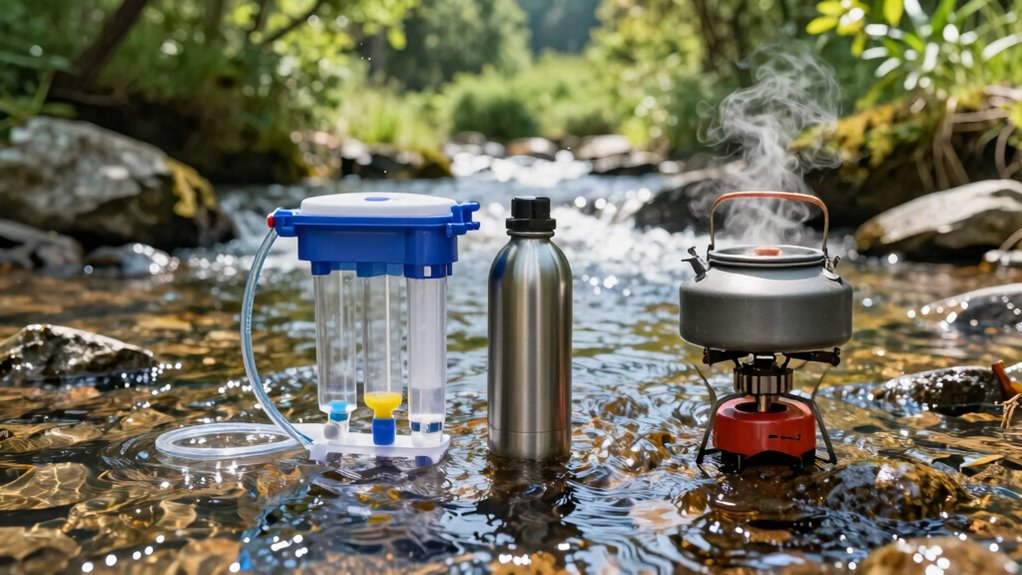
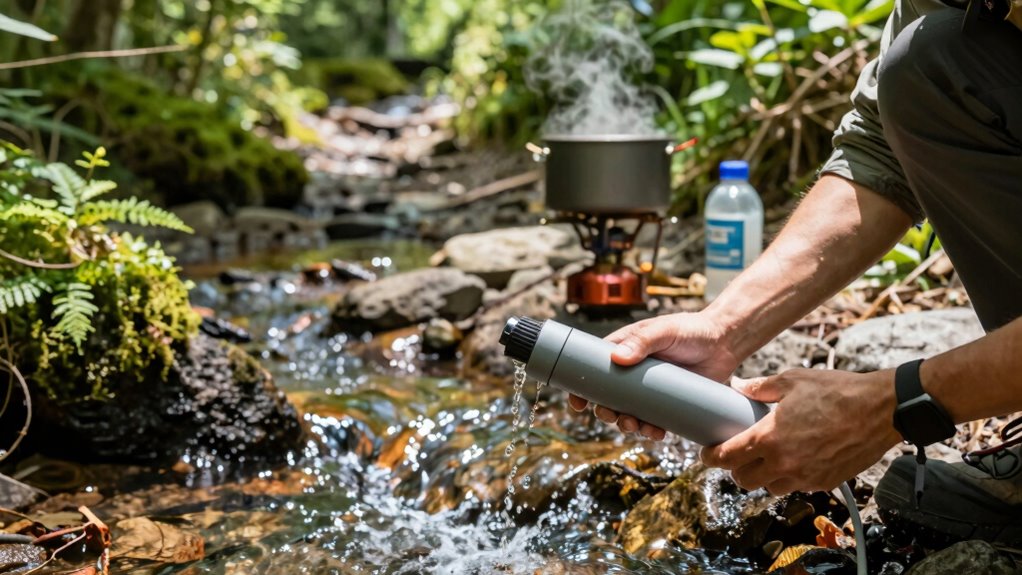
Water filters work by physically removing contaminants from water through a porous medium that traps particles, bacteria, and protozoa. During water filtration, water passes through tiny pores in the filter material, which acts as a barrier to harmful substances. This process effectively targets sediment, dirt, and larger pathogens, ensuring cleaner water for drinking. The filter’s design is vital for contaminant removal, as it needs to block a wide range of impurities without restricting water flow. Some filters also incorporate activated carbon, which improves taste and reduces chemicals. Overall, water filtration provides a straightforward, chemical-free way to make water safer, especially when traveling or camping where water sources might be contaminated. It’s a reliable method for removing many common waterborne hazards. Proper filtration techniques are essential for ensuring safe drinking water in outdoor settings. Additionally, choosing the right archival quality filter can enhance durability and effectiveness over time, especially when considering the filter material used. Regular maintenance and understanding the filter lifespan can further improve water safety and prevent contamination.
When to Use Water Filters
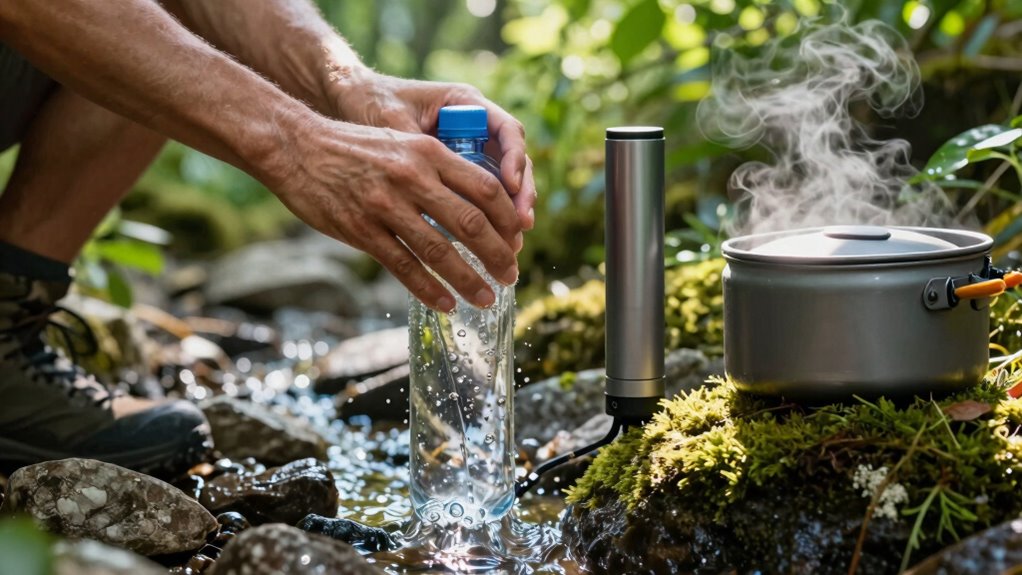
Knowing when to use water filters is essential for ensuring safe drinking water during outdoor activities or emergencies. Use a water filter when you’re in areas with questionable water quality, such as streams, lakes, or rivers. Regular water filter maintenance is key to keeping it effective and prolonging the filter lifespan. Consider filtering water if it looks murky or has debris, as filters can handle sediments better than boiling or chemical treatments. Be aware that overused filters can become clogged, reducing their effectiveness, so replace or clean them as recommended. Additionally, if you’re in a situation where boiling isn’t practical or safe, a filter provides a quick, portable solution. Proper filter maintenance ensures continued safety and efficiency during your outdoor water purification efforts. Understanding the scientific skepticism surrounding some water treatment methods can help you make informed choices about the best approach for your needs. It’s also helpful to recognize that filter effectiveness varies depending on the type of contaminant and filter design, making it important to choose the right tool for your specific situation.
How to Boil Water Safely and Effectively

First, gather your pot, water, and any fuel or fire-starting tools needed. Next, use a proper boiling method—bring the water to a rolling boil for at least one minute (or three minutes at higher altitudes). To ensure thorough sterilization, consider the advanced filtration systems that can complement boiling for added safety. Additionally, using a wood stove can provide a reliable heat source in outdoor settings, making the boiling process more efficient. Finally, verify the water has boiled thoroughly before using it to guarantee safety. Always verify the boiling process is complete to ensure water safety and effectiveness.
Gather Necessary Equipment
To boil water safely and effectively on the trail, you need to gather the right equipment. Proper hydration planning starts with having reliable tools and knowing how to maintain them. Essential gear includes a sturdy pot or kettle, a heat source like a camping stove or fire, and heat-resistant gloves for safety. Make sure your pot has a lid to speed up boiling and conserve fuel. Keep your equipment clean and well-maintained to prevent contamination. Additionally, understanding home theatre projector technologies can help you select the right equipment for optimal performance.
Use Correct Boiling Method
When boiling water on the trail, ensuring it reaches a rolling boil is essential for safety. A rolling boil guarantees the water reaches the necessary temperature to kill harmful pathogens. To maintain boiling safety, keep your heat steady and avoid over-pouring or splashing. Use a reliable stove or fire, and monitor water temperature closely. Once bubbles rise rapidly and continuously, you’ve achieved a proper boil. Don’t rely on a simmer or small bubbles, as they don’t reach the safe temperature needed for purification. Keep the water boiling for at least one minute (or three minutes at higher altitudes) to ensure safety. Proper technique prevents under-boiling, which could leave germs alive, and ensures your water is safe to drink.
Confirm Water Is Boiled
Ensuring your water is truly boiled is essential for safe drinking, especially after it has reached a rolling boil. Verifying the water has boiled helps guarantee the boiling process has effectively killed harmful pathogens, improving water safety. To do this:
- Wait at least one minute after the water reaches a rolling boil.
- For altitudes above 6,500 feet, boil for three minutes.
- Watch for consistent bubbling and steam, indicating the water is at a full boil.
- Proper boiling techniques play a crucial role in ensuring water safety.
These steps ensure you’ve completed the boiling process correctly. Remember, simply bringing water close to a boil isn’t enough—active boiling is key. Confirming your water is properly boiled prevents illness and ensures safe hydration during your trip. Always double-check your boiling process for maximum water safety.
Types of Chemical Water Treatments and How to Use Them
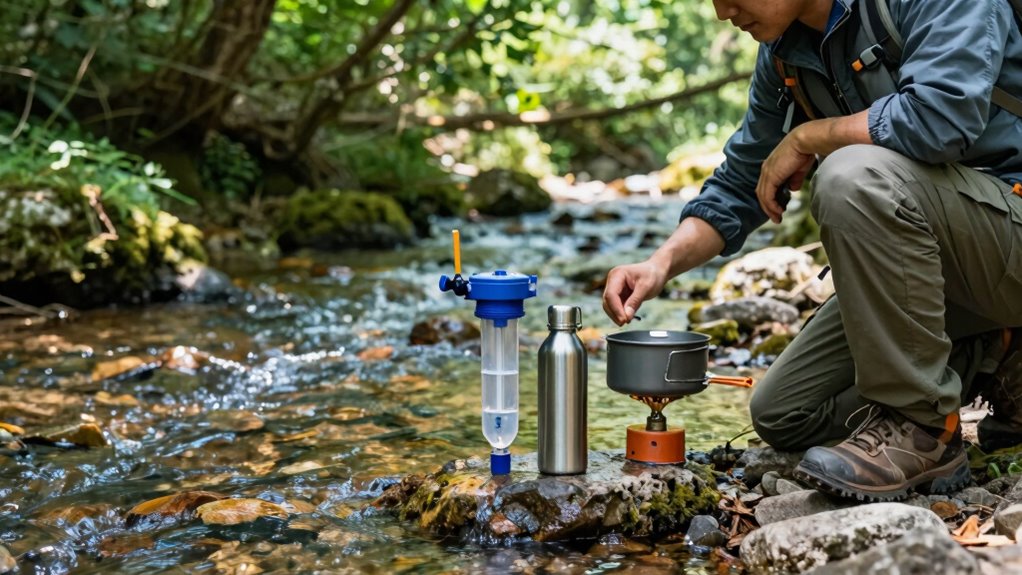
Chemical water treatments are a popular choice for hikers who need quick and reliable purification. You can use chemical tablets or iodine drops to make water safe. Chemical tablets are small, easy to carry, and dissolve quickly in water, killing bacteria and viruses. Simply drop one tablet into a clean container, wait the recommended time, then drink. Iodine drops work similarly; add the specified amount to your water and wait about 30 minutes before drinking. Both options are effective and convenient, especially when you’re in a hurry or don’t have access to other purification methods. Be sure to follow the instructions on the packaging for proper dosage and wait times to ensure your water is safe to consume. Additionally, it’s important to consider the filter maintenance of your purification system to keep it functioning effectively over time. Regularly inspecting and cleaning your chemical treatment supplies can help prevent contamination and ensure optimal performance, much like maintaining support breakfast options to enhance your overall experience. Proper storage of chemical water treatments is also essential to prevent degradation and ensure readiness when needed.
Which Water Purification Method Is Best for You?

Choosing the right water purification method depends on your water source, how easy and portable it is, and its ability to remove contaminants. You need to contemplate which approach fits your trip’s duration and environment. By weighing these factors, you can select the most effective solution for your needs. Additionally, considering top creative and gaming gear for pro users can help you stay connected and entertained during your outdoor adventures. Being aware of personal finance planning strategies can also assist in budgeting for essential gear and supplies before your trip. It’s also beneficial to understand the local environmental considerations, such as water quality and wildlife protection, to choose the safest purification method. Recognizing water source safety is crucial in determining the most suitable treatment technique for your journey, especially in areas with contaminated water sources that require more rigorous purification.
Water Source Considerations
When selecting a water purification method, your water source plays an essential role in determining the best option. Different sources have varying contamination risks that affect your choice. For example, clear mountain streams are less likely to harbor pathogens but still risk protozoa like Giardia. Lake or pond water often contains higher contamination, including bacteria and viruses. Wells may be safer but aren’t always guaranteed clean. Consider these factors: Traditional Indonesian masks can also serve as cultural artifacts that reflect the authenticity of your environment. Recognizing the contamination risks associated with each water source helps you decide whether filtration, boiling, or chemical treatment is most effective. Additionally, understanding the smart water management techniques used in modern systems can inform more efficient treatment choices. Flow rate: Fast-moving water is less likely to be contaminated than stagnant sources. Visibility: Murky or sediment-filled water may require filtration before treatment. Source type: Surface water, groundwater, or rainwater each have distinct contamination risks.
Ease of Use and Portability
Selecting a water purification method that matches your needs depends heavily on how easy it is to use and how portable it is. If you prioritize portable convenience, opt for lightweight, compact options that won’t weigh you down. Many user friendly methods, like water filters or tablets, are simple to operate and require minimal setup. Filter bottles are great because they combine filtering and drinking in one device, making them highly convenient. Boiling, while effective, demands a heat source and time, which may reduce portability in some situations. Water treatment tablets are small and easy to carry, offering a quick solution. Ultimately, choosing a method with high portability and user friendly features makes your water purification process smoother and more manageable on the trail.
Effectiveness Against Contaminants
Different water purification methods vary substantially in how well they remove or kill different types of contaminants. Some methods excel at eliminating biological hazards like bacteria and viruses, while others are better at removing chemical contaminants such as pesticides or heavy metals. For example, boiling kills most biological hazards effectively but doesn’t remove chemicals. Filtration systems can target biological hazards and some chemicals, depending on pore size and filter material. Chemical treatments, like iodine or chlorination, are quick and effective against viruses and bacteria but may not remove chemicals or parasites. Consider these points:
- Boiling kills biological hazards but not chemicals.
- Filters with small pore sizes can remove bacteria and protozoa.
- Chemical treatments are effective against biological hazards but less so for chemicals.
Choose your method based on the contaminants you’re most likely to encounter.
Common Mistakes When Purifying Water on the Trail
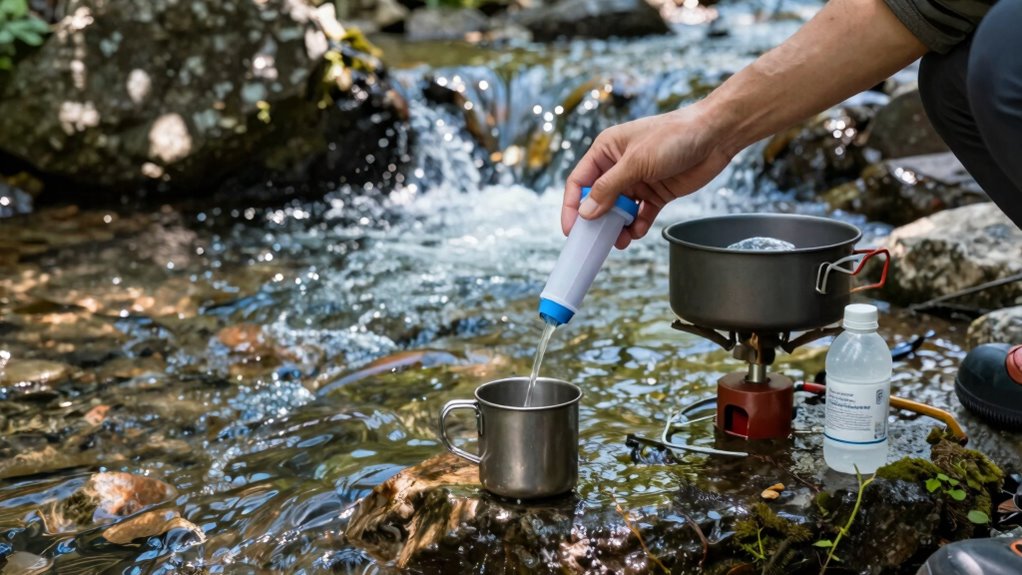
Have you ever thought you’re all set after just boiling water briefly? Many hikers assume boiling instantly makes water safe, but rushing the process can leave harmful microbes behind. It’s a common mistake that compromises your hydration tracking and backpack hydration efforts, especially if you don’t verify the water’s cleanliness. Another mistake is neglecting to use proper containers or clean equipment, which can reintroduce contaminants. Additionally, some people forget to let the boiled water cool before drinking, risking burns or discomfort. Failing to follow recommended purification steps or skipping steps altogether might seem like saving time, but it puts you at risk. Always double-check your process to ensure your water is safe to hydrate with, so you stay healthy and energized on the trail.
Final Tips for Safe and Easy Water Treatment
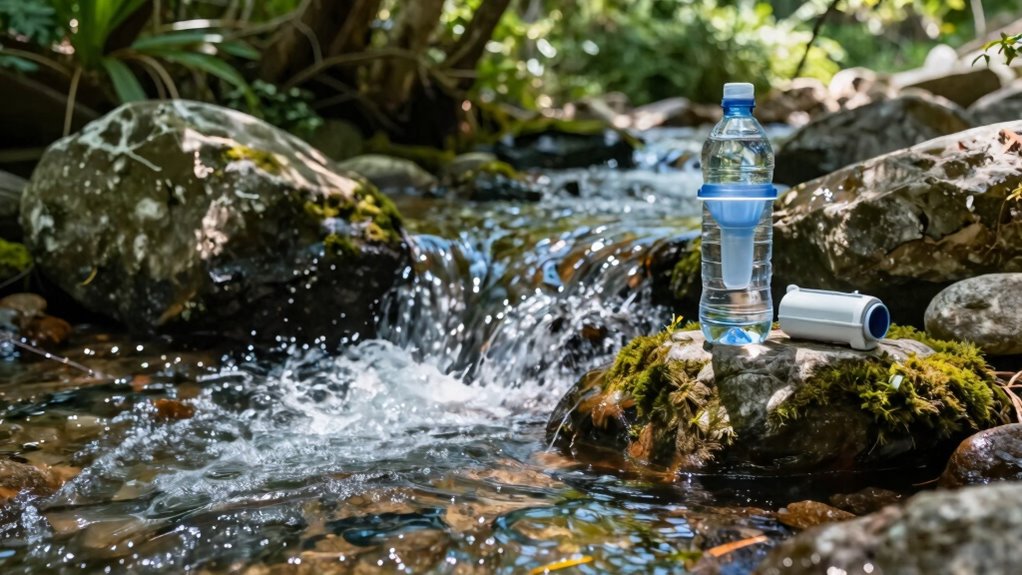
To guarantee your water is safe and easy to treat on the trail, always follow a reliable purification method consistently. This guarantees water safety and supports steady trail hydration. Before you start, double-check that your equipment works properly and is clean. Keep your water source protected from animals and contaminants to minimize risks. Remember, using a reliable filter, boiling, or chemical treatment each time keeps your water safe.
- Carry spare filters or purification tablets in case your primary method fails
- Store water in clean, covered containers to prevent recontamination
- Stay vigilant about water source conditions and treat every sip
Sticking to these final tips makes water treatment straightforward, safe, and effective—so you stay well-hydrated and healthy on your trek.
Frequently Asked Questions
Can I Combine Different Water Purification Methods for Better Safety?
Yes, you can combine different water purification methods for better safety enhancement. Using a method combination, like filtering water first and then boiling it, helps remove a wider range of contaminants, including bacteria, protozoa, and viruses. This layered approach adds extra security, especially in uncertain water sources. Just ensure you follow proper procedures for each method, and you’ll greatly improve your water safety on the trail.
How Long Does Chemical Treatment Last Before Water Becomes Unsafe Again?
Like a ticking clock, chemical treatment’s effectiveness diminishes over time. Typically, once you add chemicals, water remains safe for about 4 to 6 hours, but this depends on factors like temperature and water quality. After this period, chemical stability wanes, and treatment expiration occurs, risking recontamination. To stay safe, follow the manufacturer’s guidelines and don’t rely on chemicals beyond their recommended shelf life, especially in warm conditions.
Are There Water Purification Methods Suitable for Very Cold Environments?
In very cold environments, you should use insulated containers to prevent water from freezing and employ freezing techniques like keeping water close to your body or in insulated bottles. Boiling water might be less effective if it freezes quickly, so chemical treatments or portable filters are better options. Always store water in insulated containers and use proper freezing techniques to keep your purification methods reliable in freezing temperatures.
What Are the Environmental Impacts of Chemical Water Treatments?
They say “you are what you eat,” but it also applies to water treatment. Chemical treatments can cause environmental impacts like chemical pollution and ecosystem disruption if not used responsibly. You might think they’re convenient, but they can harm aquatic life and contaminate water sources over time. Always weigh these risks against benefits and consider eco-friendly options, because protecting nature ensures you’ll always have clean water on your trail.
How Do I Store Purified Water for Extended Backpacking Trips?
You should store purified water in clean, airtight purification containers designed for backpacking. Fill them carefully after purification, ensuring no contamination, and keep them sealed tightly. Use lightweight, durable bottles or collapsible containers to save space and prevent leaks. When you’re on the trail, store water in a cool, shaded spot to maintain quality. Regularly clean your storage containers to avoid bacterial growth and keep your water safe for extended trips.
Conclusion
Now that you know your options, the choice is yours. Will you rely on filters, boiling, or chemical treatments? Each method has its strengths—and risks. The key is understanding when and how to use them correctly. Stay vigilant out there, because one small mistake could turn your hike into a health nightmare. Ready to conquer the trail with confidence? The next step could make all the difference—are you prepared to choose wisely?