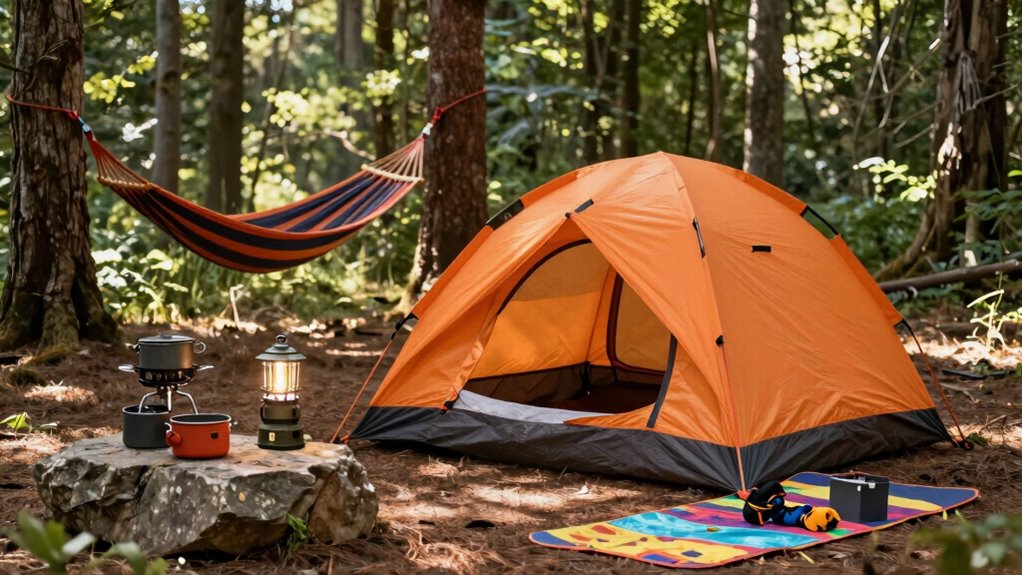

To prevent a miserable night, pick a flat, well-drained spot away from hazards and wildlife, and clear debris before pitching your tent. Secure your gear tightly with stakes, guy lines, and waterproof materials to stay stable and dry. Set up your tent properly, double-check it for stability, and create a cozy environment with appropriate sleeping gear. Keeping an eye on weather updates and testing everything beforehand will help you stay comfortable and safe all night long.
Key Takeaways
- Choose a flat, well-drained site free of hazards and windbreaks for safety and comfort.
- Properly secure and stake your tent at a 45-degree angle, tightening all guylines and ensuring stability.
- Organize gear efficiently with easy access, waterproof materials, and secure storage to prevent delays and damage.
- Select a level, debris-free area, monitor weather forecasts, and adapt setup for protection against storms and temperature drops.
- Test waterproofing, set up sleeping gear comfortably, and pack everything to ensure a dry, cozy, and restful night.
Choose a Safe, Comfortable Campsite Location
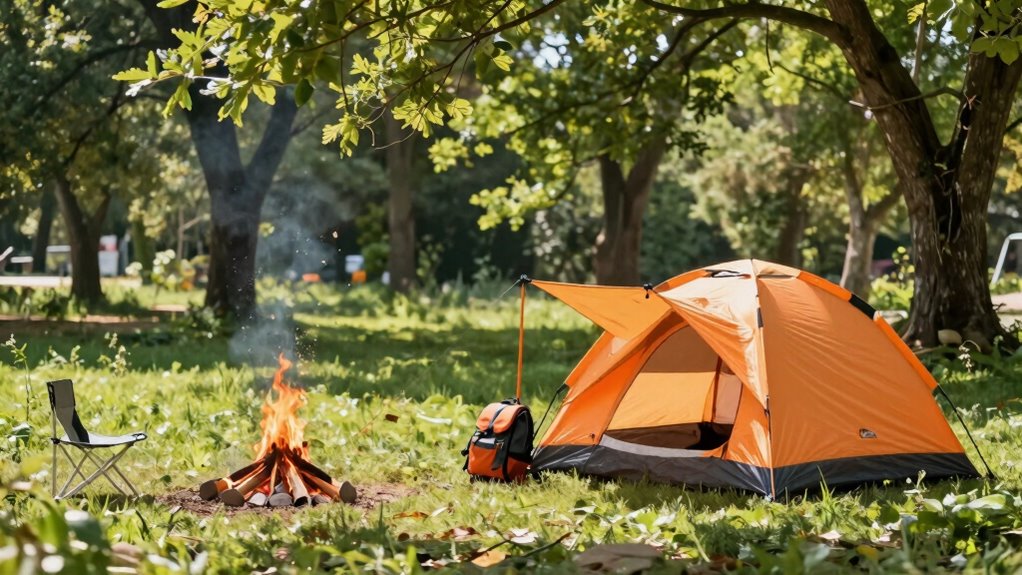
When choosing a campsite, safety and comfort should be your top priorities. Consider wildlife awareness; avoid areas near animal trails or water sources that attract wildlife. Look for a spot with good visibility to spot potential hazards early. Campsite proximity to amenities like water sources or restrooms can make your stay more comfortable, but don’t set up too close to them—this can attract wildlife and cause disturbances. Select a flat area free of rocks, roots, and low-hanging branches for a safe sleeping surface. Keep clear of dense bushes or thick undergrowth, which may harbor insects or animals. Trust your instincts and scout the area thoroughly before settling in. A well-chosen site enhances safety and makes your camping experience more enjoyable. Additionally, site selection plays a crucial role in preventing unwanted noise and disturbances, ensuring a more restful night. Proper site assessment can help identify hidden hazards and improve overall safety during your stay. Being aware of wildlife behavior can further help you avoid potential dangers during your camping trip. Knowing the local safety tips can significantly reduce risks and improve your overall experience.
Pack and Secure Your Gear for a Smooth Setup

To set up camp smoothly, you need to pack your gear efficiently so everything is easy to find. Secure your items properly to prevent damage or loss during transit and setup. Using the right securing techniques makes your campsite safer and helps you get everything ready faster. Additionally, consider incorporating Free Floating elements into your setup to ensure flexibility and ease of adjustments during your campsite arrangement. Properly gear organization can also contribute to a more enjoyable and stress-free camping experience. Incorporating performance parts such as adjustable straps or modular storage solutions can further optimize your campsite setup for quick adjustments and reliable security. Paying attention to waterproofing your gear is also crucial to prevent water damage and keep your equipment dry in unpredictable weather. Incorporating water-resistant materials in your gear can provide an extra layer of protection against unexpected rain or dew.
Organize Your Equipment Efficiently
Getting your gear organized before heading out can make the entire camping trip much smoother. Good gear organization boosts packing efficiency and saves time on setup. To stay on track:
- Group items by category—clothing, cooking gear, tools, and sleeping supplies.
- Use labeled containers or bags to keep everything visible and accessible.
- Pack heavier items at the bottom of your bag for stability.
- Keep frequently used items near the top for easy retrieval.
- Incorporate smart storage solutions that utilize modular organization to ensure your setup is both efficient and ready for any situation.
Use Proper Securing Techniques
Proper securing techniques guarantee your gear stays in place during transit and setup, preventing damage and frustration. Start by identifying strong anchor points on your vehicle or tent, such as hooks, loops, or designated tie-down spots. Use reliable tie down techniques like knots or straps to fasten your gear securely to these points. Make sure to tighten the straps enough to prevent shifting but not so tight that they damage your equipment. Check for stability by giving items a gentle shake; if they move, tighten the straps further. Properly secured gear prevents accidents, reduces noise, and makes your setup smoother. Always double-check connections before starting your journey or pitching your tent, ensuring everything remains safe and steady until you’re ready to relax. Incorporating proper securing techniques with reliable gear and equipment ensures a safer, more enjoyable camping experience. Additionally, understanding regional flavors and insights can enhance your outdoor experience by allowing you to enjoy comforting beverages around the campfire. Paying attention to vehicle protection can also help keep your gear safe from environmental elements during your trip. To further improve your setup, consider the use of sound design principles to organize your camping space more efficiently, ensuring everything is accessible and secure. Proper maintenance and regular gear inspection can extend the lifespan of your equipment and ensure safety during use.
Set Up Your Tent for Stability and Safety
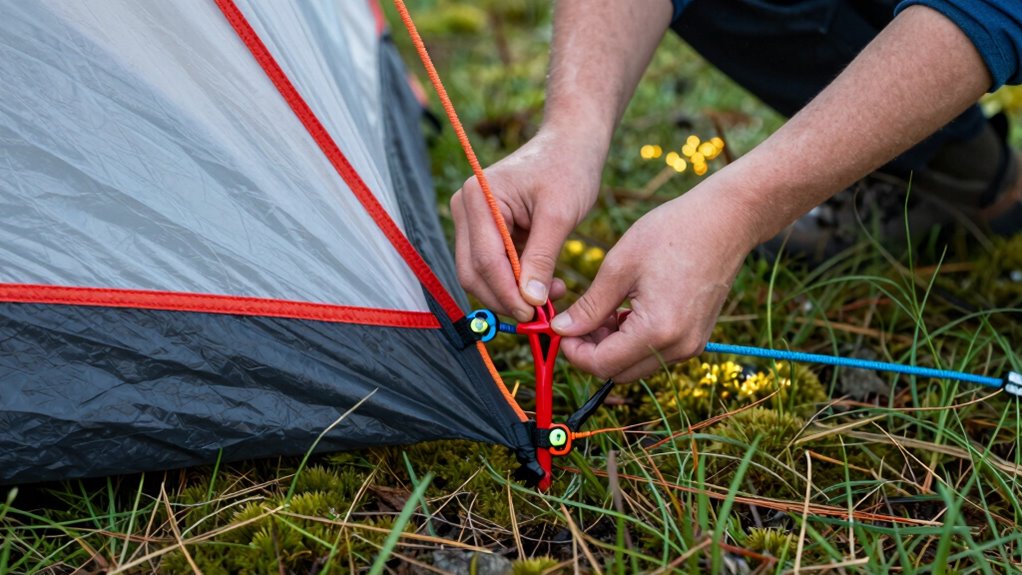
Ensuring your tent is stable and safe starts with choosing a flat, well-drained spot and properly anchoring it to the ground. Good tent anchoring prevents the tent from shifting or collapsing during wind or rain. To achieve this, follow these steps:
Secure your tent on flat, well-drained ground and anchor it firmly for safe, stable camping.
- Secure stakes deeply into the ground, ensuring they hold firmly.
- Attach guy lines tightly to provide extra support.
- Check pole stability by ensuring all poles are correctly assembled and locked.
- Tighten all guylines and tent fabric to maintain structure.
- Inspect your cabling and mounting options to ensure all components are secure and properly installed.
This method keeps your tent grounded and prevents movement. Proper tent anchoring and pole stability are essential for safety, especially in unpredictable weather. Taking these steps ensures a secure, stable shelter for a better camping experience.
Create a Cozy and Safe Campsite Environment

Start by choosing a flat spot for your campsite to keep things comfortable and stable. Make sure your tent is secured properly to prevent it from shifting or blowing away. Using vetted gear and materials can also help ensure safety and durability. Proper tent setup and secure anchoring are essential to withstand weather conditions. To further enhance your safety, consider the weight of your gear, as heavier equipment can provide additional stability during windy nights. Additionally, ensuring your campsite area is free of sharp objects and debris can help prevent injuries and damage to your gear. Being aware of water runoff patterns can also prevent flooding and water pooling around your tent, enhancing comfort and safety. With these steps, you’ll create a cozy and safe environment to enjoy your outdoor adventure.
Choose a Flat Spot
Finding a flat spot is essential for setting up a safe and comfortable campsite. A level surface ensures good ground stability and prevents your gear from sliding or shifting. When selecting your site, consider slope considerations to avoid water runoff and flooding if it rains. Here are some tips:
- Look for areas with minimal slope, ideally less than a 5-degree incline.
- Check the ground for stability—avoid loose soil or rocky patches.
- Ensure good drainage by avoiding low-lying areas prone to water accumulation.
- Opt for a spot with natural windbreaks, like bushes or trees, for added comfort.
- Choosing the right spot can significantly improve your overall camping experience by keeping you dry, safe, and comfortable throughout the night. Additionally, selecting a site with proper ground preparation can help prevent erosion and improve tent stability. Incorporating auditory processing considerations like minimizing exposure to loud or sudden noises can also contribute to a more restful sleep during your camping trip. Paying attention to site selection factors ensures a more enjoyable outdoor experience. Preparing your site with appropriate gear and understanding the environment can further enhance safety and comfort.
Secure Tent Properly
To create a cozy and safe campsite environment, you need to secure your tent properly. Start by tent anchoring it to the ground using secure stakes. Drive each stake into the soil at a 45-degree angle, ensuring they are tight and stable. Proper tent anchoring prevents your tent from shifting or collapsing if the wind picks up. Check that all stakes are firmly in place, especially at the corners and along the guy lines. Tighten the stakes and guy lines as needed to eliminate slack. This step not only keeps your tent steady but also helps maintain a comfortable and secure shelter throughout the night. Using appropriate tent stakes designed for your terrain can make a significant difference in stability. Ensuring your setup is time-efficient helps you focus on enjoying your camping experience instead of troubleshooting issues. Taking the time to secure your tent correctly makes your camping experience safer and more enjoyable.
Arrange Your Sleeping Gear for a Restful Night
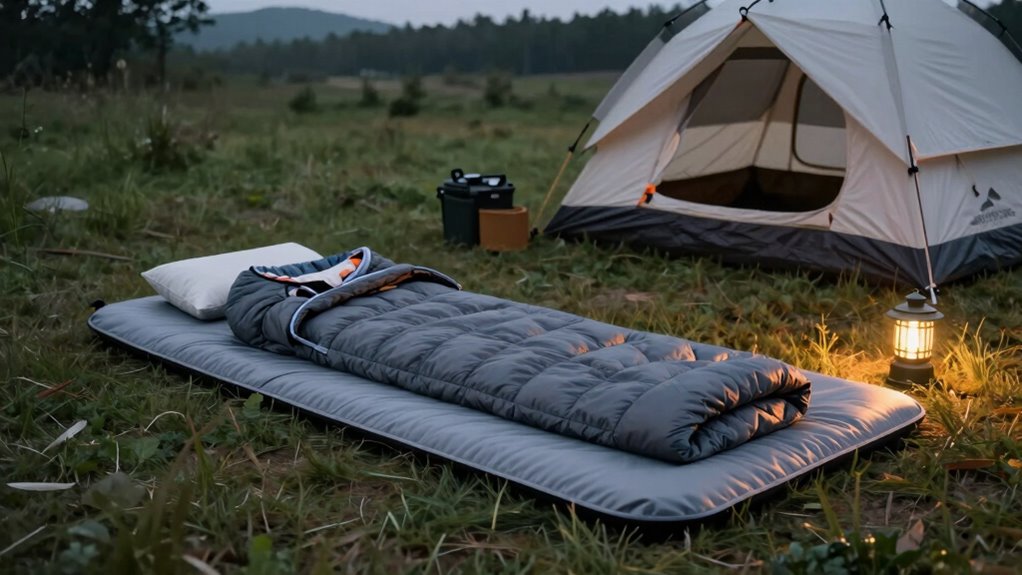
A good night’s sleep begins with properly arranging your sleeping gear, ensuring comfort and support throughout the night. First, choose the right sleeping bag selection for the expected temperatures; a suitable bag keeps you warm without overheating. Second, lay your sleeping pad flat on the ground to provide a stable, cushioned base. Third, position your pillow for pillow comfort—place it at the head of your sleeping bag, adjusting for neck support. Fourth, zip up your sleeping bag completely and make sure it’s snug, preventing drafts and heat loss. By following these steps, you’ll create a cozy, supportive sleeping environment that helps you rest well and wake up refreshed, ready for your next adventure.
Check the Weather and Adjust Your Setup

Since weather conditions can change quickly, it’s vital to check the forecast before settling in for the night. Review the latest weather forecast to spot any approaching storms or sudden drops in temperature. If a storm is predicted, adjust your setup for storm preparedness by securing loose items, closing flaps tightly, and ensuring your tent can handle strong winds. Consider relocating to a more sheltered spot if possible. Being proactive helps you stay safe and comfortable throughout the night. Don’t ignore weather updates or warnings, as they can help you make quick decisions to avoid trouble. Staying alert and adaptable to changing weather is essential for a successful, stress-free camping experience.
Test Your Tent and Gear Before Nightfall
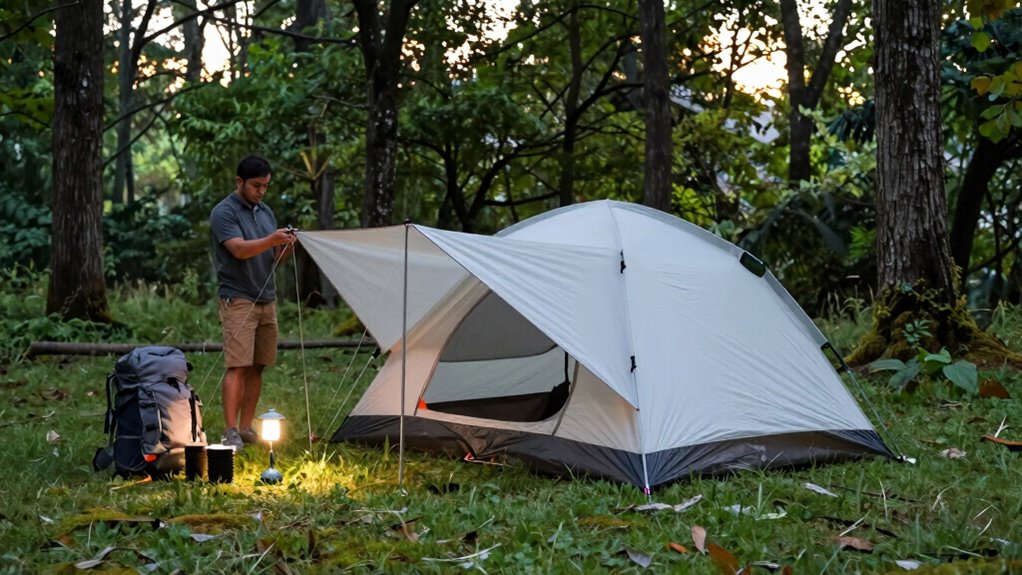
After checking the weather forecast and making any necessary adjustments to your setup, it’s wise to test your tent and gear before nightfall. This ensures everything functions properly and prevents surprises later. First, set up your tent on a flat surface and check the tent waterproofing by pouring a small amount of water on the fabric—look for leaks or drips. Second, test your gear labeling by organizing and labeling essential items so you can find them easily in the dark. Third, assemble your sleeping gear and verify comfort and warmth. Fourth, pack everything back into your bag to confirm all items fit and are accessible. Testing now saves time and stress, ensuring a comfortable, dry night.
Frequently Asked Questions
How Do I Choose the Best Campsite During Peak Season?
When choosing the best campsite during peak season, prioritize spots that follow campground etiquette by respecting quiet hours and designated areas. Check weather considerations to avoid flooding or extreme heat, and look for shaded areas or good drainage. Arrive early to secure a prime site, and consider proximity to amenities without overcrowding. This guarantees a comfortable, enjoyable stay while respecting fellow campers and environmental conditions.
What Tools Are Essential for Quick Tent Setup?
Imagine you’re wielding a Swiss Army knife in the wild—your essential tools for quick tent setup include sturdy tent stakes and a camping hammer. These tools help you secure your tent efficiently, even in tough ground. The stakes keep your tent anchored, while the hammer makes driving them in effortless. With these, you can set up your shelter swiftly, giving you more time to enjoy your adventure without hassle.
How Can I Prevent Condensation Inside My Tent?
To prevent condensation inside your tent, make sure to improve tent ventilation by opening vents or windows whenever possible. Use moisture control techniques like placing a ground tarp to reduce dampness and avoid overpacking, which traps moisture. Keep your tent dry by airing it out during the day, and avoid cooking inside. These steps help maintain airflow and manage moisture, ensuring a comfortable, condensation-free night.
What Are the Best Ways to Keep Insects Away?
To keep insects away, you should use bug sprays containing DEET or natural alternatives like citronella candles around your campsite. These create a barrier that deters mosquitoes and flies. Make sure to apply bug spray on exposed skin and reapply as needed. Light citronella candles in your tent or around your area, which helps keep insects at bay while adding a pleasant scent. Together, these methods considerably reduce insect disturbances.
How Do I Pack Efficiently to Save Space?
You pack efficiently by using packing cubes to organize your clothing and gear, making it easier to fit everything tightly. Opt for lightweight gear to reduce bulk and save space in your backpack. Roll clothes instead of folding to maximize room and prevent wrinkles. Prioritize essentials, leaving non-essentials behind, and place heavier items at the bottom for better weight distribution. This approach keeps your pack compact and easy to carry.
Conclusion
By following these simple steps, you’ll set yourself up for a comfortable night under the stars. Imagine arriving at your perfect campsite, knowing your tent is secure and your sleeping gear is cozy. Like Sarah, who once ignored these tips and ended up shivering all night, you’ll avoid such mishaps and wake up refreshed. Prep well, stay alert, and enjoy a peaceful, enjoyable camping experience that leaves you enthusiastic for the next adventure.