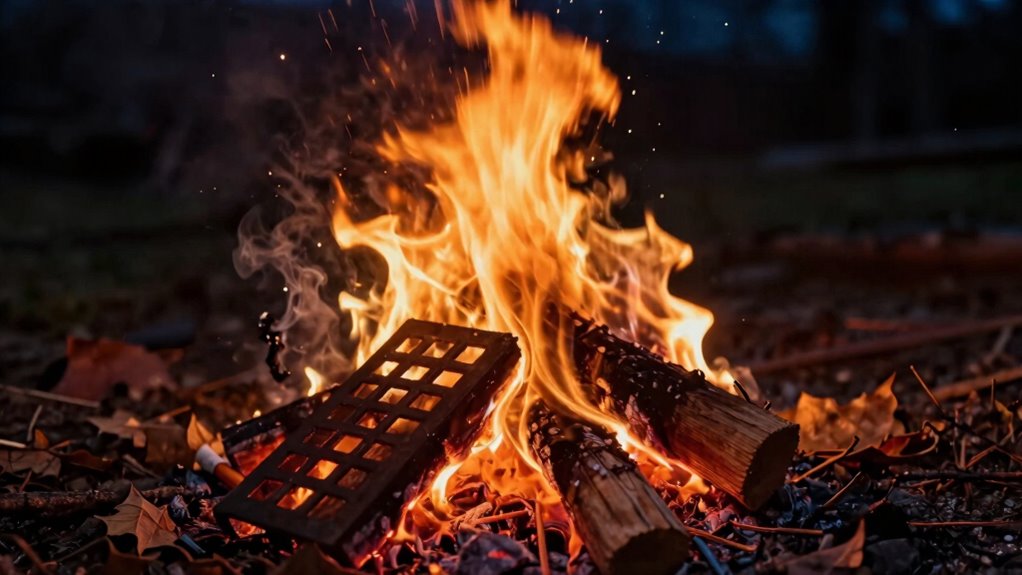

Small mistakes like neglecting to clear the area, choosing an unsafe site, or leaving your fire unattended can turn a peaceful campfire into a dangerous wildfire or injury. Proper site selection, building your fire responsibly, maintaining safe distances, and ensuring full extinguishment are essential steps you might overlook. These errors may seem minor but can have big consequences. Staying vigilant and following safety practices will help you avoid big problems — you’ll find more useful tips below.
Key Takeaways
- Always select a flat, clear site away from overhanging branches and dry vegetation to prevent accidental wildfire spread.
- Maintain a safe distance around the fire, monitor weather conditions, and never leave the fire unattended.
- Use designated fire rings or create fire-resistant barriers with rocks to contain embers and control fire spread.
- Properly extinguish the fire with water, stirring ashes, and ensure no hot spots remain before leaving.
- Keep safety equipment like extinguishers, water, and gloves nearby, and practice safe fire-building and extinguishing techniques.
Why Small Mistakes Can Turn a Campfire Into a Safety Hazard
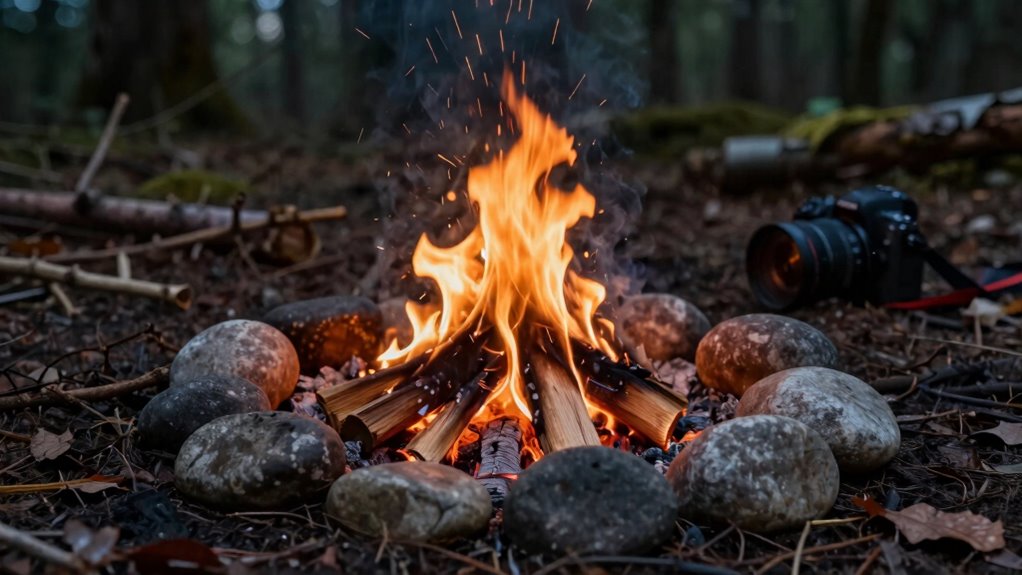
Even small mistakes can quickly turn a harmless campfire into a serious safety hazard. When you neglect basic fire safety, you increase the risk of wildfires, injuries, and property damage. Simple errors, like leaving a fire unattended or not controlling the flames, can lead to unpredictable spread. Failing to clear the area around your fire or using inappropriate materials can ignite nearby brush or structures. These minor oversights compromise risk prevention efforts, making accidents more likely. Being attentive to small details helps you maintain control and ensures safety for everyone. Remember, effective fire safety isn’t just about big precautions; it’s about consistently avoiding small mistakes that can escalate into major problems. Vigilance and careful actions are your best tools for safe camping. Always be aware of fire safety guidelines to minimize risks and protect the environment. Additionally, understanding local fire bans and regulations can prevent unintentional violations that might lead to dangerous situations. Recognizing these fire safety considerations can significantly reduce the likelihood of emergencies during your outdoor activities. Paying attention to preventative measures can help you identify potential hazards before they become serious issues.
How to Choose and Prepare a Safe Campfire Site
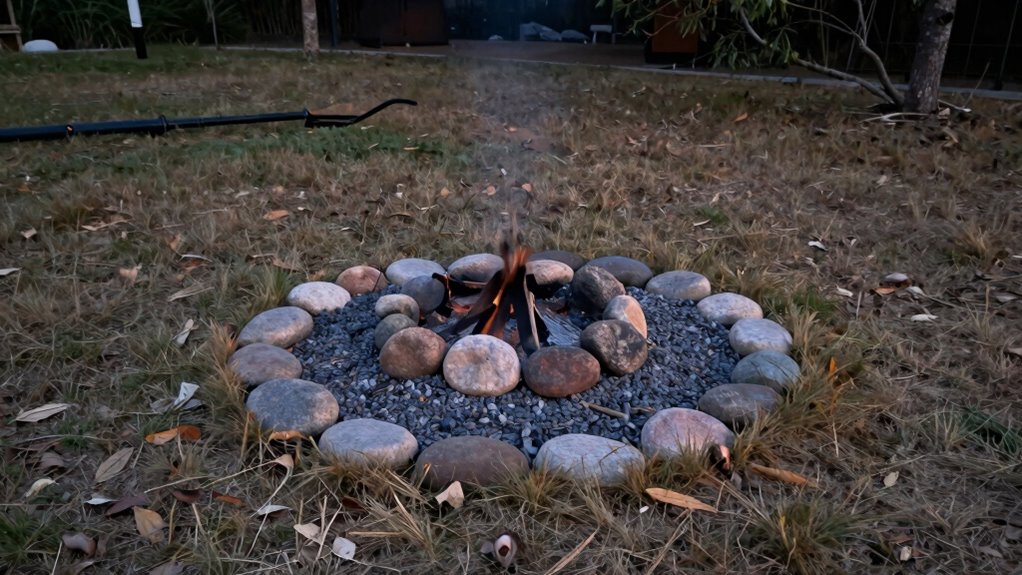
When choosing a campfire site, pick a flat, open area away from overhanging branches and tall grass. Clear away any leaves, twigs, or other flammable materials from the spot and its surroundings. Taking these steps helps prevent sparks from spreading and keeps your fire under control. Additionally, ensure proper wiring practices around your campfire setup to avoid accidental electrical hazards. Always verify that your fire safety equipment, such as extinguishers or water sources, is readily accessible in case of emergencies. Remember to keep a fire extinguisher nearby and know how to use it effectively to quickly address any unforeseen flare-ups. Being aware of measurement tools and their proper use can also help monitor environmental conditions and prevent unintended fires. Regularly checking fire risk assessments before lighting the fire can further enhance safety.
Selecting the Right Location
Choosing the right location for your campfire is essential to guarantee safety and prevent wildfires. Look for a sturdy, cleared spot away from overhanging branches, bushes, or dry grass. Use a designated fire ring if available, as it helps contain the flames and keeps the fire controlled. Place the fire ring on bare soil, not grass or leaves, to reduce the risk of spreading. Consider the smoke direction; position yourself so the smoke blows away from your tent or seating area for comfort and safety. Avoid windy days or areas with unpredictable gusts that could carry sparks. Always check local fire restrictions before starting, and ensure the site is far enough from tents, trees, and other flammable materials. Proper placement helps keep everyone safe and reduces fire hazards. Additionally, understanding contrast ratio can help in selecting appropriate lighting conditions to monitor your campfire safely in the dark.
Clearing Surrounding Vegetation
After selecting a suitable spot for your campfire, the next step is to clear the surrounding vegetation to prevent accidental spread. Start by removing all dry grass, leaves, and twigs within at least a 10-foot radius. This vegetation clearance reduces flammable materials nearby. Create fire resistant barriers by piling rocks or digging a shallow fire ring to contain the fire. Ensure there are no overhanging branches or tall grass close to your fire site. Keep the area free of brush or combustible debris. Clearing the vegetation and establishing fire resistant barriers helps prevent embers from igniting surrounding vegetation. Additionally, inclusive casting in safety practices encourages community awareness and shared responsibility in wildfire prevention. This simple step considerably reduces the risk of wildfires and keeps your campfire controlled and safe. Always double-check the area before lighting your fire. Wildfire prevention is a key aspect of responsible camping practices. Taking the time to assess the environment before lighting your fire ensures you are aware of potential hazards and can act accordingly. Properly prepare your site by checking local fire regulations and weather conditions to further minimize risks. Being mindful of fire safety protocols can further enhance your preparedness and ensure everyone stays safe.
How to Build Your Campfire Safely and Effectively
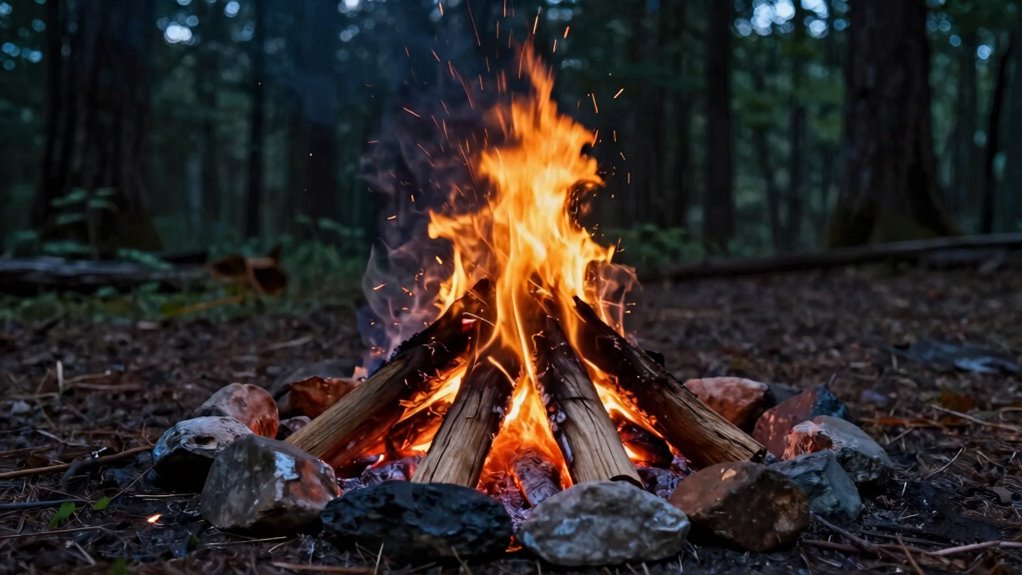
To build a safe and effective campfire, you need to choose the right spot and use proper fire-building techniques. Make sure the area is clear of overhanging branches and flammable materials. Follow safe methods to stack your firewood and ignite it responsibly. Additionally, being aware of fire safety precautions can help prevent small mistakes from causing big problems. Using portable oil radiators to stay warm near your campsite can also be safe if used correctly and kept away from combustible materials. Ensuring proper fire pit construction can further reduce the risk of accidental fires spreading. Proper planning and layout of your campsite can help in maintaining a safe environment for your campfire. Being familiar with ethical consumer choices related to campfire equipment can help you select environmentally friendly and safe products.
Selecting the Right Spot
Finding the right spot for your campfire is essential for safety and enjoyment. Choose a location away from overhanging branches, tents, and dry grass to prevent accidental fires. A designated fire pit is ideal, as it contains the flames and minimizes risks. Make sure your fire is at least 15 feet from outdoor seating, trees, and structures. Clear a flat area, free of leaves and debris, to build your fire safely. Consider these tips:
- Use a fire pit or create a bare, cleared circle on bare soil
- Keep your fire at least 15 feet from tents and outdoor seating
- Avoid windy spots that can spread sparks easily
- Remember that boundaries are important in maintaining a safe environment around your campfire.
Selecting the right spot helps prevent accidents and guarantees everyone stays safe while enjoying the fire.
Proper Fire Building Techniques
Building your campfire properly is essential for safety and effective burning. Focus on the fire triangle—heat, fuel, and oxygen—to control your fire safely. Start by choosing a clear, open spot, away from overhanging branches. Gather small tinder, kindling, and larger logs. Use ignition sources like matches or a lighter to ignite the tinder, ensuring your flame ignites the smallest material first.
| Step | Tip |
|---|---|
| Prepare | Clear a ring of bare soil or use a fire pit. |
| Build | Use the teepee or log cabin method for airflow. |
| Light | Ignite tinder with ignition sources, then add kindling. |
Proper techniques prevent small mistakes from turning into big problems.
How to Recognize and Maintain a Safe Distance From the Fire
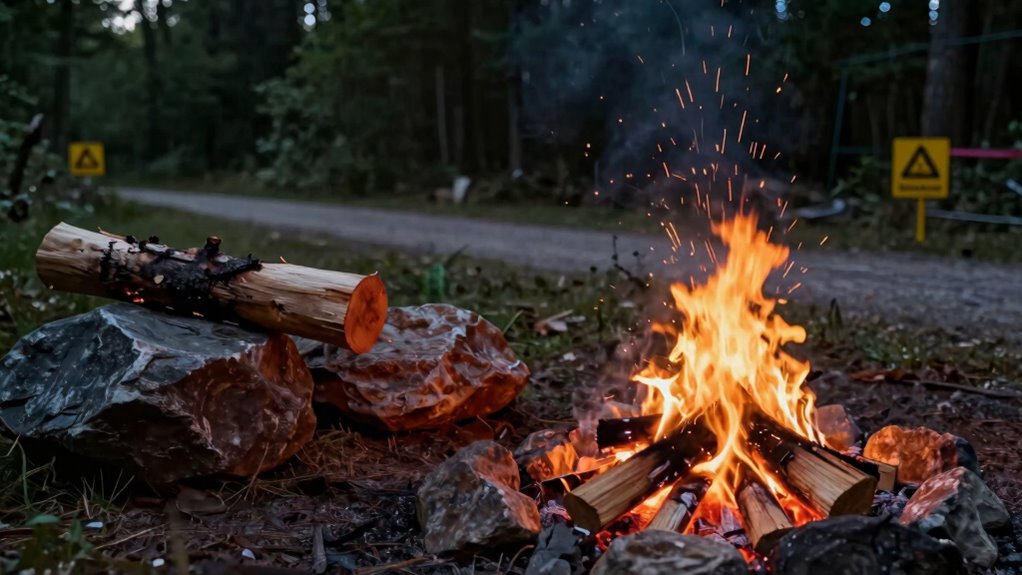
Recognizing the signs of a safe distance from a campfire is essential for preventing accidents. You need to keep a close eye on the fire size and wind awareness to stay safe. As the fire grows, step back to maintain a safe perimeter. Be alert for gusts that can spread sparks or increase fire intensity unexpectedly. To stay at a safe distance, consider these key points:
Maintain a safe distance from campfires by monitoring fire size and wind changes to prevent accidents and injuries.
- Keep at least a safe radius away, depending on fire size
- Watch for changing wind directions that can push sparks outward
- Move further back if the fire starts to grow or sparks fly higher
- Regularly monitor fire behavior to adjust your safety distance accordingly
- Understanding free floating fire dynamics can help you anticipate sudden changes in fire behavior
- Proper campfire safety practices include maintaining a safe distance and staying vigilant during changing conditions
Maintaining proper distance reduces risks of burns or unintended fires, especially when the wind picks up or fire size changes suddenly. Staying vigilant ensures you enjoy the fire responsibly.
How to Keep Your Campfire Under Control and Prevent Wildfires
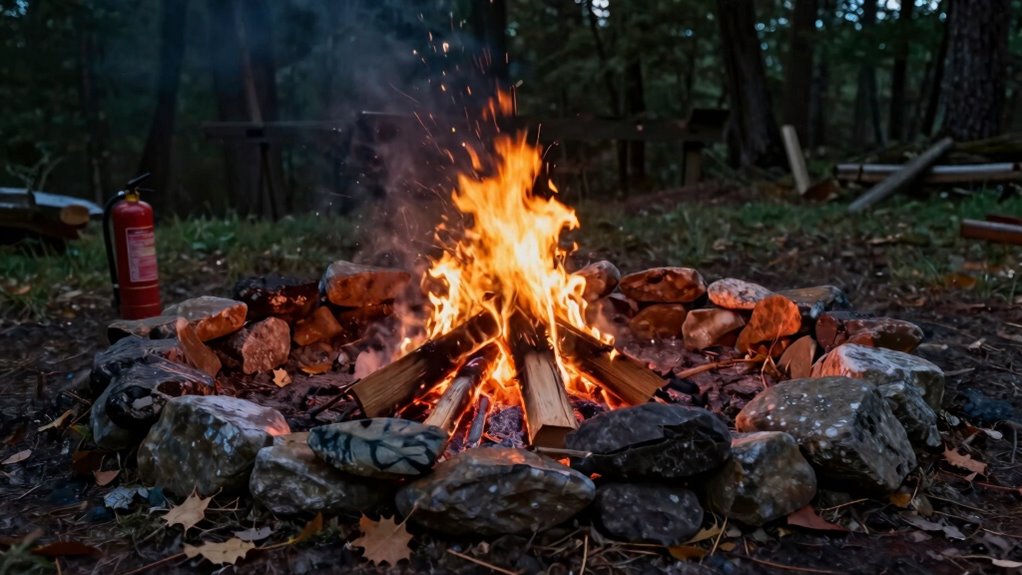
To keep your campfire under control and prevent wildfires, it’s essential to monitor the fire constantly and take proactive steps. Practice good campfire etiquette by keeping the fire small and manageable, never leaving it unattended. Clear the area around your fire pit, removing leaves, sticks, and other flammable materials. Be aware of your surroundings and respect wildlife awareness guidelines; avoid burning materials that could release toxic fumes or harm animals. Keep a bucket of water, a shovel, and a fire extinguisher nearby for quick response if needed. Always stay vigilant, and if the fire begins to spread or grow too large, extinguish it immediately. Responsible behavior helps protect the environment and ensures everyone’s safety. Incorporating appropriate fire safety measures can significantly reduce the risk of accidental wildfires. Additionally, understanding how fire behavior can change based on weather and terrain is crucial for effective prevention. Recognizing the importance of environmental conditions can help you predict how quickly a fire might spread and adjust your precautions accordingly. Proper piercing care and hygiene during campfire activities, such as cleaning hands before handling fire-starting tools, also plays a role in reducing health risks and infections. Being aware of local fire restrictions and regulations can further enhance your safety efforts and prevent legal issues.
How to Properly Extinguish Your Campfire to Avoid Accidents

When you’re ready to put out your campfire, it’s crucial to do so thoroughly to prevent accidents and wildfires. Start by pouring water over the fire, ensuring all embers are extinguished. Stir the ashes with a stick to expose hidden hot spots, then add more water to fully douse the remaining embers. Keep a fire extinguisher nearby as part of your emergency preparedness; it can be a quick backup if needed. Remember, never leave a campfire until it’s completely out. Properly extinguishing your campfire helps prevent accidents and wildfires. Always double-check the fire safety to ensure no hidden embers remain.
What Safety Equipment Should You Have Before Lighting a Fire?
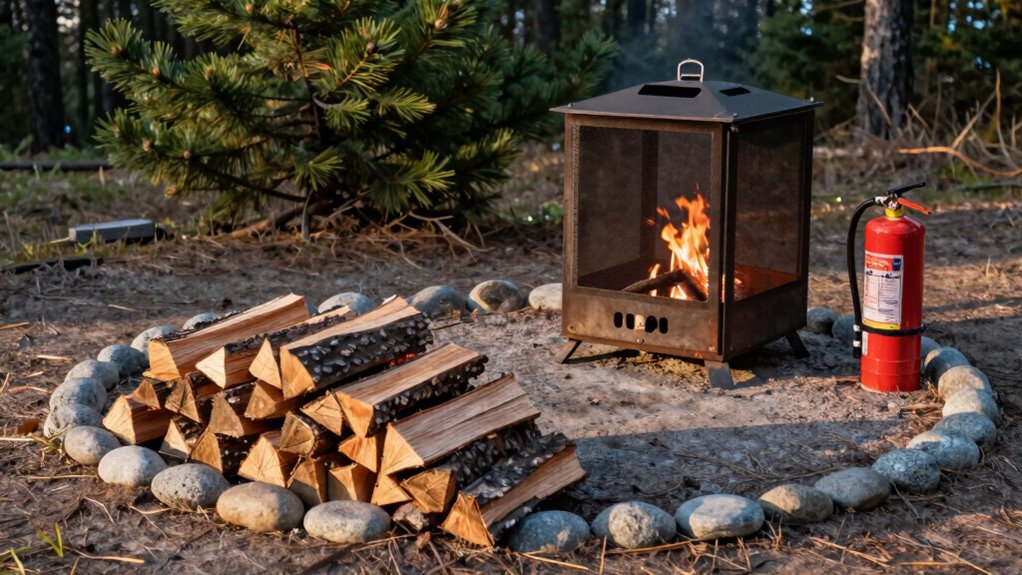
Before you light your campfire, make sure you have the right safety equipment nearby. A fire extinguisher is essential; verify it’s easily accessible and in working condition. It can quickly put out flames if your fire gets out of control. Safety gloves are also important—they protect your hands from burns and hot sparks when handling firewood or adjusting the blaze. Always wear gloves when managing the fire to prevent accidental injuries. Additionally, keep a bucket of water or a hose nearby as a backup. Having this safety equipment ready before you start helps you respond swiftly to emergencies and keeps everyone safer. Remember, being prepared with the right gear is a small step that can prevent big problems.
Tips for Teaching Campfire Safety to Beginners
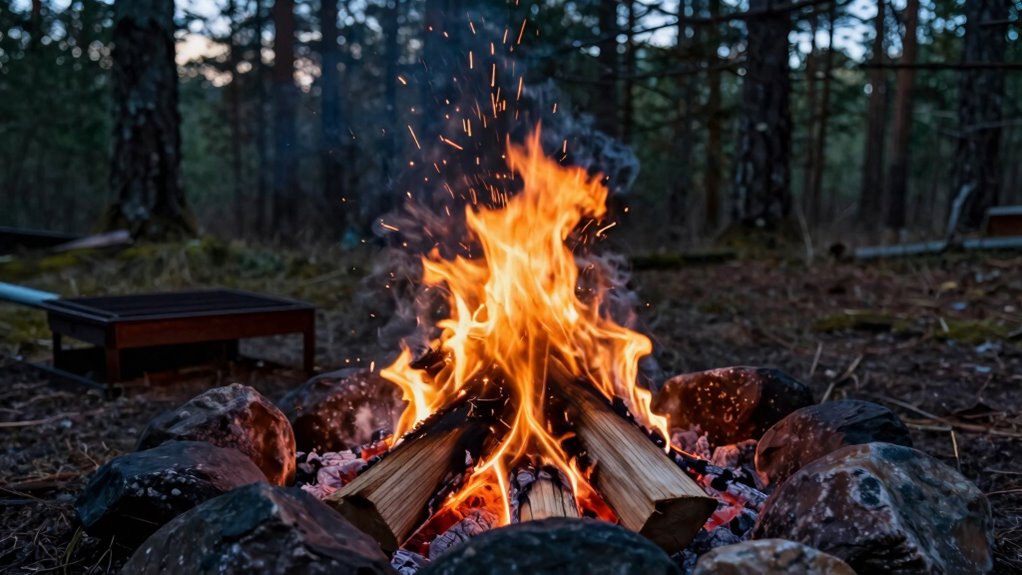
Teaching campfire safety to beginners requires clear, simple instructions and a hands-on approach. Start by explaining basic campfire etiquette, such as keeping a safe distance and never leaving the fire unattended. Demonstrate how to properly use fire safety gear like gloves, a fire extinguisher, and a bucket of water. Emphasize the importance of establishing a safe perimeter and controlling sparks. To engage beginners, consider these tips:
- Show how to build a fire safely, emphasizing proper placement and materials
- Practice extinguishing a fire completely before leaving
- Reinforce the importance of respecting the environment and fellow campers
Frequently Asked Questions
What Are Common Mistakes Beginners Make When Starting a Campfire?
When starting a campfire, you often make mistakes like not setting up a proper fire ring or choosing the wrong tinder. You might place too much tinder or use damp materials, which hampers ignition. Make certain your fire ring is secure and clear of debris. Select dry, fine tinder to catch easily, then add kindling and larger logs gradually. Paying attention to these details keeps your fire safe and manageable.
How Can Weather Conditions Affect Campfire Safety?
Did you know that windy conditions can increase a fire’s spread by up to 400%? Weather affects campfire safety considerably. During fire weather, wind hazards can blow sparks into dry areas, quickly igniting wildfires. High temperatures and low humidity also dry out fuels, making them more flammable. Always check weather forecasts before starting a fire, and avoid windy days to keep your campfire safe and under control.
Are There Specific Safety Tips for Cooking Over a Campfire?
When cooking over a campfire, always keep fire extinguisher tips in mind, like having one nearby and knowing how to utilize it. Use proper campfire cooking equipment, such as sturdy pots and long-handled utensils, to stay safe. Keep a clear area around your fire, never leave it unattended, and guarantee your fire is fully extinguished before leaving. These simple steps prevent accidents and keep everyone safe.
What Signs Indicate a Campfire Is Becoming Uncontrollable?
Like a runaway carriage, a campfire can quickly spiral out of control. If you notice flames jumping the fire ring or thick, dark smoke signs indicating poor fire containment, it’s time to act. Watch for increased flames, spreading embers, or a fire that’s hard to extinguish. These signs show your fire is becoming uncontrollable. Always stay alert, and have water or a shovel nearby to keep things safe.
How Often Should I Check on My Campfire During Use?
You should check your campfire frequently, ideally every 15 to 30 minutes, to guarantee fire safety. Monitoring frequency is vital because small changes can escalate quickly. Keep an eye on the flames, smoke, and nearby materials, and never leave the fire unattended. Regular checks help prevent the fire from becoming uncontrollable and reduce the risk of accidents. Remember, consistent monitoring is key to enjoying a safe camping experience.
Conclusion
Remember, a small mistake can turn your cozy campfire into a dangerous wildfire. Think of it like dropping a tiny spark into dry grass—what starts small can quickly grow out of control. By following safety tips and staying vigilant, you’re the firefighter guarding the flame. Keep safety at the forefront, and your campfire remains a source of warmth and joy, not disaster. With care, you can enjoy nature’s glow without risking what you love.