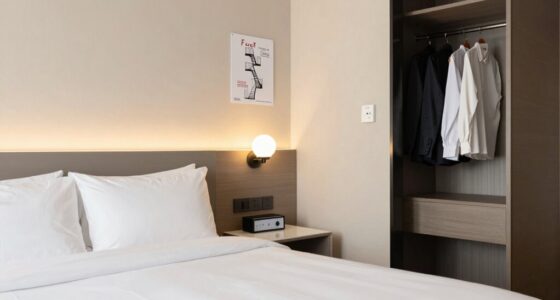
While hotel safes offer convenience, it’s important not to rely solely on them for security, as intruders can sometimes bypass their mechanisms. Use strong, unique codes or sturdy locks, and always verify the safe’s functionality before storing valuables. Hide important items out of sight and consider additional security methods like discreet storage or travel locks. For practical tips and awareness of safety limits, keep exploring ways to better protect your belongings during your stay.
Key Takeaways
- Understand the safe’s security limits and avoid relying solely on it for valuable protection.
- Use strong, unique codes or locks and regularly test the safe’s functionality.
- Supplement the safe with additional security measures like discreet hiding spots.
- Be cautious of vulnerabilities; don’t assume the safe is completely tamper-proof.
- Maintain awareness of hotel safety practices and report any suspicious activity or theft immediately.
How Do Hotel Safes Work, and What Are Their Security Limits?
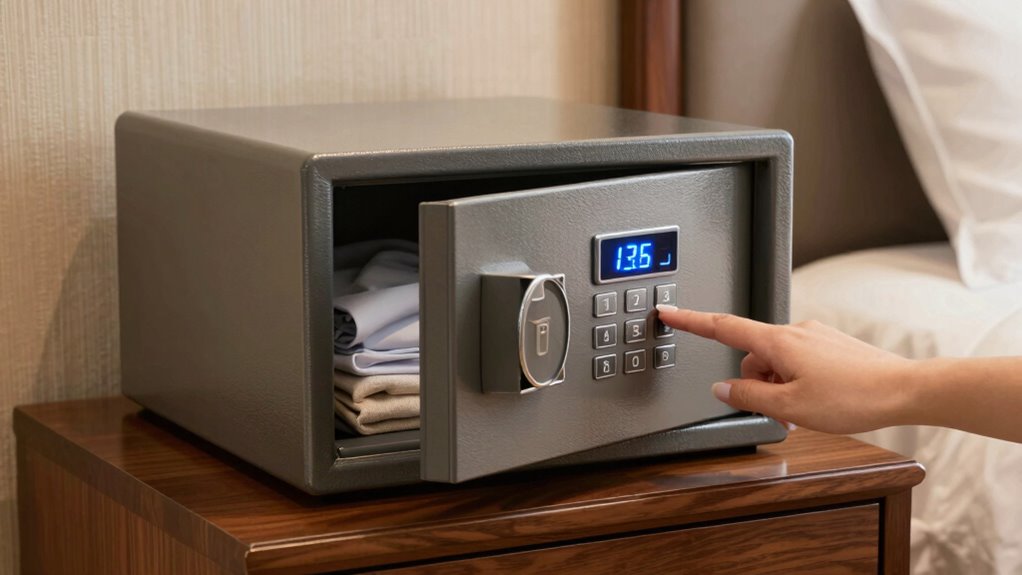
Hotel safes typically operate using a digital keypad or mechanical lock that requires a unique code or key to open. Electronic locks are common, allowing you to set a personalized code, which makes them convenient and quick to access. Mechanical safes rely on traditional keys or combination dials, offering a straightforward security method. While electronic locks are user-friendly and can include features like audit trails, they are vulnerable to hacking or electronic failure. Mechanical safes are less susceptible to cyber threats but can be physically compromised with enough effort. Both types have their security limits; no safe is entirely foolproof. Understanding these mechanisms helps you recognize their strengths and weaknesses, ensuring you don’t develop a false sense of security during your stay. Additionally, being aware of security limitations can help you make more informed decisions about safeguarding your valuables. Recognizing vulnerabilities in different safe types can help you better protect your belongings. It’s also important to consider that some safes may have physical attack vulnerabilities that require additional security measures. Being mindful of these security vulnerabilities can help you implement supplementary precautions, like using a safe with a lockable safe deposit box.
Can Hotel Safes Be Bypassed? Common Weaknesses to Know
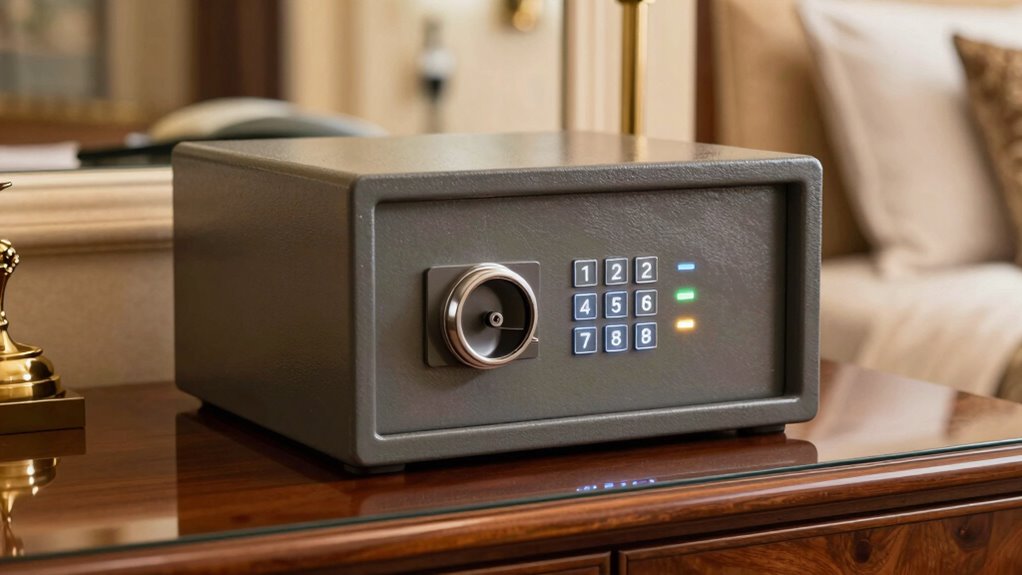
While hotel safes are designed to protect your valuables, they are not completely foolproof and can sometimes be bypassed by determined intruders. Common vulnerabilities, such as weak electronic codes or mechanical lock flaws, can be exploited through safe bypass techniques. For example, some safes have default or easily guessed codes, while others may be vulnerable to manipulation or force. Intruders might also use tools to override electronic systems or exploit manufacturing flaws. It’s important to recognize that no safe is entirely invulnerable; determined thieves can sometimes find ways around security features. Knowing these common weaknesses helps you understand the limitations of hotel safes and emphasizes the importance of not relying solely on them for your most valuable possessions.
How to Use Hotel Safes Safely and Effectively

To use hotel safes safely, start by selecting a secure locking method, such as a strong PIN or combination. Always keep sensitive items hidden and out of sight when not in the safe. Before leaving, verify that the safe is functioning properly to guarantee your valuables stay protected. Additionally, properly drying and cleaning the safe after use can help prevent damage and ensure it remains reliable for future use. Regularly testing the safe’s security features can help you identify any issues early and maintain peace of mind during your stay. Incorporating ethical considerations such as understanding the limitations of hotel safes and respecting the property’s policies can also create a more relaxed state of mind, reducing stress associated with secure storage. For added security, consider researching security tips for hotel safes to help minimize potential risks during your stay.
Choose Secure Locking Methods
Choosing the right locking method is vital for keeping your valuables safe. Biometric locks offer quick, reliable security by using fingerprint recognition, making it hard for others to access your belongings. If biometric locks aren’t available, look for safes with sturdy, traditional locks like key or combination mechanisms. Additionally, consider safes with hidden compartments or discreet access points, which add an extra layer of protection by making it less obvious where valuables are stored. These security features can significantly reduce the likelihood of unauthorized access. Always select a safe with a locking system that you trust and can easily operate. Additionally, be aware of potential security vulnerabilities associated with different lock types and regularly test your safe’s lock to ensure it functions properly. Regular maintenance and understanding of the lock mechanisms help prevent accidental lockouts and ensure your valuables remain protected. It’s also beneficial to familiarize yourself with common lock vulnerabilities, so you can choose the most secure option available. Being aware of security best practices can further enhance your overall safety. Remember, no matter the locking method, it’s important to understand how it works and verify it’s functioning properly before leaving your valuables unattended. This way, you minimize risks and maximize security.
Keep Sensitive Items Hidden
Even if your hotel provides a safe, it’s essential to keep your sensitive items hidden and out of plain sight. Relying solely on the safe’s lock isn’t enough; consider using hidden compartments or disguising items to avoid temptation or theft. Be cautious of fake safes placed for deception—thieves often look for these false clues. To enhance security, hide valuables in inconspicuous spots that aren’t obvious to others. For example:
- Use hidden compartments in luggage or furniture
- Conceal items behind or inside everyday objects
- Avoid obvious safes and recognize fake safes designed to mislead
Keeping items out of plain sight reduces the risk of theft or loss, even when safes are present. Stay vigilant and don’t rely solely on the lock—disguise and hiding are your best defenses. Incorporating tracking gear like GPS or Bluetooth devices can help locate your valuables if misplacement occurs.
Verify Safe Functionality
Before relying on a hotel safe, it’s important to verify that it functions properly. Test the safe’s lock mechanism and ensure it responds smoothly. Check for any signs of damage or tampering during safe maintenance. To confirm alarm verification, try setting and unsetting the safe’s alarm feature if available. Also, listen for any unusual noises when closing or locking it. Regularly reviewing safe maintenance procedures can help prevent future issues and ensure ongoing security. Implementing simple routines such as periodic checks can further enhance your confidence in the safe’s reliability. Understanding security best practices and privacy policies related to your data can help you feel more secure during your stay. Additionally, being aware of aviation regulations can help you develop a mindset of thorough safety checks, similar to verifying a safe’s functionality.
Other Ways to Protect Your Valuables When Traveling
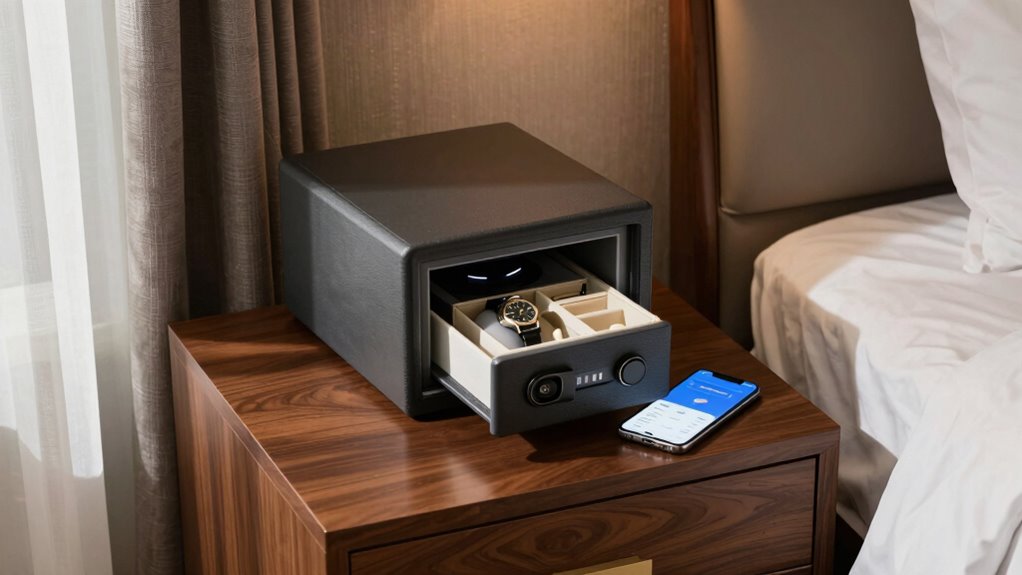
To keep your valuables safe while traveling, consider using portable safes that you can carry with you. You can also conceal your items strategically or follow hotel safety tips to reduce risks. These methods provide extra protection beyond hotel safes and help you travel more securely. Additionally, incorporating secure storage practices like hiding valuables in unexpected places can further reduce the likelihood of theft. For optimal safety, choosing a high-quality, durable safe can provide increased resistance against tampering or forced entry. Being aware of the limitations of hotel safes helps you avoid a false sense of security and encourages you to take additional precautions. Investing in a reliable home security system for your accommodations can also add an extra layer of protection during your stay. Knowing about smart security options can give you more control over safeguarding your belongings.
Use Portable Safes
Carrying a portable safe gives you a reliable way to protect your valuables while traveling. These compact safes are designed for convenience and enhance your travel security by allowing you to store important items securely in your hotel room, car, or even on the go. With portable safes, you can keep jewelry, cash, passports, and electronics safe from theft or accidental loss. They’re easy to carry and typically feature combination or key locks for added security. To maximize their effectiveness, consider these tips:
- Choose a lightweight, durable model suited to your needs
- Use it in combination with other security measures
- Keep the safe’s key or code private and secure
- Opt for high-quality materials that ensure longevity and resistance to tampering. Selecting safes made from robust, tamper-resistant materials can significantly improve their protective capabilities. Additionally, choosing safes with security features like pry-proof walls or reinforced hinges can further enhance protection. Incorporating security-conscious practices such as discreet placement can also help deter potential thieves. Being aware of common vulnerabilities and how to address them can boost your overall travel security.
Portable safes are a smart addition to your travel security plan, offering peace of mind wherever you go.
Conceal Valuables Strategically
Since thieves often target visible valuables, concealing your belongings effectively reduces the risk of theft. Use distraction techniques to divert attention away from your valuables—place them in common items like empty shampoo bottles or inside your shoes. Consider alternative concealment methods, such as hiding jewelry in inconspicuous places like a toiletry kit or inside a rolled-up sock. Avoid obvious spots like open suitcases or easy-access drawers, which thieves are quick to check. Keep valuables out of sight when not in use, and think creatively about where you hide important items. Additionally, understanding sauna safety tips, such as avoiding heatstroke signs and ensuring proper ventilation, can help you stay safe during your travels. By employing strategic concealment, you make it harder for thieves to spot and steal your belongings, adding an extra layer of security during your stay.
Opt for Hotel Safety Tips
Using hotel safes is one of the most effective ways to protect your valuables while traveling. But to enhance hotel room safety and maintain guest privacy, consider other safety tips. Always lock your door securely when inside and use the peephole before opening it. Keep your belongings organized and within sight to avoid theft or loss. When possible, avoid sharing your room number or travel plans with strangers to safeguard your privacy. Additionally, request a room on a higher floor or away from elevators for extra security. These simple precautions help reduce risks and ensure your valuables stay safe, giving you peace of mind during your trip. Combining hotel safes with these safety tips makes your overall hotel room safety more reliable.
How to Spot Reputable Hotels With Better Security Measures

To identify reputable hotels with strong security measures, you should start by researching their reputation and reviews. Look for guest reviews that mention safety and security, paying attention to consistent positive feedback about the hotel’s precautions. Check if guests mention feeling safe during their stay or specific security features that stood out. Additionally, inquire about staff training; well-trained staff are more likely to follow security protocols and handle emergencies effectively. Reputable hotels often highlight their security policies and certifications on their website. A hotel that prioritizes safety will make these details transparent. By combining positive guest reviews with evidence of exhaustive staff training, you can better gauge whether a hotel takes security seriously and provides a safer environment for guests.
What to Do if Your Valuables Are Stolen From a Hotel Safe

If your valuables are stolen from a hotel safe, it’s important to act quickly and methodically. First, notify the hotel management immediately, referencing their hotel policies on theft. This helps protect guest privacy and ensures proper documentation. Request a written report and ask about their procedures for handling such incidents. Contact your bank or credit card company if financial info was compromised. Keep records of all communications for future reference. You should also file a police report, as many insurers require this for claims. Remember, hotel policies vary, but prompt action is key to recovering losses and understanding your options. Staying calm and following these steps can help you navigate the situation efficiently.
Frequently Asked Questions
Are Hotel Safes Insured Against Theft or Loss?
Most hotel safes aren’t insured against theft or loss, so you should treat them as a safe deposit rather than a guarantee. While security measures like electronic locks and surveillance help protect your belongings, they don’t eliminate risk. Always keep valuables in a secure safe deposit or carry them with you. Relying solely on hotel safes can give you a false sense of security, so stay vigilant.
Can I Change the Default Code on a Hotel Safe?
Yes, you can change the default code on a hotel safe. To do this, follow the safe’s instructions for code customization, which usually involve entering the default code first and then setting your new one. Regular safe maintenance is essential to guarantee the lock functions properly. Changing the code enhances your security, so take a moment to personalize it and keep your valuables protected during your stay.
How Often Should I Check My Valuables in the Safe?
You should check your valuables in the safe daily to guarantee safe maintenance and theft prevention. Regularly reviewing the contents helps confirm everything is secure and intact. Make it a habit to verify your valuables before leaving your room and after returning. This proactive approach minimizes risks, discourages theft, and ensures your items stay protected, giving you peace of mind during your stay.
Are There Legal Restrictions on Bypassing Hotel Safes?
You should know that bypass methods to access hotel safes are generally illegal, and there are strict legal restrictions against them. Attempting to bypass a safe violates laws, privacy, and security protocols. If you’re curious about safe access, always ask hotel staff or management first. Bypassing a safe without permission can lead to serious legal consequences, so respect the rules and rely on proper channels for access or assistance.
What Should I Do if I Forget My Safe Code?
If you forget your safe code, don’t panic. First, look for instructions on how to resolve a safe lockout or safe reset procedures, often found in the hotel’s informational materials or by asking staff. They can guide you through resetting the safe or contacting maintenance. Avoid trying to force it open, as this could cause damage. Rely on hotel staff to help you securely regain access quickly and safely.
Conclusion
Remember, while hotel safes can offer convenience, they’re not foolproof. Don’t put all your eggs in one basket—spread out your valuables and stay vigilant. Trusting blindly can backfire, so stay informed about their limits and take extra precautions. In the end, it’s better to be safe than sorry, because sometimes the best protection is knowing when to hold back and keep your valuables close. Stay smart and travel confidently.