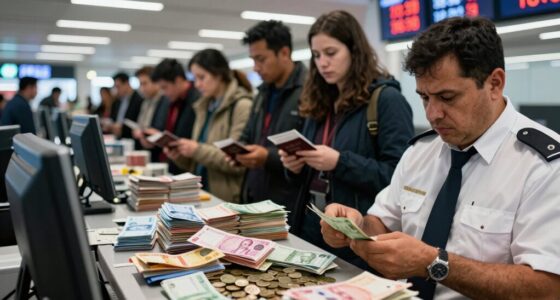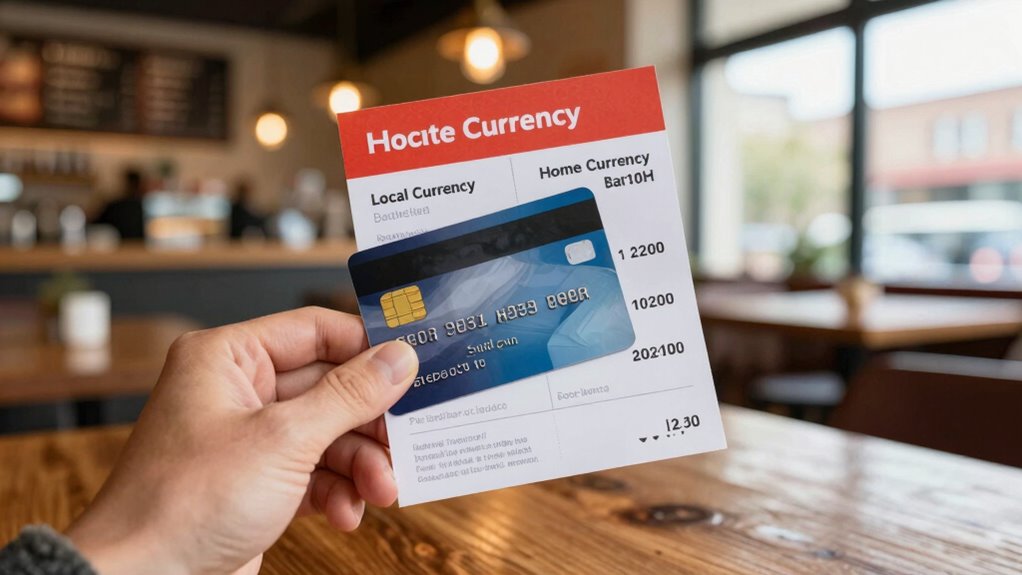

To save money abroad, always pay in the local currency instead of your home currency. Paying in your home currency can trigger hidden fees and less favorable exchange rates through dynamic currency conversion, often inflating costs. By choosing to pay in the local currency, you avoid these extra charges, ensuring better rates and greater transparency. Stick with this rule to maximize your savings and control expenses—continue to find out how to make it work every time.

Get travel and outdoor gear delivered free — and shop member deals
- Fast, free delivery on millions of items
- Access to Prime Big Deal Days deals on October 6–7
- Prime Video, Amazon Music and more included
Key Takeaways
- Always choose to pay in the local currency to avoid unfavorable exchange rates and hidden fees.
- Paying in home currency often involves dynamic currency conversion, which can inflate costs with poor rates and surcharges.
- Monitor exchange rates and set payment preferences to prioritize local currency transactions for better savings.
- Using credit cards with favorable policies and avoiding cash exchanges at airports can further reduce extra fees.
- Confirm transaction currency at checkout to ensure payments are processed in local currency, maximizing transparency and value.
best credit cards for international travel
As an affiliate, we earn on qualifying purchases.
As an affiliate, we earn on qualifying purchases.
Why Paying in Your Home Currency Costs You More
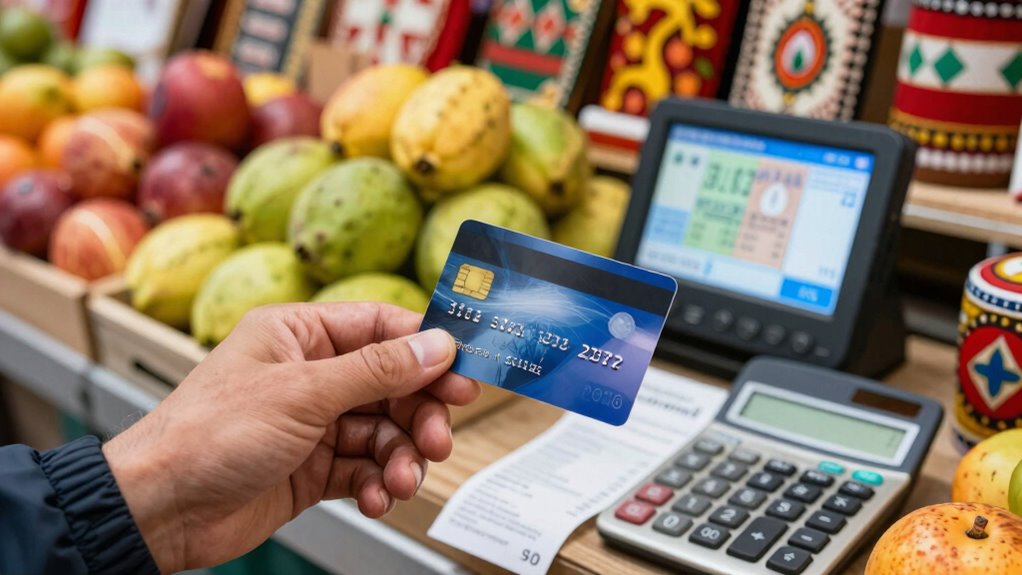
Have you ever noticed that choosing to pay in your home currency often ends up costing you more? When you select your home currency at a point of sale abroad, the merchant’s system performs a currency conversion, which can include hidden markups. This process often involves additional international fees or unfavorable exchange rates, increasing the total cost. Banks and credit card companies may also add their own currency conversion fees, further inflating the price. Instead of getting a clear rate, you might pay more than the actual market value of the foreign currency. Being aware of SWIFT/BIC codes can help ensure your international transactions are processed accurately and securely. Additionally, understanding foreign exchange margins can enable you to recognize better deals and avoid unnecessary costs. Recognizing how currency conversion processes work can help you make more informed decisions when paying abroad, especially when considering dynamic currency conversion, which often appears as a convenient option but may cost more. By paying in your local currency, you avoid these extra charges, ensuring you’re not paying more than necessary for goods or services abroad. For instance, knowing about the role of exchange rate providers can help you choose the most cost-effective options.
multi-currency travel money card
As an affiliate, we earn on qualifying purchases.
As an affiliate, we earn on qualifying purchases.
How Paying in Local Currency Saves You Money
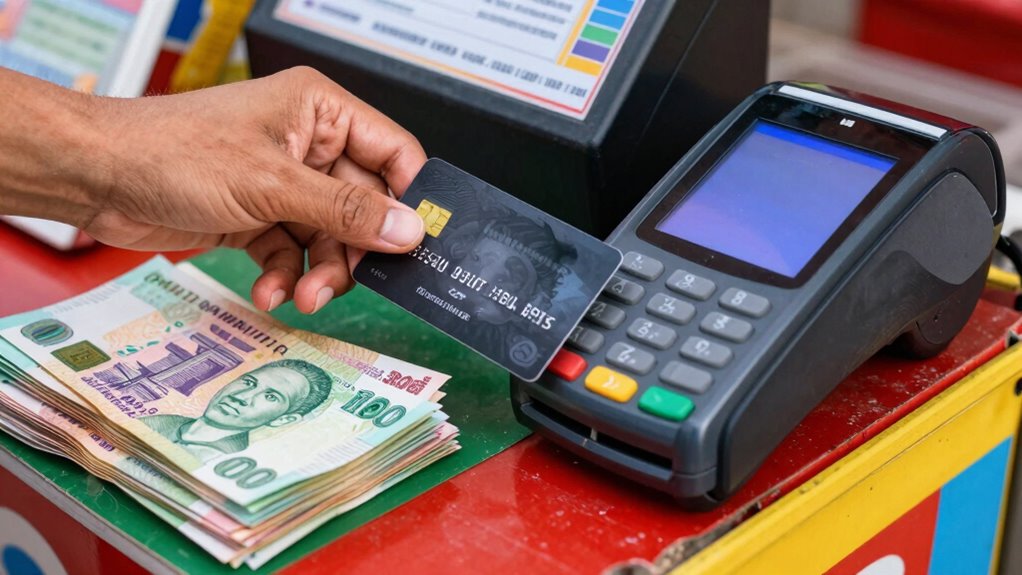
Paying in local currency can save you a significant amount of money during international transactions. When you choose local currency, you avoid unfavorable currency exchange rates and additional fees that often come with paying in your home currency. This approach allows for better payment optimization, ensuring you get more value for your money. Merchants and ATMs typically offer better rates for local currency transactions because they process payments directly within the local financial system. By opting for local currency, you minimize hidden costs associated with currency exchange, making your spending more efficient. Additionally, understanding the importance of currency conversion can help you make smarter financial decisions when shopping internationally. Being aware of financial literacy can further improve your ability to avoid common pitfalls. This simple choice can lead to considerable savings over time, especially if you frequently travel or make international purchases. Always remember, paying in local currency puts you in control of your money.
As an affiliate, we earn on qualifying purchases.
How Exchange Rates Affect Your Payments Abroad
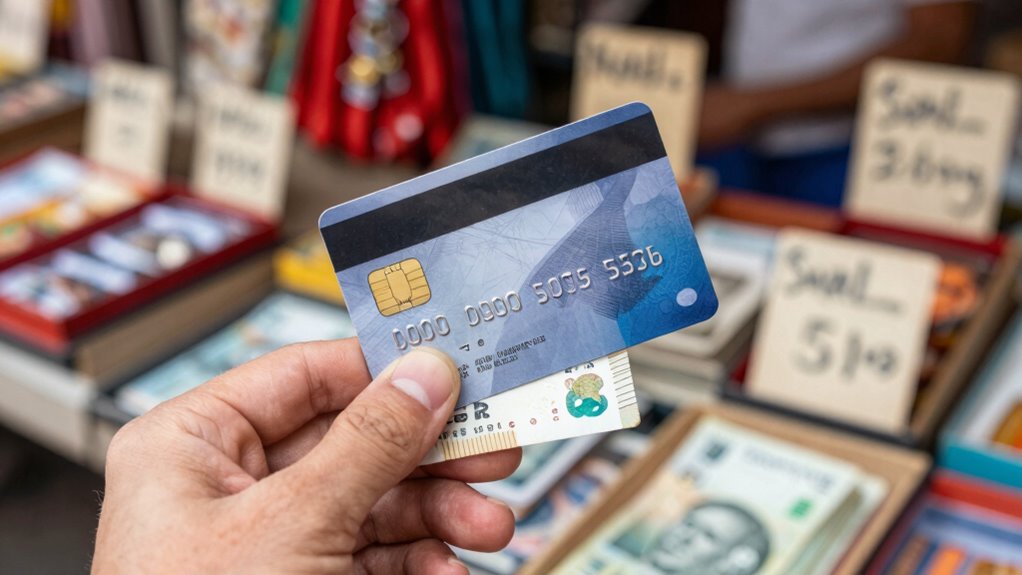
When you pay abroad, exchange rates can considerably impact your costs. You might encounter hidden fees or get caught in dynamic currency conversion, which can inflate your bill unexpectedly. Understanding these factors helps you make smarter payment choices and avoid costly surprises. Incorporating quick recovery routines like foam rolling can also help reduce physical stress from travel, allowing for better overall well-being. Being aware of currency exchange fluctuations can further aid in planning your payments more effectively, especially when considering exchange rate trends over time. Monitoring foreign transaction fees can help you choose the most cost-effective payment methods during your trip, and staying informed about market fluctuations can help you anticipate changes that may affect your expenses.
Dynamic Currency Conversion Risks
Dynamic Currency Conversion (DCC) allows you to see and pay in your home currency at the point of sale, but it often comes with hidden costs. When you opt for DCC, your transaction involves a currency conversion that may not be favorable, leading to higher costs. The currency conversion rate used by merchants or ATMs can be less advantageous than market rates, increasing the amount you pay. Additionally, DCC often includes extra transaction fees, which can add up quickly. Even though paying in your home currency seems convenient, these hidden charges mean you might pay more than if you’d chosen to pay in the local currency. Always be cautious with DCC options to avoid unnecessary expenses tied to unfavorable currency conversion and transaction fees. Be aware that the exchange rate applied during DCC might not reflect the real market value, resulting in additional costs. To make informed decisions, understanding currency exchange mechanisms can help you recognize when DCC might be costing you more. Recognizing the role of financial institutions in currency conversion can further help you avoid hidden costs during international transactions.
Hidden Conversion Fees
Choosing to pay in your home currency through Dynamic Currency Conversion might seem convenient, but hidden conversion fees can quickly inflate your costs. These hidden fees are often buried in the exchange rate, disguised as a favorable rate or added as a surcharge. Currency tricks like these make it hard to spot the true cost of your transaction. Instead of saving money, you end up paying more due to these sneaky charges. Always check the exchange rate applied and compare it to the market rate before confirming the payment. Be aware that comprehensive currency understanding can help you identify and avoid unfair charges. Avoid the temptation of currency tricks that banks or merchants might use to boost their profits. Paying in your local currency at the point of sale usually results in fewer hidden fees, helping you keep better control over your expenses abroad. Being aware of affiliate disclosures can help you understand potential costs and make informed decisions. Additionally, understanding regional currency practices can give you an edge in recognizing when fees are inflated or hidden. For example, being familiar with common exchange rate policies can help you spot when a rate is manipulated to favor the provider.
Exchange Rate Fluctuations
Exchange rate fluctuations can substantially impact the total cost of your transactions abroad. When foreign exchange rates shift, the amount you pay in your home currency changes due to currency conversion. To navigate this effectively, you should also consider the healing times associated with various procedures, as these can influence your financial planning and timing for payments. Understanding solar system safety measures can help prevent costly accidents and ensure system longevity. Additionally, staying informed about precious metal IRA options can help diversify your investments and potentially hedge against currency risk. For example, the horsepower of electric dirt bikes influences their performance and how much you might need to spend on upgrades or maintenance. 1. Keep an eye on currency trends before making large purchases or payments. 2. Use forward contracts or locking in rates to avoid unexpected costs. 3. Opt to pay in the local currency to minimize losses from unfavorable exchange rate swings. Being aware of exchange rate fluctuations can help you plan and budget more accurately for your trip.
As an affiliate, we earn on qualifying purchases.
What Is Dynamic Currency Conversion and Why Should You Avoid It?
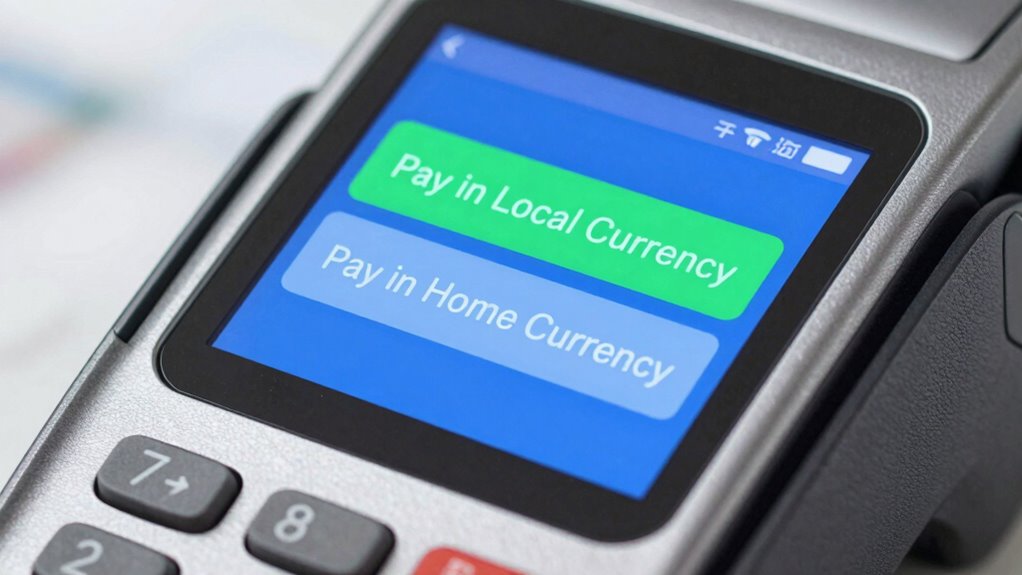
When you make a purchase abroad and see the option for dynamic currency conversion, it might seem convenient to pay in your home currency. However, this often leads to higher costs. Dynamic currency conversion involves converting the transaction amount into your home currency at the point of sale, but it usually includes a currency markup and additional credit card fees. These extra charges make the total cost higher than simply paying in local currency and allowing your bank to handle the currency exchange. To help you compare, here’s a quick overview:
| Feature | Paying in Local Currency | Using Dynamic Currency Conversion |
|---|---|---|
| Currency Rate | Bank’s rate | Marked-up rate |
| Extra Fees | Usually none | Increased credit card fees |
| Cost Transparency | Clear, at transaction time | Hidden costs, surprise fees |
Avoid dynamic currency conversion to save money. Understanding exchange rates can further help you make informed decisions and recognize currency markup practices that inflate costs.
How to Set Payment Preferences to Save Money
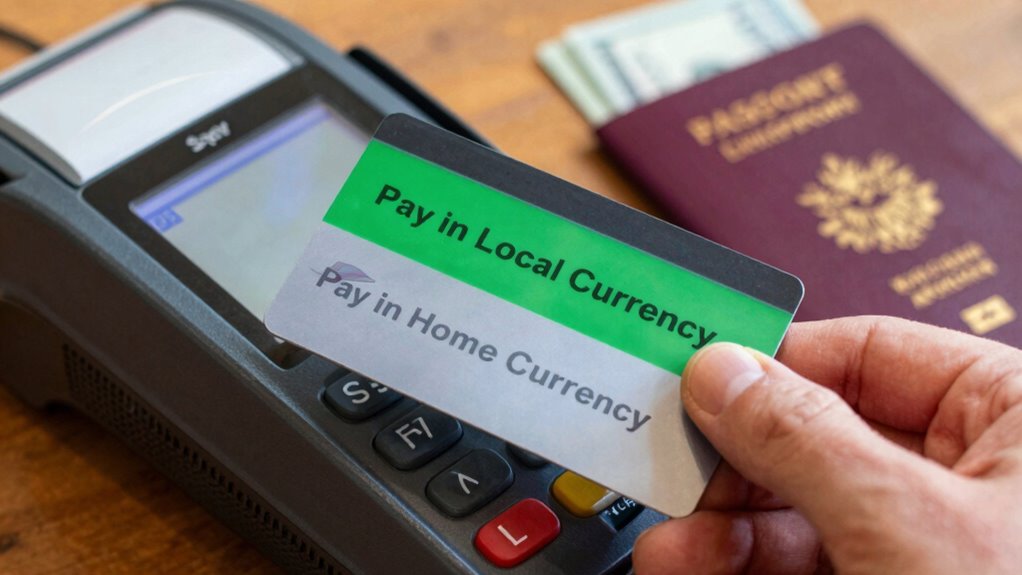
To save money, start by choosing local currency transactions whenever possible. Make sure to update your payment settings to prioritize local currency options and avoid unnecessary conversion fees. Taking these simple steps can make a noticeable difference in your overall expenses. Additionally, reviewing your cookie preferences ensures that your browsing experience remains tailored and secure, supporting your efforts to manage costs effectively.
Choose Local Currency Transactions
Choosing local currency for your transactions can considerably reduce extra fees and unfavorable exchange rates. To optimize your savings, follow these steps:
- When making purchases online or in-store, check if the merchant offers the option to pay in local currency, minimizing currency conversion costs.
- Adjust your payment settings on your credit card or digital wallets to default to local currency, avoiding foreign exchange fees.
- Be aware that some payment platforms automatically convert to your home currency, which can inflate costs due to poor exchange rates. Always select the local currency to prevent unnecessary expenses.
Update Payment Settings
Adjusting your payment settings is a straightforward way to guarantee you’re always paying in the most cost-effective currency. By updating your preferences, you can avoid unnecessary foreign transaction fees and benefit from favorable currency conversion rates. Start by checking your payment provider’s options to select the local currency whenever possible. Many platforms allow you to set your preferred currency for transactions, which helps minimize additional charges. Be sure to review your current settings and switch to local currency payments if you haven’t already. This simple adjustment ensures you’re not paying extra through unfavorable currency conversion rates or foreign transaction fees that often inflate costs when paying in your home currency abroad. Making these updates puts you in control of your expenses.
Common Currency-Related Payment Mistakes to Watch Out For
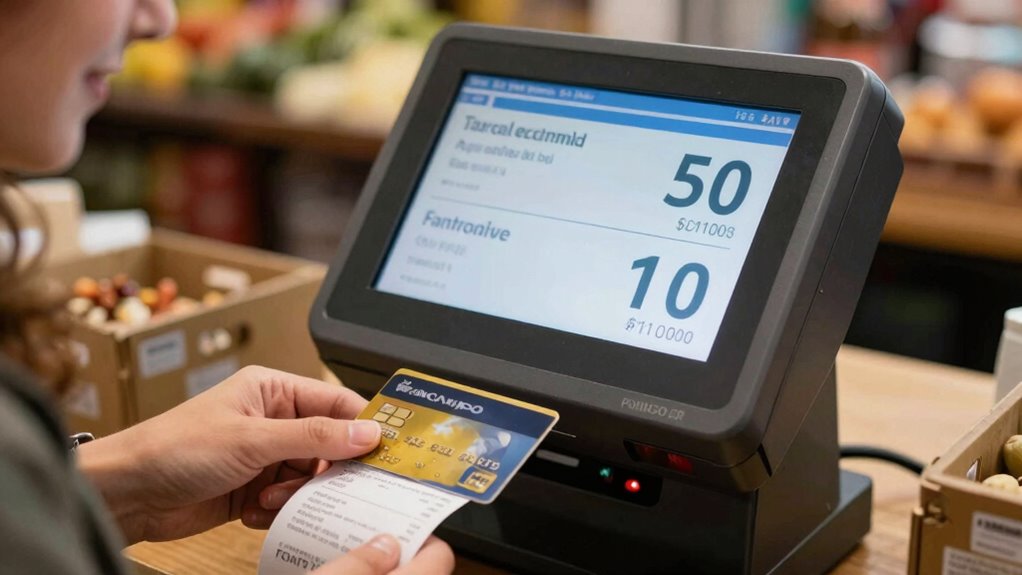
One common mistake in international transactions is paying in the home currency instead of the local currency, which can lead to unfavorable exchange rates and hidden fees. This often results in higher costs through:
- Increased credit card fees, as some cards charge extra for foreign transactions when you choose the home currency.
- Excess ATM charges, since withdrawing in the local currency might incur additional fees or poorer exchange rates.
- Ignoring dynamic currency conversion offers, which seem convenient but often come with worse rates than the local currency option.
To avoid these pitfalls, always opt to pay in the local currency whenever possible. This practice helps you sidestep unnecessary credit card fees, ATM charges, and unfavorable exchange rates, saving you money.
Tips for Always Paying in Local Currency
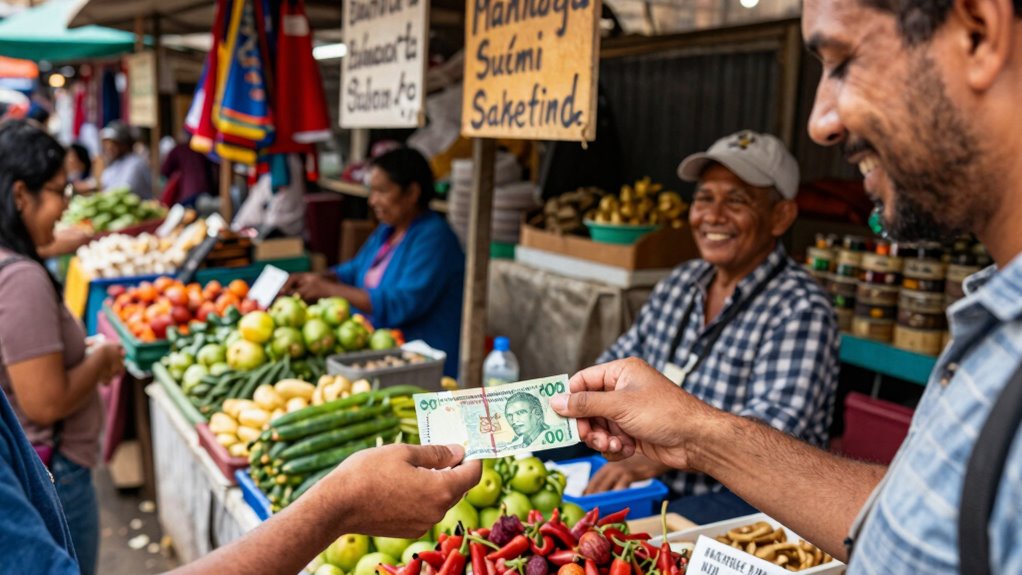
To guarantee you always pay in the local currency, make it a habit to select the local currency option whenever you’re prompted during transactions. This simple step helps you avoid unfavorable currency exchange rates and extra fees from your bank or card issuer. When using payment methods, always double-check that the transaction is processed in the local currency before confirming. Using credit cards that offer favorable currency exchange rates can save you money, but ensure your card doesn’t automatically convert to your home currency. Also, avoid cash exchanges at airports or hotels, as they often have poor rates. Being vigilant with your payment methods and always choosing the local currency ensures you get the best deal and avoid unnecessary charges.
What to Do If You’re Unknowingly Charged in Your Home Currency?
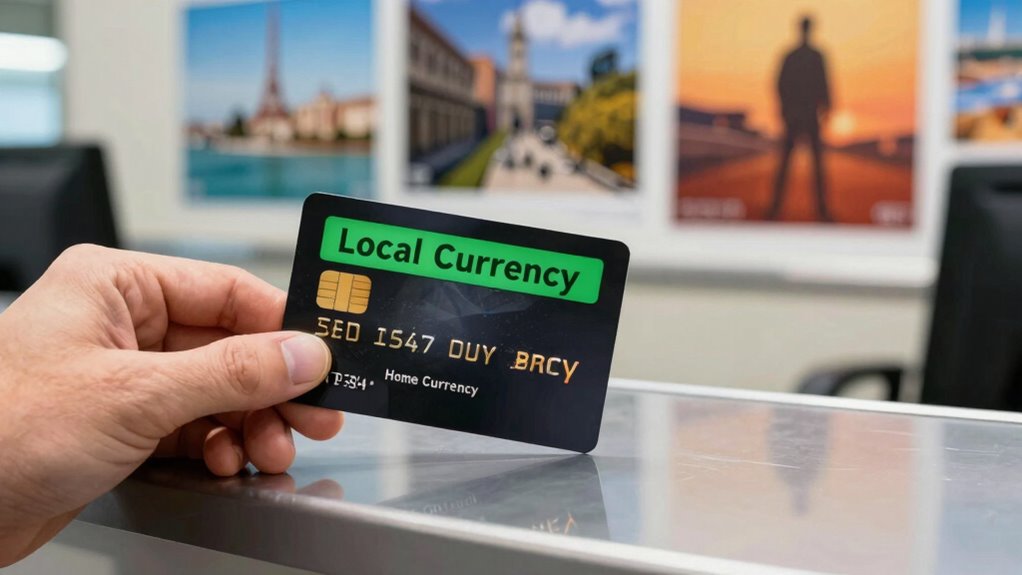
If you notice that you’ve been charged in your home currency instead of the local one, act quickly to resolve the issue. This often results from currency conversion pitfalls and unexpected foreign transaction fees. To fix it:
- Contact your bank or credit card issuer immediately to dispute the charge and request a reversal if applicable.
- Check your card’s settings to ensure you’ve selected the option to pay in the local currency whenever possible.
- Review your recent transactions to identify any recurring mistakes and consider switching to a card with no foreign transaction fees.
Taking swift action helps you avoid unnecessary costs. Remember, paying in your home currency might seem convenient, but it often leads to higher fees and unfavorable exchange rates.
Frequently Asked Questions
Can I Change My Payment Currency Preferences After a Purchase?
Yes, you can typically change your payment currency preference after a purchase, but it depends on the platform or merchant. Check your account settings or contact customer support to request a preference change. Keep in mind, altering your payment currency might affect the transaction’s processing or fees. Act quickly if possible, as some merchants lock in the original currency during checkout, making post-purchase changes difficult.
Do All Merchants Offer Local Currency Payment Options?
Did you know that over 80% of international merchants accept local currency payments? Not all merchants display clear currency signage or offer local currency options, so you might need to ask. To avoid extra fees and unfavorable exchange rates, look for merchants with visible local currency signage or ask beforehand. Your awareness of merchant acceptance can help you save money and make smoother transactions abroad.
How Do Credit Card Companies Handle Currency Conversion Fees?
Credit card companies handle currency conversion fees by applying a fee based on their fee structure, usually around 1-3% of the transaction amount. When you make a purchase in a foreign currency, your card issuer converts the amount through a currency exchange process, often adding this fee. To save money, it’s best to pay in the local currency, avoiding extra conversion charges and benefiting from transparent exchange rates.
Is It Better to Withdraw Cash in Local Currency From ATMS Abroad?
You should withdraw cash in local currency from ATMs abroad to avoid extra ATM fees and unfavorable currency exchange rates. When you choose to pay in your home currency, you often face higher currency exchange fees and hidden charges. By selecting the local currency, you help guarantee you’re getting a fair rate and minimize additional costs, saving you money during your travels.
What Are the Signs of Being Charged in My Home Currency Without Realizing?
Think of your bank statement as a mirror reflecting hidden surprises. If you see unfamiliar charges in your home currency, it’s a sign you were charged in your home currency without realizing. Keep an eye on exchange rate alerts and monitor for unauthorized charges. These clues help you catch sneaky conversions or extra fees early, saving your money and peace of mind. Always review your statements carefully after international transactions.
Conclusion
Think of your money as a traveler steering through a busy marketplace. When you pay in your home currency, it’s like paying at a foreign stall with a confusing sign—you’re often losing more than you realize. Stick to paying in local currency, and you’ll find your finances stay on the right path, saving you from hidden fees and unfair rates. Remember, being savvy with currency choices keeps your money traveling further and your journey smoother.
Fall Picks
fall essentials
As an affiliate, we earn on qualifying purchases.