To avoid dynamic currency conversion traps, always choose to pay in the local currency, not your home currency. When prompted, decline DCC offers and check receipts for any mention of currency conversion. Use credit or debit cards that charge transparent foreign transaction fees or pay with cash in local currency. Be aware of your bank’s policies on foreign fees and monitor your account for hidden charges. Keep learning how to stay protected and save money on international payments.

Get travel and outdoor gear delivered free with Prime
- Fast, free delivery on millions of items
- Prime Video, Amazon Music and more included
- Member-only deals all year
Key Takeaways
- Always decline DCC options at payment terminals and tell merchants you want to pay in local currency.
- Check receipts for mentions of currency conversion or dynamic conversion; avoid transactions with these details.
- Use credit or debit cards that specify no foreign transaction fees and process payments in local currency.
- Carry cash in local currency to avoid DCC altogether and prevent unfavorable exchange rates.
- Monitor your bank and card statements regularly to identify and dispute hidden DCC charges.
What Is DCC and Why Does It Cost You More?
Have you ever wondered why some purchases abroad cost more than expected? That’s often due to Dynamic Currency Conversion (DCC). DCC allows merchants to bill you in your home currency instead of the local currency. While it might seem convenient, it usually isn’t. The exchange rates used in DCC are often less favorable than those your bank or credit card issuer offers. Plus, you’ll likely face extra transaction fees, which add to the total cost. These fees and poor exchange rates can quickly make your purchase more expensive. Instead of accepting DCC offers, it’s better to pay in the local currency and let your bank handle the conversion. This way, you avoid unnecessary charges and get a better deal on your purchases abroad. Understanding affiliate disclosures can help you recognize the importance of transparent financial information when shopping internationally.
How Can You Spot DCC Offers When Paying?
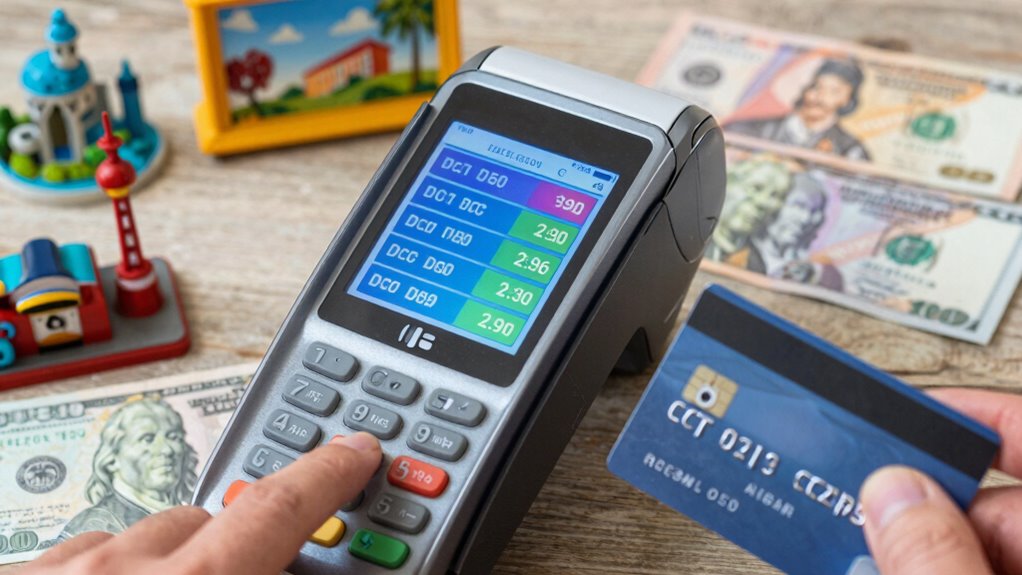
Wondering how to identify DCC offers when you’re paying? Watch out for signs that you’re being offered a currency conversion service at checkout. Here are four ways to spot DCC offers:
- Look for prompts asking if you want to pay in your home currency.
- Check the receipt for mentions of currency conversion or dynamic conversion.
- Be wary of options that seem to avoid your bank’s transaction fees.
- Notice if the total amount appears higher than expected, indicating added DCC costs.
- Be aware of how dynamic currency conversion can affect the total transaction amount and transparency. Recognizing the potential for hidden fees related to currency exchange helps you make more informed decisions. Additionally, understanding how nail biology differs between males and females can help you maintain healthy nails and prevent damage, especially when paying attention to the condition of your nails during transactions or general health monitoring. Recognizing these clues helps you avoid unnecessary costs and make smarter payment choices.
Which Payment Methods Help You Avoid DCC Fees?
Choosing the right payment method can substantially reduce your risk of incurring DCC fees. To avoid unexpected currency exchange costs, use payment options that prioritize fee transparency. Credit cards from issuers that process transactions in your home currency often eliminate DCC, saving you money. Debit cards linked to global networks can also help, but check if they charge foreign transaction fees. Cash payments in local currency avoid DCC entirely, though less convenient. The table below highlights your best options:
| Payment Method | Currency Exchange | Fee Transparency |
|---|---|---|
| Home Currency Credit Card | Yes | Clear, known fees |
| Local Currency Debit Card | Yes | Varies, check issuer |
| Cash in Local Currency | No | Not applicable |
| Travel Money Cards | Yes | Usually transparent |
| Digital Wallets | Yes | Often transparent |
Additionally, understanding currency exchange processes can help you make more informed choices. Being aware of exchange rate margins and how they impact costs can further empower your financial decisions. Knowing how dynamic currency conversion operates at checkout can help you avoid unnecessary fees and retain control over your expenses. For example, some merchants may attempt to upsell DCC, so recognizing the signs can save you money. A good grasp of Indonesian decor masks and their cultural significance can also help you select authentic and meaningful pieces while avoiding deceptive pricing tactics.
How Your Bank’s Policies Can Help You Save on Foreign Transactions?
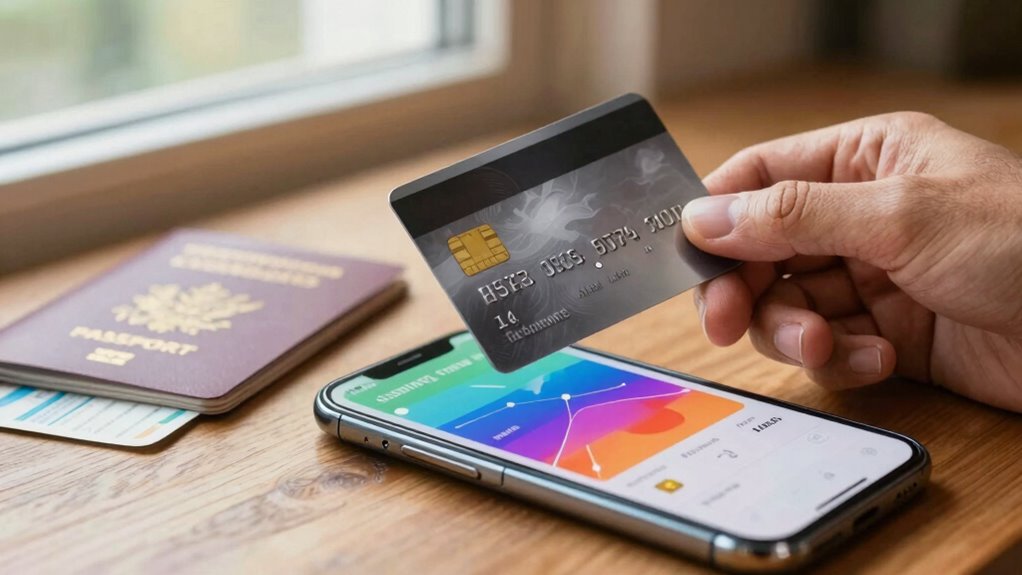
Your bank’s policies can considerably impact how much you pay in foreign transaction fees. Understanding their stance on currency exchange rates and fees helps you make smarter choices. Here are four ways your bank’s policies can save you money:
- Opt for banks with no foreign transaction fees
- Choose credit cards with favorable bank fee policies for international use
- Check if your bank offers free or discounted currency exchange rates
- Avoid dynamic currency conversion by declining local currency billing at ATMs and merchants
- Transparency in fee structures in your banking choices can encourage smarter financial decisions during international transactions. Additionally, being aware of how banks apply exchange rate policies can help you avoid hidden costs that often accompany foreign currency conversions. Familiarizing yourself with security zone info can also prevent unexpected charges when managing international financial tools or equipment.
Tips to Stay Informed and Protect Yourself From Hidden DCC Charges?
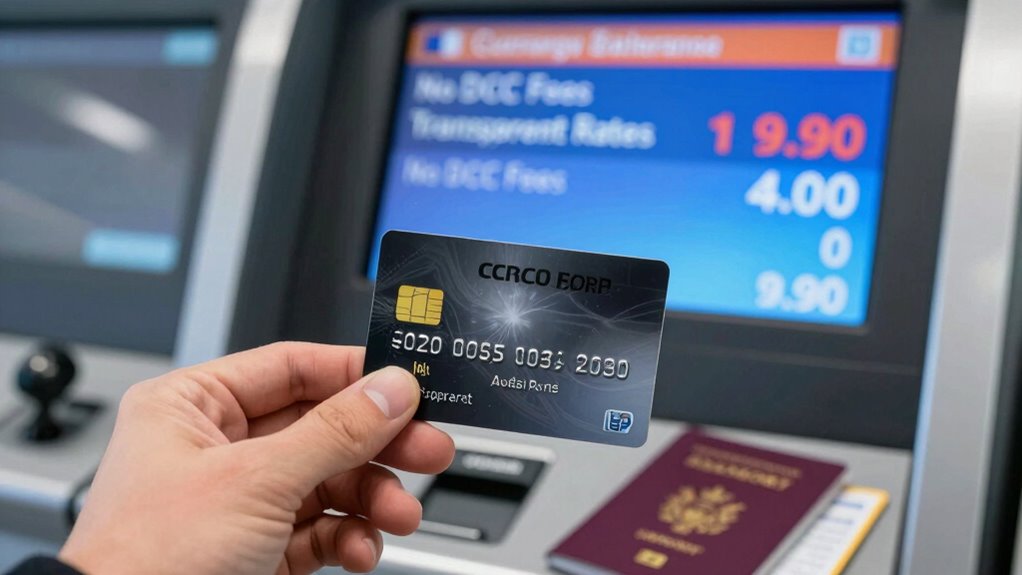
Staying informed about dynamic currency conversion (DCC) charges is essential to avoid unexpected costs. To do this, prioritize exchange rate transparency; always ask the merchant if they will apply DCC and clarify the exchange rate used. Don’t hesitate to request a written receipt or confirmation showing the currency conversion details. Good merchant communication can prevent surprises—if you’re unsure, decline DCC and opt to be billed in the local currency. Use your bank’s mobile app or website to monitor foreign transaction fees and exchange rates regularly. Staying vigilant helps you spot hidden charges early. Remember, being proactive with questions and review of receipts ensures you’re protected from inflated rates and unnecessary DCC fees. Incorporating mind-body healing practices can also help reduce stress associated with unexpected financial surprises. Additionally, understanding the cost transparency policies of your bank or credit card provider can empower you to make better-informed decisions when traveling. Being aware of financial awareness strategies can further enhance your ability to detect and avoid hidden charges before they accrue. Maintaining awareness of exchange rate fluctuations can also help you recognize when rates are less favorable and avoid unnecessary expenses. Regularly reviewing your account statements and transaction details is another effective way to stay informed and alert for potential hidden fees.
Frequently Asked Questions
Are There Any Countries Where DCC Is Not Commonly Used?
You’ll find that in some countries, DCC isn’t commonly used, especially where local currency transactions dominate. Places like Japan and Switzerland tend to have low DCC prevalence because merchants and banks prefer local currency, and the regulations support transparent pricing. When traveling there, you’ll likely be charged in the local currency, helping you avoid DCC traps and keep better track of your spending.
Can I Request to Pay Only in My Home Currency?
Yes, you can request to pay only in your home currency. When you do this, the merchant’s terminal should offer the option to convert the transaction to your home currency, avoiding dynamic currency conversion fees. By choosing your home currency, you reduce unnecessary currency conversion costs and transaction fees. Always look for the “pay in home currency” option during checkout, and be aware that some merchants might automatically suggest DCC, so decline if you prefer your currency.
Do Credit Card Rewards Programs Exclude DCC Transactions?
Is it a trap? Yes, credit card rewards programs often exclude DCC transactions, meaning you’ll miss out on rewards if you pay in your home currency. Plus, foreign transaction fees apply, which can eat into your savings. To maximize benefits, always check your card’s terms and avoid DCC. Use your card in its native currency to earn rewards and dodge extra fees—your wallet will thank you.
How Can I Verify if a Merchant Is Authorized for DCC?
You can verify if a merchant is authorized for DCC by checking their signage or asking directly about their authorization procedures. Look for clear indicators like DCC logos or ask the cashier if they participate in the program. Additionally, you can contact your credit card issuer or bank to confirm the merchant’s authorization status. This proactive approach helps you avoid unexpected currency conversion fees and ensures you’re aware of the transaction process.
What Are the Legal Rights if I Suspect Unfair DCC Charges?
If you suspect unfair DCC charges, your consumer protection rights kick in. You can dispute the charge with your bank or credit card issuer, providing proof if needed. Many countries have dispute resolution processes to help resolve such issues fairly. Keep records of transactions and any communication. If you believe you’ve been unfairly charged, exercising these rights guarantees you’re protected and can seek a refund or adjustment.
Conclusion
To dodge costly DCC traps, stay vigilant and always question unfamiliar currency conversions. Remember, knowledge is power—if it sounds too good to be true, it probably is. By paying attention to your payment options and bank policies, you can keep your hard-earned money safe from hidden fees. Don’t let yourself be caught off guard; stay informed and take control of your transactions. In the end, it’s better to be safe than sorry.
Fall Picks
fall essentials
As an affiliate, we earn on qualifying purchases.