
To spot credit card skimmers without seeming paranoid, inspect card readers and ATMs carefully before using them. Look for loose, crooked, or oddly attached parts, and check for extra overlays or signs of tampering like tape or scratches. Be cautious of bulky modifications or suspicious cameras near the keypad. If something feels off, trust your instincts and avoid the device. Keep learning tips to stay safer and protect your financial info effectively.

Get travel and outdoor gear delivered free — and shop member deals
- Fast, free delivery on millions of items
- Access to Prime Big Deal Days deals on October 6–7
- Prime Video, Amazon Music and more included
Key Takeaways
- Conduct a quick visual check for loose, tilted, or uneven parts around the card reader or keypad.
- Look for extra overlays, tape, or signs of glue indicating recent tampering or added devices.
- Feel for unusual roughness, wobbliness, or gaps in the card slot and keypad area.
- Watch for tiny cameras or suspicious devices attached near the card entry point.
- Trust your instincts—if something seems off, avoid using the machine and report it promptly.
As an affiliate, we earn on qualifying purchases.
What Are Credit Card Skimmers and How Do They Work?
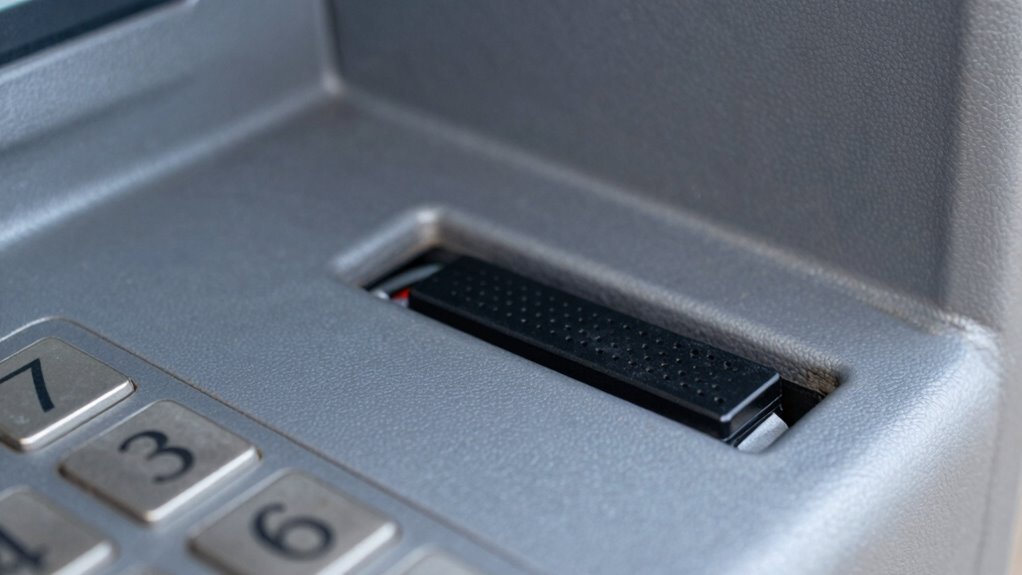
Credit card skimmers are malicious devices designed to steal your card information when you use certain payment terminals. These tiny devices are often attached over card readers, secretly capturing data from the magnetic strip as you swipe your card. Once installed, they record your card’s details, including the card number and expiration date. Many skimmers also bypass or compromise card encryption, making it easier for hackers to access sensitive information. Some advanced skimmers can even read data from contactless payments or chip cards, though magnetic strip theft remains common. When you insert or swipe your card, the skimmer silently copies your data, which is then retrieved by cybercriminals. Recognizing these devices helps you protect your financial information and avoid falling victim to fraud. Proper device maintenance and cautious inspection of payment terminals are essential for preventing skimmer installation. Being aware of common tampering signs can further help you spot suspicious devices before any data is compromised. Additionally, understanding how skimmers are installed can equip you with better detection techniques for safer transactions. Awareness of new skimming techniques can also improve your ability to identify increasingly sophisticated devices.
As an affiliate, we earn on qualifying purchases.
Where Are Credit Card Skimmers Usually Hidden?
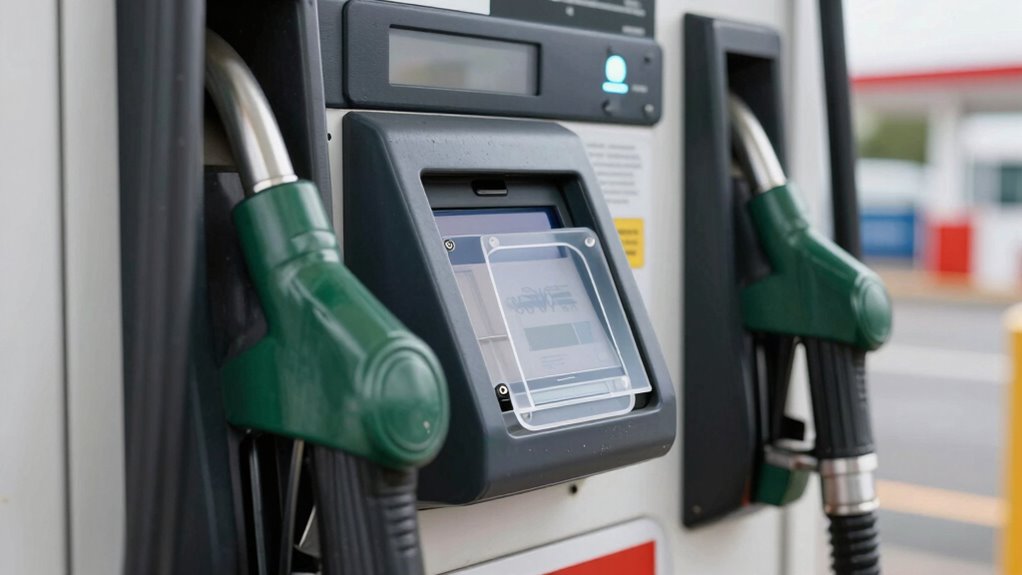
Skimmers are often hidden in plain sight at gas stations, ATMs, and point-of-sale terminals, making them easy for cybercriminals to install without attracting attention. They blend seamlessly with legitimate equipment, which complicates skimming prevention efforts. To protect yourself from credit card fraud, always inspect card readers closely. Look for:
- Loose or misaligned card slots that feel different from the original.
- Tiny cameras or suspicious devices attached near the keypad.
- Unusual overlays or plastic covers on the machine’s surface.
Being vigilant about these signs can help you spot potential skimmers before swiping your card. Remember, cybercriminals rely on the element of surprise, so your careful observation is key to avoiding credit card fraud and ensuring safe transactions. Additionally, understanding where credit card skimmers are usually hidden can help you stay alert and avoid dangerous devices. For example, skimmers are sometimes placed in easily accessible yet overlooked locations to increase the chance of unnoticed installation, especially in areas with poor surveillance or maintenance. Recognizing that skimmers often target high-traffic, low-security areas can further improve your vigilance during transactions. Moreover, knowing how to detect suspicious modifications can aid in preventing fraud before it happens.
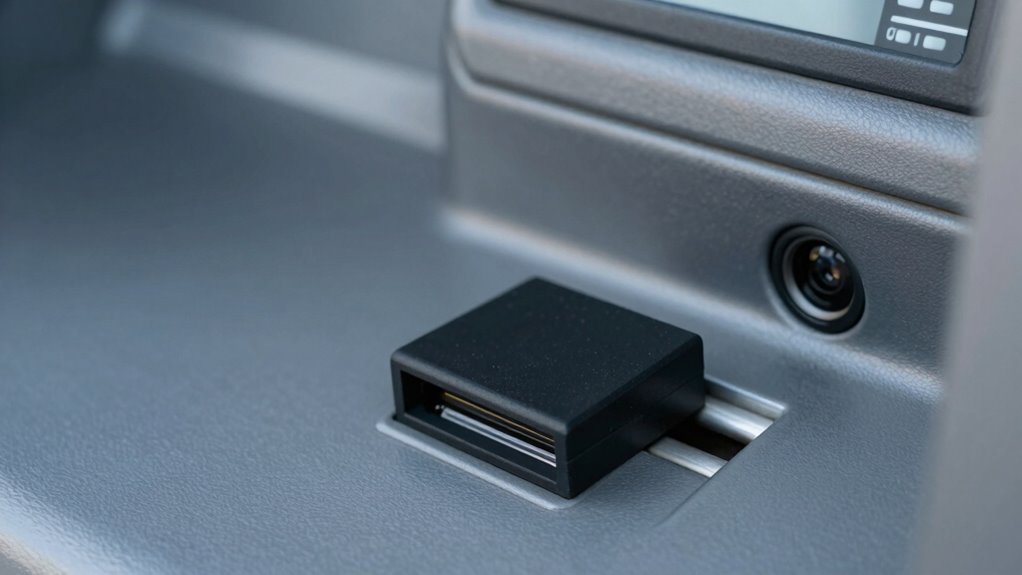
credit card reader security device
As an affiliate, we earn on qualifying purchases.
As an affiliate, we earn on qualifying purchases.
How Can You Spot a Skimmer on a Card Reader or ATM?

When inspecting a card reader or ATM, start by checking for loose or broken parts, which can be a sign of tampering. Look closely for any unusual devices or attachments that don’t belong, especially around the card slot area. A quick visual check can help you spot potential skimmers before you use the machine. Additionally, be aware that security measures often include modern technology designed to prevent fraud; if something seems off, trust your instincts and consider using a different ATM or card reader. Being aware of consumer safety tips can further help you avoid falling victim to skimmers and protect your financial information. Familiarizing yourself with skimming techniques can also improve your ability to recognize signs of tampering and stay safe. Remember that skin health is important, and just like skincare routines benefit your skin, staying vigilant about ATM safety helps protect your finances.
Check for Loose Parts
If a card reader or ATM has been tampered with, you might notice parts that seem loose or out of place. These small details can be clues to skimmer prevention and help you avoid falling victim to payment card fraud. Check the entire device carefully, especially around the card slot and keypad. Look for:
- A card reader that wobbles or feels loose when you insert your card
- Extra plastic or metal parts that don’t match the rest of the device
- Any unusual or bulky overlays that seem glued or taped on
Skimmers are often attached with adhesive or clips, so any movement or uneven surfaces should raise suspicion. Staying vigilant for loose parts can help you spot a hidden skimmer and avoid becoming a victim of payment card fraud. Additionally, being aware of trusted security measures can further protect your financial information. For example, some ATMs and card readers now feature anti-skimming technology, making it harder for criminals to install covert devices.
Look for Unusual Devices
Look carefully at the entire card reader or ATM for any unusual devices or modifications. Skimmers often hide behind or inside these machines, so scrutinize every component. Check for loose or mismatched parts, as fraud prevention relies on consistent security measures. Be wary of any added equipment, such as extra card slots, keypad overlays, or small cameras attached nearby. These are common signs of a skimmer or hidden recording device. If anything looks out of place or suspicious, trust your instincts and avoid using that machine. Vigilance helps prevent fraud and protects your financial information. By thoroughly inspecting for unusual devices, you reduce the risk of becoming a victim of card-skimming scams and strengthen overall security measures. Security measures are essential in maintaining safe financial transactions. Remember that physical security features on legitimate card readers are designed to prevent tampering, so comparing the device to known authentic models can be helpful. Additionally, being aware of common tampering techniques can improve your ability to recognize signs of fraud. Staying informed about skimming techniques can further enhance your ability to detect potential threats before they compromise your data. Regularly inspecting for tampering signs can also help alert you to ongoing fraud attempts.
Inspect Card Slot Area
Ever wondered how to spot a skimmer hidden in the card slot area? Your security awareness and consumer vigilance are key. Carefully examine the card reader’s slot for any abnormalities. Look for:
- A protruding or loose card insert that doesn’t fit snugly
- Additional devices or overlays attached to the slot’s edges
- Unusual tape, glue, or signs of tampering around the area
Skimmers often blend seamlessly with legitimate parts, but irregularities can be clues. Trust your instincts—if something looks off or feels different, avoid using that ATM or card reader. Regularly inspecting the card slot area is a simple but effective way to protect yourself from fraud. Being aware of tampering techniques common among fraudsters can help you recognize signs of a compromised device. Staying alert helps you spot potential threats before they compromise your information. Additionally, understanding skimming methods can improve your ability to detect suspicious devices early. Familiarity with card reader design can also aid in noticing subtle differences that indicate tampering. Educating yourself about common fraud tactics enhances your overall vigilance when using card readers.
As an affiliate, we earn on qualifying purchases.
Signs That a Card Reader Has Been Tampered With
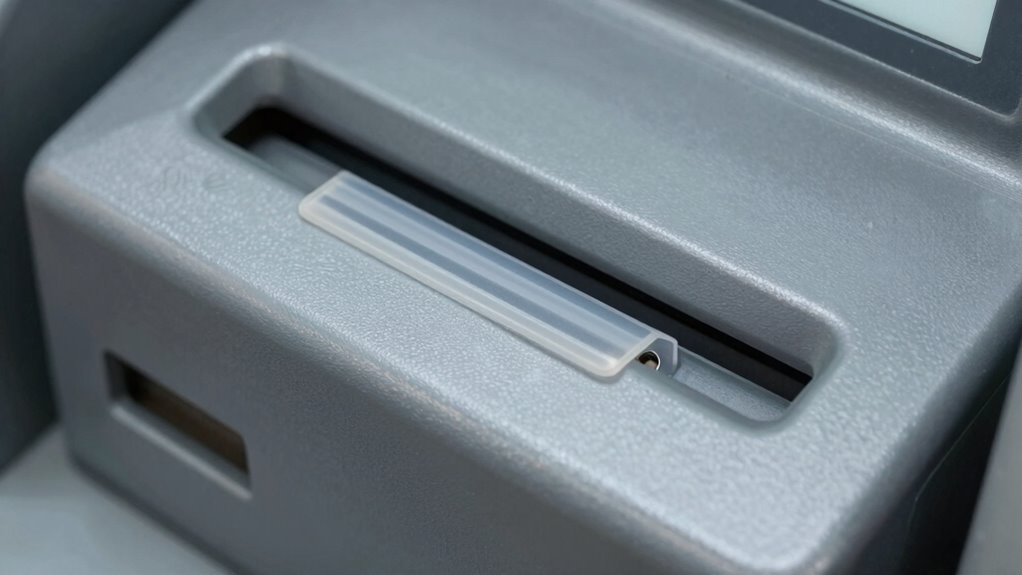
Look closely at the card reader for any unusual positions or placements that seem off. Check for visible signs of tampering, like scratches, tape, or loose parts. Be wary of sticky or loose devices attached to the machine, which could indicate skimming equipment. Remember that tamper-evident seals can also help detect unauthorized access.
Unusual Card Reader Position
A sudden change in the position or alignment of a card reader can be a key indicator of tampering. If you notice an unusual card reader that seems loose, tilted, or slightly shifted from its original placement, it could be a sign of hidden device placement or a skimmer. These unusual positions often result from someone trying to conceal a device or replace the reader with a fake.
Imagine:
- The card reader wobbles when you insert your card.
- It appears slightly off-center or misaligned with nearby components.
- There’s an unusual gap between the reader and the terminal surface.
These subtle clues help you spot potential tampering. Always trust your instincts if something looks or feels different from usual.
Visible Tampering Signs
Visible signs of tampering are often the most obvious indicators that a card reader has been compromised. Look closely at the device for any loose or uneven parts, such as a keypad that feels loose or is misaligned. Check for unusual tape, glued-on components, or any signs of glue residue around the card slot or keypad. These may indicate that someone has tampered with the reader using skimming techniques to install a counterfeit card reader. Also, examine the card slot for any extra devices or overlays that don’t belong. If something seems out of place or looks suspicious, trust your instincts. These visible tampering signs are essential in spotting potential skimmers before your card information is stolen.
Sticky or Loose Devices
Have you ever noticed that a card reader feels unusually loose or wobbly? This can be a sign that the device’s security has been compromised. Tampered devices often have sticky or loose components from skimmer removal attempts or unauthorized modifications.
Look for these clues:
- The card reader shifts or wobbles when you insert your card
- The keypad or surrounding panel feels uneven or slightly detached
- There are sticky residues or gaps where parts don’t sit flush
These subtle signs indicate someone may have tampered with the device. Always be cautious and avoid using compromised readers. Recognizing sticky or loose devices helps protect your card details and prevents skimming. If in doubt, report your concerns to the establishment immediately.
Practical Tips for Safe Use of Gas Stations and ATMs
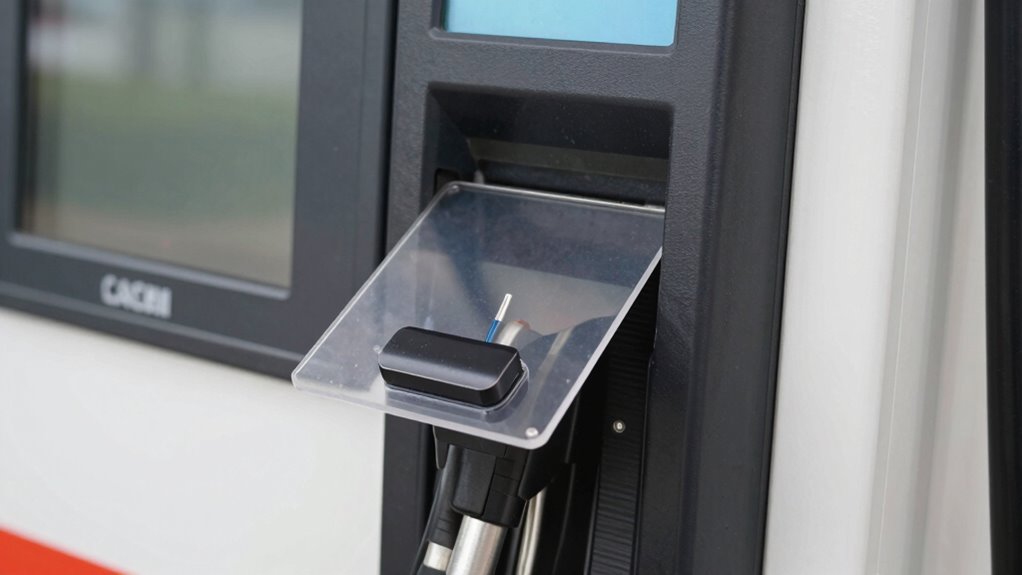
To protect your financial information, always inspect gas station pumps and ATMs carefully before using them. Look for loose or unusual card readers, warped surfaces, or any signs of tampering, as these could indicate skimmers that facilitate payment fraud and identity theft. Use your hand or flashlight to check around the card slot and keypad. Avoid ATMs or pumps with covers or tape over key areas. Keep your PIN hidden while entering it. Use ATMs located inside bank branches when possible, as they tend to be more secure. Here’s a quick visual guide:
| Warning Signs | What to Do | Best Practices |
|---|---|---|
| Loose card reader | Report immediately | Use chip readers when available |
| Unusual device placement | Cover keypad and card slot | Inspect for tampering |
| Skimmer attachments | Avoid using | Use ATMs in well-lit areas |
| Visible damage | Find another machine | Check for security features |
What Should You Do If You Suspect a Skimmer?
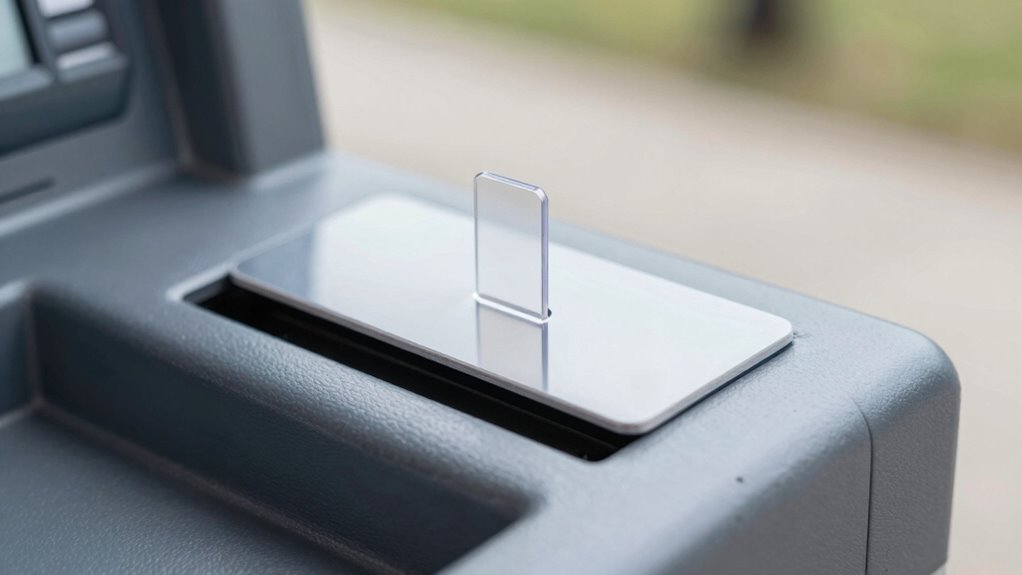
If you notice signs of tampering or suspect a skimmer on an ATM or gas pump, act quickly to protect your accounts. Your immediate response is vital for security awareness and fraud prevention. First, avoid using the machine and don’t insert your card. Second, report your suspicions to the bank or station staff immediately. Third, monitor your bank accounts closely for any unauthorized transactions. Take a photo of the device if possible, but don’t tamper with it. Your swift action helps prevent further fraud and alerts authorities to potential skimming activity. Remember, staying alert and responsive creates a safer environment for everyone and minimizes your risk of falling victim to credit card fraud. Trust your instincts and prioritize security awareness at all times.
The Best Ways to Protect Your Card Info During Transactions
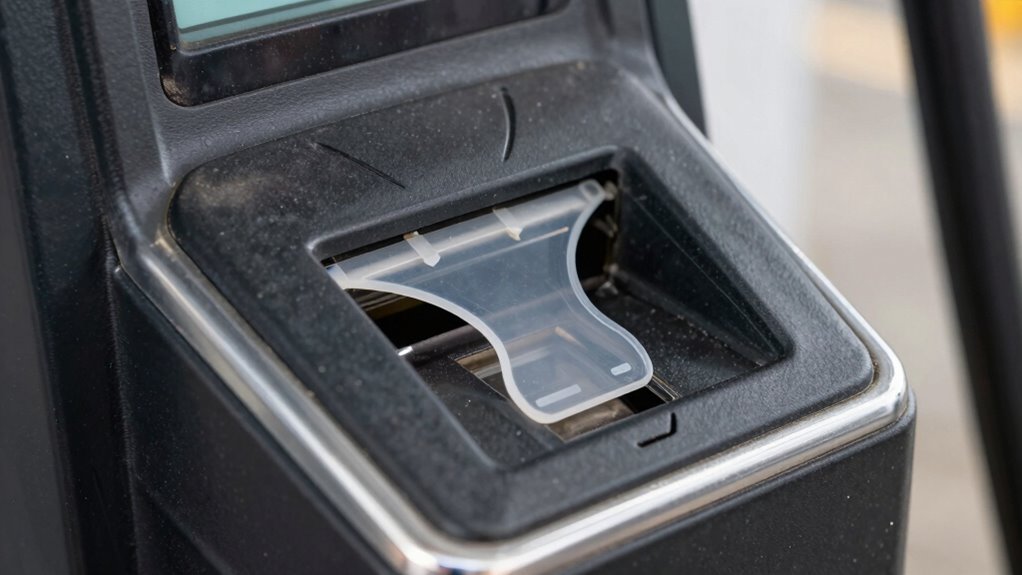
Protecting your card information during transactions starts with being proactive and vigilant. Always inspect card readers at ATMs and point-of-sale terminals for any signs of tampering, such as loose parts or unusual attachments. Use payment security measures like chip cards instead of magnetic stripes, since chips provide better fraud prevention. When paying with a mobile device or contactless card, ensure the transaction occurs in a secure environment and that the terminal is legitimate. Avoid sharing your card details over unsecured networks or with unverified sources. Regularly monitor your bank statements for suspicious activity, and set up alerts for unusual transactions. These precautions help you maintain strong fraud prevention, reduce the risk of skimming, and keep your financial information secure during every transaction.
How Technology Is Making Skimmer Detection Easier
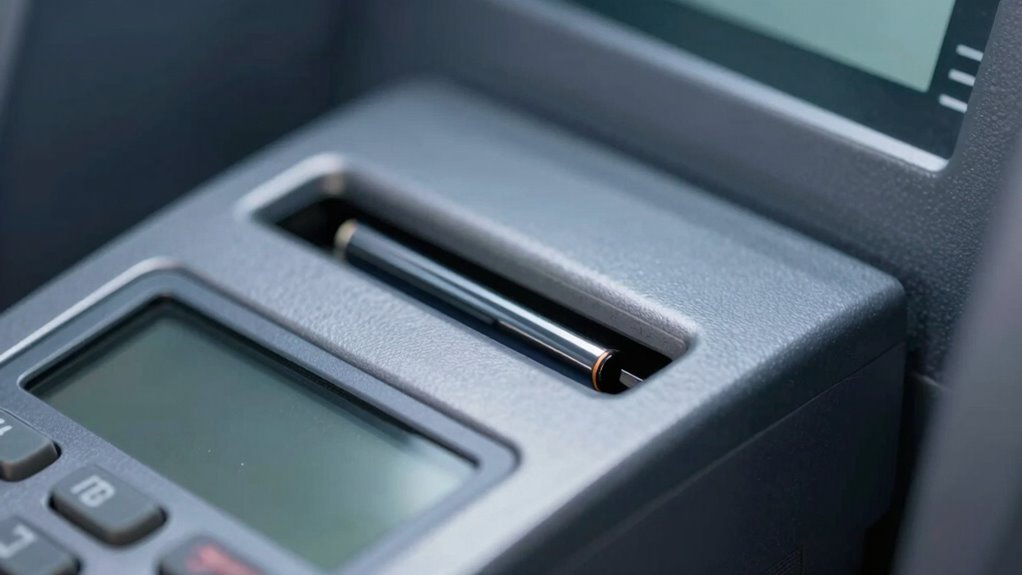
Advancements in technology are considerably enhancing the ability to detect skimmers before they cause harm. Modern systems now leverage biometric authentication, making it harder for thieves to access your account without your fingerprint or face scan. Additionally, encrypted transactions ensure that data stays secure, even if a skimmer is present. These innovations allow banks and merchants to identify suspicious activity quickly. Imagine sensors that detect tampering on card readers or software that flags unusual transaction patterns. You might see real-time alerts on your phone or ATMs with built-in cameras monitoring for odd behavior. Together, these tools create a layered defense against skimming, making it easier to spot and prevent theft before it happens. Technology continues to evolve, making skimmer detection faster, smarter, and more reliable.
Frequently Asked Questions
Are Some Credit Card Skimmers More Advanced Than Others?
Yes, some credit card skimmers are more advanced than others. They use sophisticated skimming technologies that can be harder to detect. To protect yourself, you should rely on skimmer detection techniques like inspecting card readers for tampering or unusual devices. Being vigilant and aware of these advanced skimmers helps you spot potential threats early, so you’re less likely to fall victim to skimming scams.
Can Mobile Payment Methods Be Targeted by Skimmers?
Yes, mobile payment methods can be targeted by skimmers. Criminals might exploit vulnerabilities in contactless security or mobile encryption to intercept your data. To stay safe, always keep your device updated with the latest security patches, use strong passwords, and enable two-factor authentication. Avoid using public Wi-Fi for transactions, and regularly monitor your accounts for suspicious activity. These steps help protect your mobile payments from skimming attempts.
How Often Should I Check My Bank Statements for Suspicious Activity?
You should check your bank statements at least once a week—yes, weekly, because who wants to discover fraud when it’s already racking up? Keep an eye out for suspicious activity, and consider credit report monitoring and fraud alert systems for extra protection. Regular checks help catch unauthorized transactions early, saving you from headaches and financial chaos. Stay vigilant, because fraudsters don’t take holidays—neither should you.
Do Certain Locations Have Higher Risks for Skimming?
Certain locations have higher risks for skimming, especially in high risk areas like gas stations, ATMs, and parking meters. Seasonal trends also play a role, with more skimming activity during holidays and busy shopping seasons when thieves target vulnerable systems. Always be cautious in these spots, inspect card readers for tampering, and avoid using machines that look suspicious to protect yourself from skimming.
Are There Legal Consequences for Installing or Using Skimmers?
Yes, installing or using skimmers can lead to serious legal penalties. If you’re caught, you could face criminal charges, including fines and imprisonment. Laws vary by jurisdiction, but authorities treat skimming as a significant crime due to its impact on victims. Avoid the risks by steering clear of any involvement with skimmers and report suspicious devices to the authorities immediately. Staying law-abiding keeps you safe from these severe consequences.
Conclusion
Think of your credit card like a delicate key—you wouldn’t give it to just anyone. By staying vigilant, you’re the locksmith protecting your valuables. Remember, just last year, a simple glance saved a friend from falling victim to a skimmer. Trust your instincts, check for signs, and use technology to stay one step ahead. Staying alert keeps your financial house secure—because in this game, awareness is your best defense.
Fall Picks
fall essentials
As an affiliate, we earn on qualifying purchases.